












latest articles
Horoscopes – why we believe in them

When reading horoscopes, we often find sentences like: "Sometimes you are extroverted, sociable, and open-minded, sometimes rather introverted, skeptical, and reserved." If you feel that this statement applies to you, you're not alone. Horoscopes often seem to be very accurate; an observation that might be attributed to the... / more
- written by Lea Sperlich
Does nudging have a place in politics? How decision-making contexts inevitably influence our behavior

We like to see ourselves as masters of our decisions. However, psychological research has found that the context that surrounds our decisions influences our behavior often unnoticed - for better or for worse. Policy makers need to be aware of these influences to protect citizens from being manipulated and to reach societal goals efficiently. Why is the influence of... / more
- written by Mario Herberz
Context matters: Why women are not worse negotiators than men

Mastering the art of negotiation is key to being successful in everyday life and in a highly competitive and dynamic professional world. One widespread belief among laypeople is that women are inferior negotiators compared to men. Such gender... / more
- written by Moritz Burmester, Yannik Escher, Danna Oomen & Hannes Petrowsky
- edited by Jana Dreston
That's cringe! – Wait a minute. What is cringe?

The word “cringe” is on everyone's lips. What does it mean? How can it be described? An attempt to explain the phenomenon using established psychological constructs. / more
- written by Thomas Feiler & Fabian Hutmacher
newsletter
Keep me updated about new In-Mind articles, blog entries and more.
most read articles
The good, the bad, and the ugly of the Dove Campaign for Real Beauty
The Dove Campaign for Real Beauty has been called a lot of things, from a “game changer” and “a breath of fresh air”, to “hypocritical”, “sexist”, and “sneaky”. So why has the campaign, whose major innovation was to use ads that featured real women rather than airbrushed models or celebrity spokespersons, sparked so much controversy? Taking... / more
- written by Angela Celebre & Ashley Waggoner Denton
- edited by Rosanna Guadagno & Reine van der Wal
That human touch that means so much: Exploring the tactile dimension of social life

Interpersonal touch is a fundamental but undervalued aspect of human nature. In the present article, the authors review psychological research showing that even fleeting forms of touch may have a powerful impact on our emotional and social functioning. Given its... / more
- written by Mandy Tjew A Sin & Sander Koole
- edited by Hans IJzerman
Intergroup Contact Theory: Past, Present, and Future
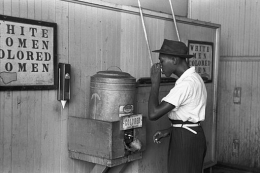
In the midst of racial segregation in the U.S.A and the ‘Jim Crow Laws’, Gordon Allport (1954) proposed one of the most important social psychological events of... / more
- written by Jim A. C. Everett
- edited by Diana Onu
No strings attached: Are “friends with benefits” as complicated in real life as they are in the movies?

Many people become “friends with benefits” to avoid drama and to have sex without getting tied up in emotions; however, the reality is that having a friend with benefits often becomes complicated. Why is that, and is there anything you can do to avoid these complexities? In... / more
- written by Justin J. Lehmiller
- edited by Dylan Selterman
InMind blog
It’s just a joke, right? Empirical findings on the serious effects of sexist humor

You can still make a joke, right? Yes, but... misogynistic jokes about women can have negative consequences. What can such humor do to women and men? / more
How harmful is “always-on” for our well-being? Technology-assisted supplemental work
Calling a colleague on the way home, finishing a presentation after dinner or checking emails before going to bed - for many... / more