  • EN
  • DE
  • FR
  • IT
  • NL

User account menu

  • Log in
Home
  • Magazine
    • All issues
    • Glossary
  • Blog
    • All blog posts
  • Submit to In-Mind
    • Articles
    • Blog posts
  • About In-Mind
    • Team
    • Join In-Mind
    • What is In-Mind?
    • Credits
  • Search

Psychology for You!

  • Magazine Issue
    09/2026

    Teamwork today and tomorrow: The skills that matter and how to build them

    • written by
    • Lara Watermann,
    • Natalie Hogh,
    • Joshua Braun,
    • Simone Kubowitsch
    Teams today collaborate across screens, time zones, and digital tools, but better technology does not always mean better teamwork. Hybrid meetings, information overload, and workflows supported by artificial intelligence (AI) create new challenges. Drawing on expert insights and psychological research, this article explores which team skills matter most and how teams can build them.
    Read more
  • Man using ChatGPT
    Magazine Issue
    08/2026 - Special issue on artificial intelligence

    Benefits and risks of asking AI for health advice

    • written by
    • Jaroslava Kaňková
    Can ChatGPT become your new health advisor – or even your therapist? Generative AI tools are changing how we access health information, offering speed and convenience like never before. But alongside the benefits come real risks. This article explores the promise and pitfalls of AI in non-clinical health settings.
    Read more
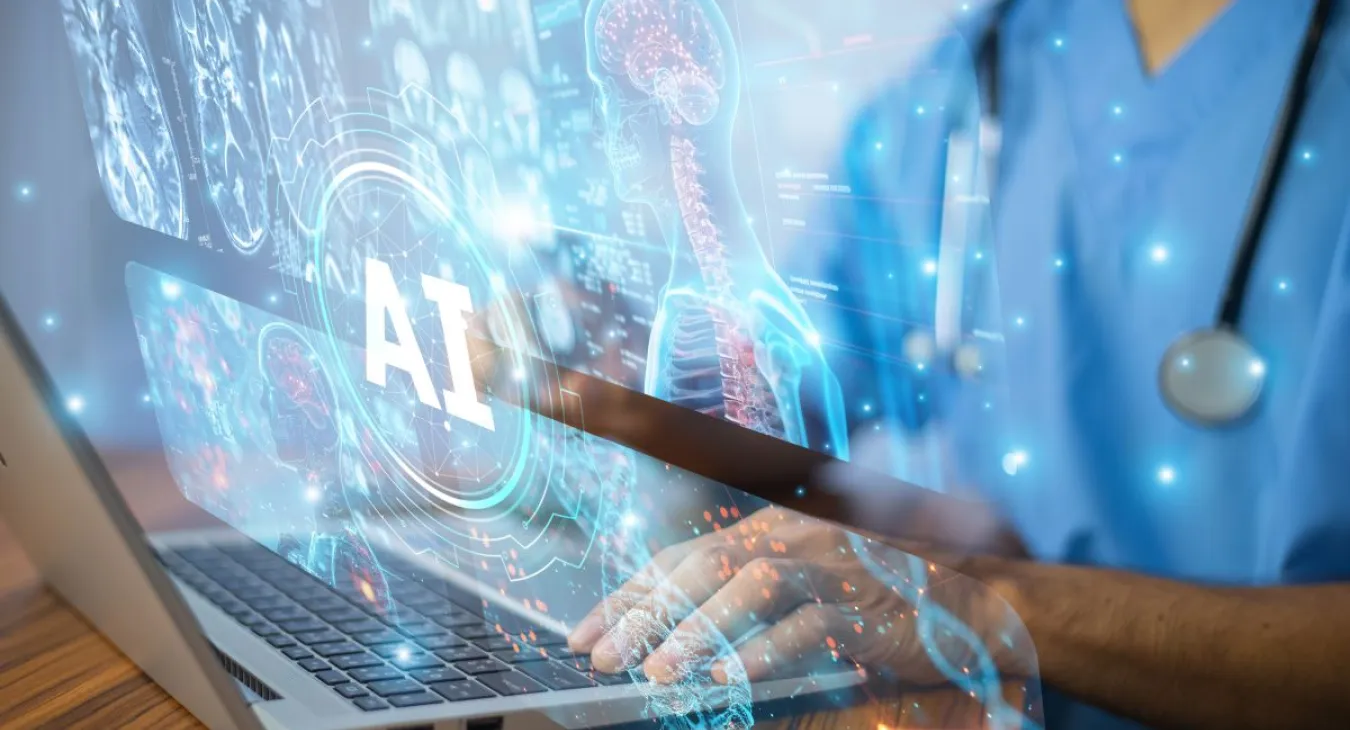
  • AI in healthcare
    Magazine Issue
    08/2026 - Special issue on artificial intelligence

    Doctor, meet AI: How AI systems influence human decision-making in healthcare

    • written by
    • Julia Cecil,
    • Selina Angerer,
    • Eesha Kokje,
    • Susanne Gaube,
    • Anne-Kathrin Kleine,
    • Eva Lermer
    Artificial Intelligence (AI) is revolutionizing healthcare, from enhancing radiology diagnoses to supporting mental health treatment. But while it promises efficiency and accuracy, its integration raises questions of trust, bias, and decision-making dynamics. Will AI become an indispensable medical partner, or will barriers hinder its adoption? This article explores AI’s expanding role, its impact on healthcare professionals, and the road ahead.
    Read more
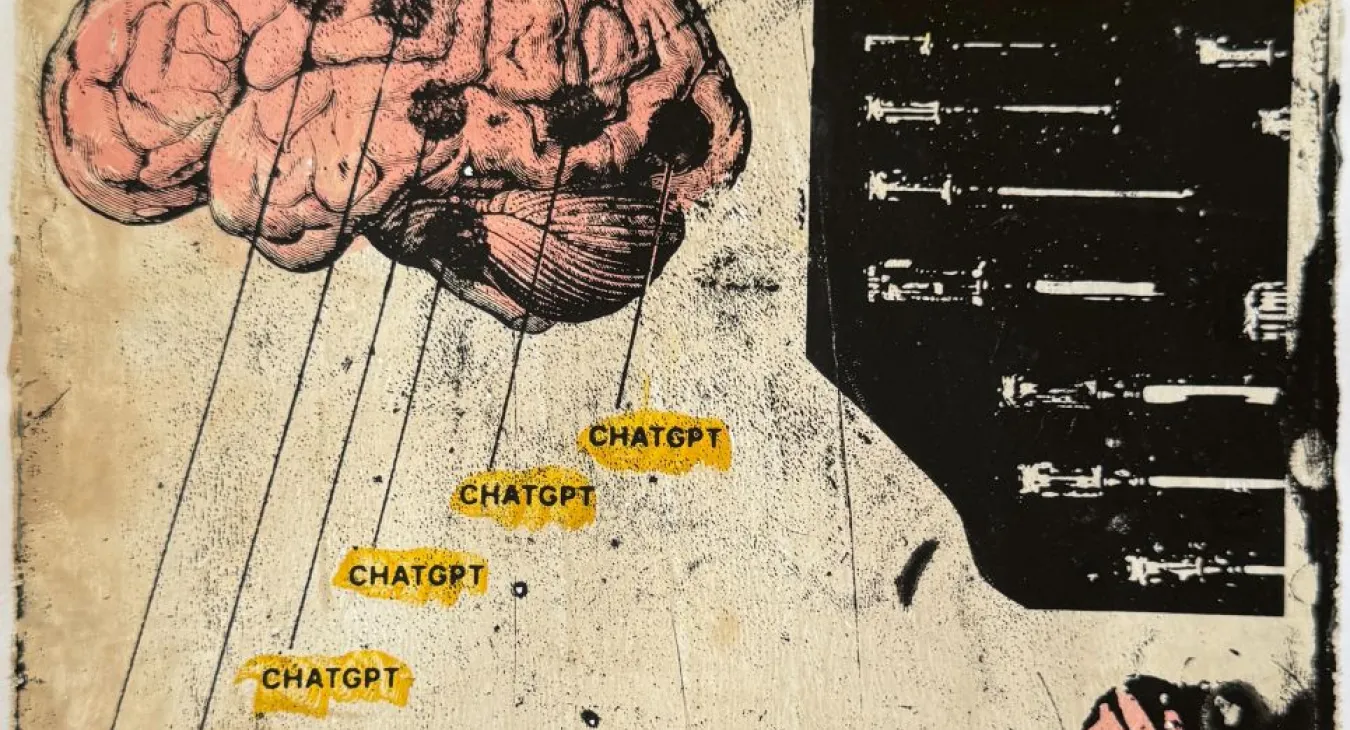
  • a brain with areas marked as responsible for chatGPT processing
    Magazine Issue
    08/2026 - Special issue on artificial intelligence

    Editorial for the special issue "Artificial intelligence, real consequences: Exploring the psychological dimensions of AI"

    • written by
    • Magdalena Wischnewski,
    • Stella Wernicke
    Not long ago, artificial intelligence was mostly found in science fiction and computer science departments. Today, it drafts our emails, recommends our next purchase, tutors our children, and occasionally tells us it understands how we feel. This shift has happened so quickly that our psychological vocabulary is still catching up. What does it mean to trust a system that has no body, no history, and no stake in the outcome but communicates like us? Why do we sometimes treat a chatbot with the same politeness we'd extend to a colleague, and other times discard it the moment it makes a...
    Read more
  • In-Mind Blog

    Join the In-Mind team: Help us make psychology accessible to everyone!

    written by: Rinat Meerson, Stella Wernicke, Jana Dreston
  • Magazine Issue 09/2026

    Teamwork today and tomorrow: The skills that matter and how to build them

    written by: Lara Watermann, Natalie Hogh, Joshua Braun, Simone Kubowitsch
  • In-Mind Blog

    After "Adolescence": What we know (and don’t know) about gender attitudes and online misogyny

    written by: Kate Schramm, Silvana Weber
  • Magazine Issue 08/2026 - Special issue on artificial intelligence

    Benefits and risks of asking AI for health advice

    written by: Jaroslava Kaňková
  • Magazine Issue 11/2024

    How the voice gives away what you are feeling

    written by: Zoé Nikolakis, Sebastian Wallot, Oliver Genschow
    People’s tone of voice changes when they are feeling different emotions. This helps people to recognize the feelings of others. more
  • Magazine Issue 11/2024

    On the same wavelength—Do parents and children understand each other better if their brains are “in sync”?

    written by: Pascal Vrtička, Trinh Nguyen
    Humans are social beings by nature. We often (unconsciously) imitate each other’s behaviors—think of yawning or laughing. Recent research shows that this imitation extends even beyond actions; it happens in... more
  • Magazine Issue 10/2024

    "We are on the same wavelength!" The creation of a shared reality and its relationship with uncertainty reduction and connection with others

    written by: Matteo Masi, Yael Bar-Shachar
    People seek connection by finding that they share the same understanding of things in the world. This creates a shared reality that builds connection and confidence, reinforcing shared reality itself... more
  • Magazine Issue 10/2024

    Trauma(tic) media - What does it even look like? 

    written by: Kristen Leer
    Understanding how trauma appears in media and impacts vulnerable communities is important for researchers from various fields to investigate. However, to begin to understand this specific type of media, we must ask... more
  • Magazine Issue 09/2024

    The psychology of digital disconnection: Why we want to use digital media less and if we should even try to

    written by: Julius Klingelhoefer, Alicia Gilbert
    Digital detox, digital minimalism, and smartphone free schools reveal a desire to reduce or change how we use technologies. However, disconnecting from digital communication like smartphones and social media is... more
  • Magazine Issue 09/2024

    How body language helps us understand other people’s emotions

    written by: Britta Krüger, Julia Bachmann, Jörn Munzert
    Social interaction is a complex phenomenon. When we want to know what our fellow human beings are feeling, we have various sources of information at our disposal. One major source... more
  • Load More Issues

In-Mind Blog

  • 07.03.2016 | Race & Ethnicity, Culture

    Marginal and Happy – How can people be culturally detached and well adjusted?

    written by: Régine Debrosse
    Belonging to several cultural groups at the same time can be associated with complex feelings of group membership. In this post, I will provide an explanation for the phenomenon whereby many immigrants marginalize—feel detached from the mainstream culture they live in and the heritage culture they grew up in—while feeling happy. more
  • 07.02.2016 | Political Psychology

    Are conservatives really simple-minded?

    written by: Lucian Gideon Conway III
    The current consensus in psychology is that political conservatives are uniquely simple-minded. Indeed, even the famous critic of political bias and Heterodox contributor Jonathan Haidt (and colleagues) suggested that there is a “consistent difference between liberals and conservatives” on several measurements related to cognitive complexity (Joseph, Graham, & Haidt, 2009, p. 176). more
  • 30.01.2016 | Meaning Making

    Foetus or child? Language and attitudes toward abortion

    written by: Gosia Mikołajczak
    Due to moral, religious and cultural sensibilities, the topic of abortion still gives rise to controversy in many countries. In this post, I will discuss our research showing how language used in abortion discourse can affect people’s attitudes by changing their attributions of humanity to unborn (Mikołajczak & Bilewicz, 2015). more
  • 13.12.2015 | Big Questions in Society

    Refugees work placement: Call for collaboration

    written by: Sanja Djordjevic
    In the Netherlands only, more than 25.000 refugees arrived this year, and the numbers are rapidly increasing. One of the biggest challenges for refugees is to acclimatize, adapt, and find jobs in a new country. As a group of behavioral change experts, we want to help them, but we need some expert collaborators. This is a call for collaboration with a programmer, translator, and refugee organizations. more
  • 25.11.2015 | Big Questions in Society, Current Events

    Empathy and prejudice after attacks in Paris and Beirut

    written by: Marly van Oirschot
    In this blog, I will try to explain why we showed more empathy for victims in Paris than in Beirut, and how feelings of fear after such a terrorist attack can lead to prejudice against out-groups, especially against Muslims. more
  • 11.10.2015 | Self-Control & Decision-Making

    What does your selfie say about you?

    written by: Lin Qiu
    Selfie is a new form of self-expression in this digital age. In this post, I will discuss our research on how selfies reveal the personality of their owners and how people judge others’ personality based on selfies (Qiu, Lu, Qu, & Zhu, 2015). more
  • Load more blog posts

Editors' Choice

  • Magazine Issue 09/2026

    Teamwork today and tomorrow: The skills that matter and how to build them

    written by: Lara Watermann, Natalie Hogh, Joshua Braun, Simone Kubowitsch
  • In-Mind Blog
    a boy sitting next to a laptop using his phone

    After "Adolescence": What we know (and don’t know) about gender attitudes and online misogyny

    written by: Kate Schramm, Silvana Weber
  • Magazine Issue 08/2026 - Special issue on artificial intelligence
    Man using ChatGPT

    Benefits and risks of asking AI for health advice

    written by: Jaroslava Kaňková

Most Read

  • Magazine Issue 09/2025

    Viral and harmful: Violence in media and its impact on empathy

    written by: Mira Fauth-Bühler
  • Magazine Issue 03/2026

    Children in front of a screen: what is the impact of technology on their development?

    written by: Marica Notte, Daniela Renzi
  • Magazine Issue 09/2025

    Digital moral distortion: How social media can negatively shape our judgement of right and wrong

    written by: Tim-Dorian Knöchel, Sarah Vahed

The Inquisitive Mind is supported by:

  • DGPs – Deutsche Gesellschaft für Psychologie
  • C-SEB – Center for Social and Economic Behavior

Menu

  • Magazine
  • Blog
  • Submit to In-Mind
  • About In-Mind
  • Search
  • LinkedIn
  • Bluesky
  • Instagram
  • Print
  • RSS Feed
  • Cookie settings

About Us

In-Mind is a voluntary science communication project. We enable scientifically working psychologists to present their research topics in a scientifically sound, understandable and entertaining way for an interested audience: Psychology by scientists for everyone....more

Footer menu

  • Imprint
  • Data Protection