  • EN
  • DE
  • FR
  • IT
  • NL

User account menu

  • Log in
Home
  • Magazine
    • All issues
    • Glossary
  • Blog
    • All blog posts
  • Submit to In-Mind
    • Articles
    • Blog posts
  • About In-Mind
    • Team
    • What is In-Mind?
    • Credits

Psychology for You!

  • Magazine Issue
    09/2026

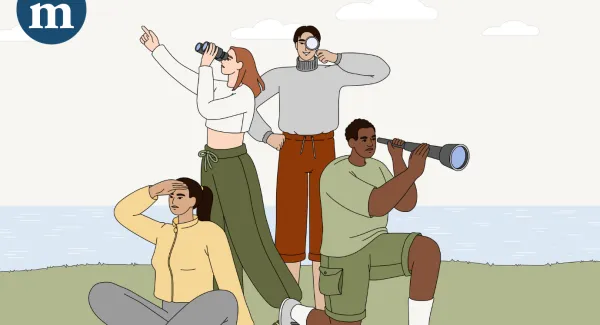
    Teamwork today and tomorrow: The skills that matter and how to build them

    • written by
    • Lara Watermann,
    • Natalie Hogh,
    • Joshua Braun,
    • Simone Kubowitsch
    Teams today collaborate across screens, time zones, and digital tools, but better technology does not always mean better teamwork. Hybrid meetings, information overload, and workflows supported by artificial intelligence (AI) create new challenges. Drawing on expert insights and psychological research, this article explores which team skills matter most and how teams can build them.
    Read more
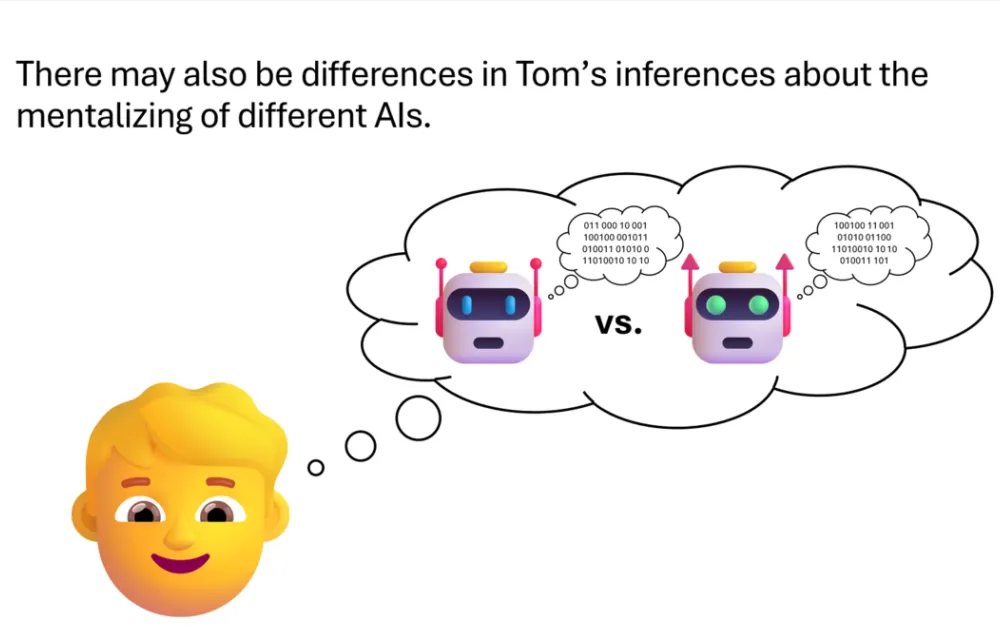
  • Cartoon of boy with speech ballon with 2 robots
    Magazine Issue
    08/2026 - SpeciaI issue on artificial intelligence

    How humans form beliefs about conversational AI

    • written by
    • Tobias R. Rebholz
    Why do we treat Alexa or ChatGPT like a helpful coworker – or even a friend? This article explores how talking to conversational AI shapes the beliefs we form about machines.
    Read more
  • Magazine Issue
    08/2026 - SpeciaI issue on artificial intelligence

    Why putting humans in the loop can make decision-making with AI worse

    • written by
    • Tobias Rieger,
    • Dietrich Manzey,
    • Eileen Roesler,
    • Linda Onnasch
    AI's decisions are often comprised with a human in the loop. Why? The person tries to improve the decisions but ends up making it worse despite good intentions. Our need to contribute interferes with these systems. In this article, we discuss this issue and whether explainable AI can foster true human-AI teamwork for better choices.
    Read more
  • a brain with areas marked as responsible for chatGPT processing
    Magazine Issue
    08/2026 - SpeciaI issue on artificial intelligence

    Editorial for the special issue "Artificial intelligence, real consequences: Exploring the psychological dimensions of AI"

    • written by
    • Magdalena Wischnewski,
    • Stella Wernicke
    Not long ago, artificial intelligence was mostly found in science fiction and computer science departments. Today, it drafts our emails, recommends our next purchase, tutors our children, and occasionally tells us it understands how we feel. This shift has happened so quickly that our psychological vocabulary is still catching up. What does it mean to trust a system that has no body, no history, and no stake in the outcome but communicates like us? Why do we sometimes treat a chatbot with the same politeness we'd extend to a colleague, and other times discard it the moment it makes a...
    Read more
  • Magazine Issue 09/2026

    Teamwork today and tomorrow: The skills that matter and how to build them

    written by: Lara Watermann, Natalie Hogh, Joshua Braun, Simone Kubowitsch
  • Magazine Issue 08/2026 - SpeciaI issue on artificial intelligence

    How humans form beliefs about conversational AI

    written by: Tobias R. Rebholz
  • Magazine Issue 08/2026 - SpeciaI issue on artificial intelligence

    Why putting humans in the loop can make decision-making with AI worse

    written by: Tobias Rieger, Dietrich Manzey, Eileen Roesler, Linda Onnasch
  • Magazine Issue 08/2026 - SpeciaI issue on artificial intelligence

    Editorial for the special issue "Artificial intelligence, real consequences: Exploring the psychological dimensions of AI"

    written by: Magdalena Wischnewski, Stella Wernicke
  • Man using ChatGPT
    Magazine Issue 08/2026 - SpeciaI issue on artificial intelligence

    Benefits and risks of asking AI for health advice

    written by: Jaroslava Kaňková
    Can ChatGPT become your new health advisor – or even your therapist? Generative AI tools are changing how we access health information, offering speed and convenience like never before. But... more
  • Magazine Issue 08/2026 - SpeciaI issue on artificial intelligence

    Understanding the mind-AI connection – how cognitive abilities shape AI use

    written by: Magnus Liebherr, Eva Gößwein
    The impact of Artificial Intelligence (AI) is closely tied to human cognitive abilities – mental processes that determine how we interpret, evaluate, and respond to AI-generated information. Understanding this interplay... more
  • Human oversight
    Magazine Issue 08/2026 - SpeciaI issue on artificial intelligence

    Human oversight of AI: An effective remedy for AI risks or a way to induce unwarranted trust in AI?

    written by: Markus Langer, Kevin Baum, Johann Laux
    When AI determines medical treatments or prison sentences, we may find comfort in the idea of a “human touch” in decisions, for instance, in the form of human oversight mandated... more
  • Digital price tags
    Magazine Issue 08/2026 - SpeciaI issue on artificial intelligence

    How artificial intelligence in supermarkets influences customer experiences

    written by: Sophia Wingen, Laura Schenk
    A supermarket with prices that can change at any time and fully automated checkouts is no longer fiction but a reality enabled by artificial intelligence. This raises important questions about... more
  • AI-generated content may reflect gender stereotypes
    Magazine Issue 08/2026 - SpeciaI issue on artificial intelligence

    Blaming the biased bot? Gender bias in AI-generated content

    written by: Alexandra Wölfle
    With the growing popularity and increasing capabilities of generative AI, more and more attention is also drawn to AI model biases, in particular, gender biases. But what exactly does bias... more
  • What AIs are made of
    Magazine Issue 08/2026 - SpeciaI issue on artificial intelligence

    Does ChatGPT think like humans?

    written by: Jannis Friedrich
    AIs like ChatGPT are trained only on texts and do not actually experience the world. It’s been argued that for this reason, AI’s cannot really ‘understand’. This is called the... more
  • Load More Issues

In-Mind Blog

  • 17.09.2026 | Announcements and News

    Join the In-Mind team: Help us make psychology accessible to everyone!

    written by: Rinat Meerson, Stella Wernicke, Jana Dreston
    We are looking for 3 new team members to join our Social Media team, 2 to join our Copy Editing team, and 1 new team member to join our Editorial Management team. Are you passionate about communicating psychological research to a broad audience? Then we'd love to hear from you! more
  • a boy sitting next to a laptop using his phone
    15.09.2026 | Gender, Violence & Aggression

    After "Adolescence": What we know (and don’t know) about gender attitudes and online misogyny

    written by: Kate Schramm, Silvana Weber
    Netflix’s "Adolescence" sparked the debate about whether social media can push boys towards misogyny. Research suggests a more complex picture: harmful content exists, but its influence and interpretation depend on much more than the type of content itself. more
  • Join the In-Mind's Social Media team: Help us make psychology accessible to everyone!
    10.07.2026 | Announcements and News

    Join the In-Mind's Social Media team: Help us make psychology accessible to everyone!

    written by: Rinat Meerson, Stella Wernicke, Jana Dreston
    We are looking for 2-3 new team members to join our LinkedIn team. Are you passionate about social media and communicating psychological research to a broad audience? Then we'd love to hear from you! more
  • In-Mind Logo
    26.06.2026 | Announcements and News

    Join the In-Mind team: Help us make psychology accessible to everyone!

    written by: Stella Wernicke, Jana Dreston
    We are recruiting for editors with expertise in social and environmental psychology, with a focus on climate change, and/or social or personality psychology, with a focus on relationships, love, and dating. more
  • Special issue of In-Mind: Adapting to life transitions and critical life events
    26.05.2026 | Announcements and News

    Special issue of In-Mind: Adapting to life transitions and critical life events

    written by: Charikleia Lampraki, Lukas Repnik, Jana Dreston, Stella Wernicke
    Life is marked by transitions. Some are expected, such as entering adulthood, becoming a parent, or retiring. Others are abrupt, disruptive, or unwanted, such as bereavement, serious illness, divorce, unemployment, forced migration, or caregiving burdens. These experiences often challenge people’s routines, identities, relationships, and expectations for the future. more
  • Call for articles on topical issues
    27.04.2026 | Announcements and News

    Call for articles on topical issues

    written by: Stella Wernicke, Jana Dreston
    We are currently looking to publish articles on a series of specific themes that we know people are generally very interested in learning more about. This is an invitation to all those interested in writing an article on any of the themes or specific topics listed below to please submit a short abstract on a future article idea. If your abstract is accepted, we will invite you to submit a full length-article to the magazine, which will then be reviewed. Your abstract should be around 150–250 words long, and we wish to have your abstract before November 3rd. more
  • Load more blog posts

Book Reviews

Confessions of a sociopath: A life spent hiding in plain sight

reviewed by: Irena Domachowska

Pause Button Therapy

reviewed by: Richard Skaff

Free will and consciousness: how might they work?

reviewed by: Wim Pouw

Handbook of cxperimental existential psychology

reviewed by: Wim Pouw

Skill sheets. An integrated approach to research, study and management

reviewed by: Irena Domachowska

Most Read

  • Magazine Issue 01/2012

    Honor in the Past: The Case of Mexico

    written by: Sonya Lipsett-Rivera
  • Magazine Issue 02/2013

    Intergroup Contact Theory: Past, Present, and Future

    written by: Jim A. C. Everett
  • Magazine Issue 04/2014

    Seeing mountains in molehills: Embodied visual perception of the environment

    written by: Shana Cole, Emily Balcetis
  • Magazine Issue 06/2014

    Consensual non-monogamy: Table for more than two, please

    written by: Amy Moors, William Chopik, Robin Edelstein, Terri Conley
  • Magazine Issue 07/2025

    Does organized ritual child abuse exist?

    written by: Roland Imhoff, Marcel Meuer, Andreas Mokros, Aileen Oeberst

The Inquisitive Mind Magazine is supported by:

  • DGPs
  • C-SEB

Menu

  • Magazine
  • Blog
  • Submit to In-Mind
  • About In-Mind
  • LinkedIn
  • Bluesky
  • Instagram
  • print
  • RSS Feed
  • Cookie settings

About Us

In-Mind is a voluntary science communication project. We enable scientifically working psychologists to present their research topics in a scientifically sound, understandable and entertaining way for an interested audience: Psychology by scientists for everyone....more

Footer menu

  • Imprint
  • Data Protection
Clear keys input element