  • INT
  • DE
  • FR
  • IT
  • NL

User account menu

  • Log in
Home
  • The Magazine
    • All Issues
    • Glossary
    • For Authors
    • Magazine Team
  • Blog
    • All Blog Posts
    • For Authors
  • Book Reviews
    • Book Reviews
  • The Foundation
    • What is In-Mind?
    • Credits
  • Donate

Psychology for You!

  • Magazine Issue
    04/2026

    Trapped by tranquility: Understanding dependence on benzodiazepines

    • written by
    • Joana Mihani
    Benzodiazepines offer relief from anxiety and insomnia , yet their calming effects can quietly lead to physical and psychological dependence . This piece explores how that reliance develops and why withdrawal requires support and patience. Recovery is possible when guidance, compassion, and gradual healing replace fear.
    Read more
    • Log in to post comments
  • Magazine Issue
    04/2026

    Now is the time – A discussion on current sexual misconduct prevention and provider readiness

    • written by
    • Julia L. Lancaster
    Despite many efforts to prevent sexual misconduct, this unwanted behavior persists in private and public spaces. Given the prevalence of sexual misconduct and the likelihood that mental health care providers will be called upon during their careers to support survivors, how prepared are they?
    Read more
    • Log in to post comments
  • Magazine Issue
    03/2026

    How do we interpret social situations marked by ambiguity?

    • written by
    • Lisa Vos,
    • Tom Smeets,
    • Jonas Everaert
    Imagine sending a message to a friend, and hours pass without a reply. Did you do something wrong? Are they upset? Or are they simply busy? Every day, we face moments like these: ambiguous social situations that leave us wondering what others think or feel. How we interpret these moments can shape our emotions, thoughts, social connections, and our own behavior, and can even impact our mental health. In this article, we review recent research from our team that sheds light on how people make sense of such ambiguous social cues, and why some of us tend to interpret them...
    Read more
    • Log in to post comments
  • Magazine Issue
    03/2026

    Children in front of a screen: what is the impact of technology on their development?

    • written by
    • Marica Notte,
    • Daniela Renzi
    The use of technology, particularly digital devices, is having a negative impact on children’s psychological and physical development. This is largely due to two factors : today’s generations are growing up in an increasingly digital environment , and parents often allow extensive or unregulated use. In response, the international medical community has put forward recommendations aimed at regulating device use to minimize both short and long-term consequences.
    Read more
    • Log in to post comments
  • Magazine Issue 04/2026

    Trapped by tranquility: Understanding dependence on benzodiazepines

    written by: Joana Mihani
  • Magazine Issue 04/2026

    Now is the time – A discussion on current sexual misconduct prevention and provider readiness

    written by: Julia L. Lancaster
  • Magazine Issue 03/2026

    How do we interpret social situations marked by ambiguity?

    written by: Lisa Vos, Tom Smeets, Jonas Everaert
  • Magazine Issue 03/2026

    Children in front of a screen: what is the impact of technology on their development?

    written by: Marica Notte, Daniela Renzi
  • Magazine Issue 11/2025

    Understanding anxiety, encouraging courage: What families should know about social anxiety

    written by: Nadine Vietmeier, Jasper Froehlich, Silas Rooß
    Social anxiety is among the most common psychological challenges in childhood and adolescence—and it also presents major challenges for parents. How can they support their children without overwhelming them? What... more
  • Magazine Issue 10/2025

    Starting early: How caregivers can support their children's emotion regulation

    written by: Katharina Demke, Mara Hüttner, Dr. Avelina Lovis Schmidt
    Emotion regulation in children can be challenging: screaming, loud crying, temper tantrums at the supermarket checkout - many people are familiar with such situations. What role do caregivers play in... more
  • Magazine Issue 09/2025

    Scrolling against hate: Developing critical media competence to counter online antisemitism

    written by: Agata Maria Kraj, Özen Odağ, Larisa Buhin, Jannis Niedick, Justine Kohl
    Social media connects – but also divides. This article explores how antisemitism appears online, why young adults are especially vulnerable, and what we can do about it. Based on existing... more
  • Magazine Issue 09/2025

    Social media use towards self-diagnosing and health anxiety

    written by: Lili R. Romann
    Self-diagnosing occurs when individuals who are not medical professionals intrinsically establish themselves as living with a particular medical diagnosis. Self-diagnosing is becoming all the more prominent due to increasing communication... more
  • Magazine Issue 09/2025

    FOMO: The fun everybody else has

    written by: Carolin Lehmann
    Have you ever felt that nagging sense of missing out on something exciting? Did you feel like you did not take on an opportunity that may never come again -a... more
  • Magazine Issue 09/2025

    Viral and harmful: Violence in media and its impact on empathy

    written by: Mira Fauth-Bühler
    From fight videos on TikTok to hate comments on Instagram, violence is omnipresent online, but what does it do to our empathy ? Studies reveal that repeated exposure to digital... more
  • Load More Issues

In-Mind Blog

  • 29.09.2025 | Announcements and News

    In-Mind has relaunched its blog post

    written by: Stella Wernicke, Jana Dreston, Charikleia Lampraki, Zoey Chapman
    We are excited to announce that the English version of In-Mind has relaunched its blog. The goal of In-Mind’s online blog is to communicate psychological research in a way that is scientifically accurate, accessible, and engaging for a broad readership. Articles span a broad spectrum of topics, with particular emphasis on current social, political, and scientific issues... more
  • 09.06.2025 |

    Chronic loneliness: Why loneliness can make us even lonelier

    written by: Michèle D. Birtel
    Loneliness can be more than a temporary feeling. For some, it becomes an invisible vicious cycle. Chronically lonely people experience social exclusion more intensely and find less joy in social interactions. They fall into cognitive traps that block the way out of isolation. This can have serious consequences, especially for adolescents. But how does this vicious cycle develop –and more importantly, how can it be broken? more
  • 09.06.2025 |

    Resumé under the X-ray: What a CV really reveals about personality

    written by: Dr. Tobias Marc Härtel
    CVs are more than lists of experiences and qualifications – they tell a story. But can they also provide cues about a person’s personality? To investigate this question, a study examined 141early-career professionals [1]. They completed personality tests on the Big Five and narcissism and submitted their CVs. The question: Which pieces of information in these CVs reveal something about their personality? The answer: There are cues, but they are subtle. more
  • 07.06.2025 |

    Why it takes more than the occasional ‘sorry’: How frequency and quality of apologies shape our relationships

    written by: Martina Grunenberg
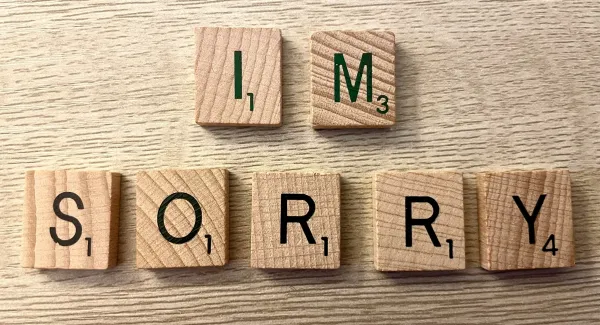
    Missteps and hurt feelings are often unavoidable in romantic relationships. While some individuals are quick to fully admit their mistakes, others are more reserved. But how does the way we apologize affect our relationships? more
  • 05.06.2025 |

    Can expectations about being hungry affect your concentration?

    written by: Christoph Bamberg
    Can skipping breakfast blur your focus? A recent study found that hunger alone did not alter concentration—but participants expecting hunger to sharpen their minds performed better than those anticipating a slump. The results suggest beliefs about hunger can steer cognitive performance and should inform health messaging. more
  • 24.03.2025 | Social Influence & Negotiations

    The Dark Side of Social Media - Unpacking Its Psychological Impact 

    written by: Rinat Meerson, Jana Dreston
    Social media has revolutionized the way we connect, communicate, and consume information. However, its darker aspects pose significant challenges to individuals and societies. This Special Issue (SI) seeks to explore the negative psychological consequences of social media , such as their impact on interpersonal communication, the formation of political beliefs, mental... more
  • Load more blog posts

Book Reviews

Buried Secrets: Rememberance of Things Past, a Review by Christopher Perez

reviewed by: Christopher Perez

The Coddling of the American Mind, reviewed by Dylan Selterman

reviewed by: Dylan Selterman

My Year of Rest and Relaxation, reviewed by Andrew Archer

reviewed by: Andrew Archer

The Hope Circuit, Reviewed by Joe Smith

reviewed by: Joe Smith

Social Psychology: Revisiting the Classics (2nd Edition)

reviewed by: Richard Skaff

Most Read

  • Magazine Issue 06/2024 - Special issue on sport psychology

    Psychological aspects of elite performance in new Olympic disciplines: The case of climbing

    written by: Xavier Sanchez, Julian Henz, Cécile Martha, Jerry Prosper Medernach
  • Magazine Issue 12/2019

    Just a compliment? Why positive gender stereotypes can be more harmful than they seem

    written by: Lea Hartwich, Julia C. Becker
  • Magazine Issue 01/2016

    From the Editors: On the Current State of Science Journalism

    written by: Dylan Selterman
  • Magazine Issue 10/2013

    Sense-making through science

    written by: Bastiaan Rutjens, Frenk van Harreveld, Joop van der Pligt
  • Magazine Issue 09/2008

    Penetrating the Circle of Death: Why People are Dying (and Killing) Not to Die

    written by: Daniel Sullivan, Jeff Greenberg

The Inquisitive Mind Magazine is supported by:

  • DGPs
  • C-SEB

Menu

  • The Magazine
  • Blog
  • Book Reviews
  • The Foundation
  • Donate
  • facebook
  • twitter
  • instagram
  • print
  • RSS Feed

About Us

In-Mind is a voluntary science communication project. We enable scientifically working psychologists to present their research topics in a scientifically sound, understandable and entertaining way for an interested audience: Psychology by scientists for everyone....more

Footer menu

  • Imprint
  • Data Protection
Clear keys input element