  • INT
  • DE
  • FR
  • IT
  • NL

User account menu

  • Log in
Home
  • Magazine
    • All issues
    • Glossary
  • Blog
    • All blog posts
  • Book Reviews
    • Book Reviews
  • Submit to In-Mind
    • Articles
    • Blog posts
  • About In-Mind
    • Team
    • What is In-Mind?
    • Credits

Psychology for You!

  • Magazine Issue
    08/2026 - SpeciaI issue on artificial intelligence

    Understanding the mind-AI connection – how cognitive abilities shape AI use

    • written by
    • Magnus Liebherr,
    • Eva Gößwein
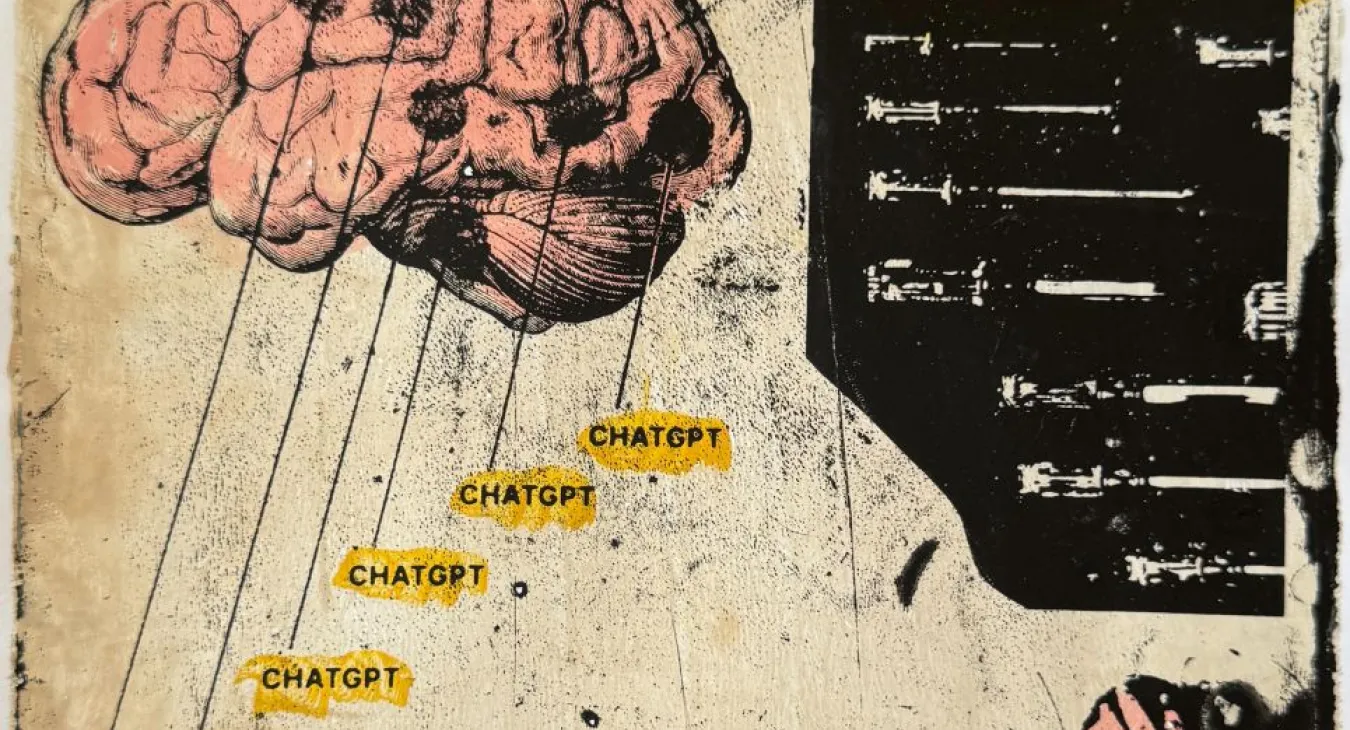
    The impact of Artificial Intelligence (AI) is closely tied to human cognitive abilities – mental processes that determine how we interpret, evaluate, and respond to AI-generated information. Understanding this interplay is essential for designing AI systems that align with human cognition, enhancing user engagement while reducing risks such as automation bias (the tendency to overtrust AI outputs) and cognitive overload (the state in which information exceeds mental capacity). In this article, we introduce the concepts of working memory, cognitive flexibility, and attention and explore how they shape the way we interact with AI. We illustrate how these cognitive functions influence...
    Read more
    • Log in to post comments
  • Human oversight
    Magazine Issue
    08/2026 - SpeciaI issue on artificial intelligence

    Human oversight of AI: An effective remedy for AI risks or a way to induce unwarranted trust in AI?

    • written by
    • Markus Langer,
    • Kevin Baum,
    • Johann Laux
    When AI determines medical treatments or prison sentences, we may find comfort in the idea of a “human touch” in decisions, for instance, in the form of human oversight mandated in AI regulation. But does human oversight add something meaningful or does it merely serve to convince us to trust AI?
    Read more
    • Log in to post comments
  • Digital price tags
    Magazine Issue
    08/2026 - SpeciaI issue on artificial intelligence

    How artificial intelligence in supermarkets influences customer experiences

    • written by
    • Sophia Wingen,
    • Laura Schenk
    A supermarket with prices that can change at any time and fully automated checkouts is no longer fiction but a reality enabled by artificial intelligence. This raises important questions about the consequences for consumers. Besides greater convenience, efficiency, and a personalized shopping experience, AI-driven supermarkets may reduce price and payment transparency and create a less comfortable atmosphere for consumers. This article explores the use of AI in supermarkets from a psychological perspective.
    Read more
    • Log in to post comments
  • AI-generated content may reflect gender stereotypes
    Magazine Issue
    08/2026 - SpeciaI issue on artificial intelligence

    Blaming the biased bot? Gender bias in AI-generated content

    • written by
    • Alexandra Wölfle
    With the growing popularity and increasing capabilities of generative AI, more and more attention is also drawn to AI model biases, in particular, gender biases. But what exactly does bias mean in this context, how should it be addressed, and what role do humans play in all this?
    Read more
    • Log in to post comments
  • Magazine Issue 08/2026 - SpeciaI issue on artificial intelligence

    Understanding the mind-AI connection – how cognitive abilities shape AI use

    written by: Magnus Liebherr, Eva Gößwein
  • Magazine Issue 08/2026 - SpeciaI issue on artificial intelligence

    Human oversight of AI: An effective remedy for AI risks or a way to induce unwarranted trust in AI?

    written by: Markus Langer, Kevin Baum, Johann Laux
  • Magazine Issue 08/2026 - SpeciaI issue on artificial intelligence

    How artificial intelligence in supermarkets influences customer experiences

    written by: Sophia Wingen, Laura Schenk
  • Magazine Issue 08/2026 - SpeciaI issue on artificial intelligence

    Blaming the biased bot? Gender bias in AI-generated content

    written by: Alexandra Wölfle
  • Magazine Issue 12/2025

    Diagnosed by AI – What our social media behavior reveals about our mental health

    written by: Stella Wernicke, Stefanie Peykarjou, Letitia Parcalabescu
    When mental illnesses are detected early and treated promptly, people affected tend to suffer less and have a better chance of recovery. Until now, identifying signs of mental illness in... more
  • Magazine Issue 12/2025

    The unbearable heaviness of having an appearance: How society teaches us to judge our bodies

    written by: Cristian Di Gesto, Amanda Nerini, Camilla Matera
    Why do so many of us, especially women, struggle to feel comfortable in our own bodies? This article explores how sociocultural pressures and social media shape body dissatisfaction and drive... more
  • Magazine Issue 11/2025

    Self-care in the digital age: How we can handle social media in a healthy way

    written by: Marvin Holtwiesche, Mira Fauth-Bühler
    Do you find it difficult to reduce the time you spend on social media in the long term? Are you interested in learning why you often use social media excessively... more
  • Magazine Issue 11/2025

    Language models: A new perspective on language and cognition

    written by: Sam Boeve
    How do computers help us understand language acquisition? What do ChatGPT and text readability scores have in common? Language models are no longer just a useful technology; they are a... more
  • Magazine Issue 11/2025

    Understanding anxiety, encouraging courage: What families should know about social anxiety

    written by: Nadine Vietmeier, Jasper Froehlich, Silas Rooß
    Social anxiety is among the most common psychological challenges in childhood and adolescence—and it also presents major challenges for parents. How can they support their children without overwhelming them? What... more
  • Magazine Issue 10/2025

    Starting early: How caregivers can support their children's emotion regulation

    written by: Katharina Demke, Mara Hüttner, Dr. Avelina Lovis Schmidt
    Emotion regulation in children can be challenging: screaming, loud crying, temper tantrums at the supermarket checkout - many people are familiar with such situations. What role do caregivers play in... more
  • Load More Issues

In-Mind Blog

  • 23.03.2025 |

    Join the In-Mind Team: Help us make psychology accessible to everyone!

    written by: Jana Dreston, Stella Wernicke
    What is In-Mind? In-Mind is a volunteer-driven project dedicated to sharing psychological research. We give researchers a platform to present their work in an engaging, accessible, and scientifically rigorous way—psychology by scientists, for everyone. Our journal publishes freely available, ad-free articles across all areas of psychology. We are the English version of In... more
  • 08.01.2025 | Announcements and News

    Artificial intelligence, real consequences: Call for abstracts for a special issue on the psychological dimensions of AI

    written by: Magdalena Wischnewski, Stella Wernicke
    The special issue "Artificial Intelligence, Real Consequences — exploring the psychological dimensions of AI" aims to make central research on the psychological components of Artificial Intelligence (AI) accessible to the general public. more
  • 23.12.2024 | Happiness & Well-being

    Caught in a vicious cycle? The complex interplay of work stressors and burnout

    written by: Jette Völker
    A conflict with a coworker, time pressure, or technical issues – work-related stressors can take many forms. When work stressors accumulate, they can lead to burnout. However, recent research suggests that the interplay between work stressors and burnout is more complex than previously assumed. Could employees potentially be caught in a vicious cycle? more
  • 19.12.2024 | Self-Control & Decision-Making

    Everything was better in the past? Children’s self-regulation across the decades

    written by: Stefanie Peykarjou
    Do you also believe, like most American adults, that children today have less self-control than prior generations? A large study suggests that this assumption is wrong: Children from the 2000s can wait longer for candy than children from the 1960s and 1980s. more
  • 06.11.2024 | Announcements and News

    Call for editors for a Special Issue on the “Psychology of Artificial Intelligence”

    written by: Jana Dreston, Sofia Calderon, Stella Wernicke, Rinat Meerson
    Are you an AI researcher and wish to handle a special issue on the topic? 
In-Mind is looking for one or several people who are interested in being guest editors of a special issue on the “Psychology of Artificial Intelligence” directed at a general audience. In a recent call for papers, we received a good number of abstracts for papers on various AI related topics. This... more
  • 25.10.2024 | Romance & Friendship

    Phubbing: When love slips through the screen

    written by: Sarah Spies, Denise Vesper
    We all know this situation: we want to tell the other person something, but they only have eyes for their smartphone. This behavior has a name: Phubbing. But how does phubbing change our relationships and do we have to switch back to reading the newspaper to be a good partner? more
  • Load more blog posts

Book Reviews

Buried Secrets: Rememberance of Things Past, a Review by Christopher Perez

reviewed by: Christopher Perez

The Coddling of the American Mind, reviewed by Dylan Selterman

reviewed by: Dylan Selterman

My Year of Rest and Relaxation, reviewed by Andrew Archer

reviewed by: Andrew Archer

The Hope Circuit, Reviewed by Joe Smith

reviewed by: Joe Smith

Social Psychology: Revisiting the Classics (2nd Edition)

reviewed by: Richard Skaff

Most Read

  • Magazine Issue 02/2025

    Do we really like what we like? How social influence processes shape our experiences when we are online

    written by: Dr. A. Marthe Möller
  • Magazine Issue 04/2024

    Does nudging have a place in politics? How decision-making contexts inevitably influence our behavior

    written by: Mario Herberz
  • Magazine Issue 06/2024 - Special issue on sport psychology

    In the shades of the rings – experiences of interpersonal violence in elite sports

    written by: Julia T. Schwender, Teresa Greither, Helena Schmitz, Laurie Schwab
  • Magazine Issue 08/2024

    Bug or feature? Boredom feels aversive, and this is why it matters

    written by: Wanja Wolff, Katja Rewitz, Dr. Maik Bieleke
  • Magazine Issue 10/2009

    The Ghost in the System: Where Free Will Lurks in Human Minds

    written by: Jay Michaels, Robin Vallacher

The Inquisitive Mind Magazine is supported by:

  • DGPs
  • C-SEB

Menu

  • Magazine
  • Blog
  • Book Reviews
  • Submit to In-Mind
  • About In-Mind
  • facebook
  • twitter
  • instagram
  • print
  • RSS Feed

About Us

In-Mind is a voluntary science communication project. We enable scientifically working psychologists to present their research topics in a scientifically sound, understandable and entertaining way for an interested audience: Psychology by scientists for everyone....more

Footer menu

  • Imprint
  • Data Protection
Clear keys input element