Not long ago, artificial intelligence was mostly found in science fiction and computer science departments. Today, it drafts our emails, recommends our next purchase, tutors our children, and occasionally tells us it understands how we feel. This shift has happened so quickly that our psychological vocabulary is still catching up. What does it mean to trust a system that has no body, no history, and no stake in the outcome but communicates like us? Why do we sometimes treat a chatbot with the same politeness we'd extend to a colleague, and other times discard it the moment it makes a mistake we would readily forgive in a person? What happens to human relationships, learning, and decision-making when a persuasive, tireless, always-available interlocutor becomes part of daily life?
These are not questions that computer science alone can answer. They are, at their core, psychological questions about attribution, trust, anthropomorphism, social cognition, motivation, and identity. This is precisely the territory this special issue sets out to explore, and the contributions gathered here move through it in a deliberate arc: from what these systems actually are, to how our minds respond to them, to what happens when we put them to work in the real world.
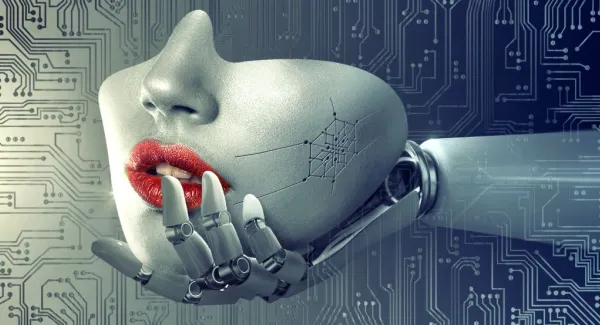
We begin with the machine itself. Before we can ask what AI does to us psychologically, we need a clear-eyed picture of what it is, and, just as importantly, what it isn't. Jannis Friedrich opens the issue by explaining how large language models actually work, and why fluent, confident text is not evidence of understanding or experience: ChatGPT does not know the world the way we do, however convincingly it may sound like it does.
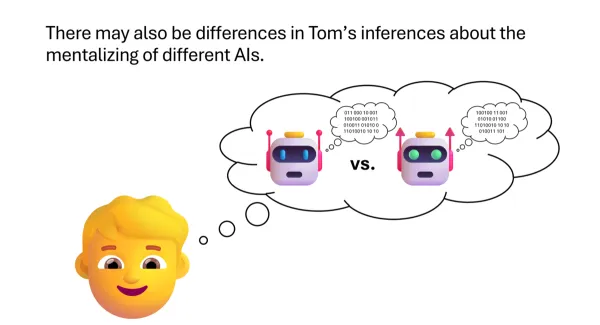
That gap between appearance and reality turns out to be psychologically consequential. Magnus Liebherr and Eva Gößwein look at how basic cognitive capacities such as our working memory, shape our interactions with AI systems, arguing that effective collaboration requires these tools to adapt to human cognitive limits, not the other way around. Tobias Rebholz picks up a related thread: because these systems "speak" our language so fluently, we can hardly help but anthropomorphize them, attributing minds, intentions, and feelings to something that, as Friedrich reminds us, has none.
This mismatch between what AI is and how we treat it plays out directly in collaboration. Tobias Rieger and colleagues examine the phenomenon of Verschlimmbessern, well-intentioned "improvements" that make AI output worse, as people overcorrect, underestimate the system's competence, or simply trust their own judgment over the machine's. And bias, Alexandra Wölfel shows, is not a glitch to be patched away but something inherent to data drawn from a biased world, gender bias in AI output is a mirror, not a malfunction.
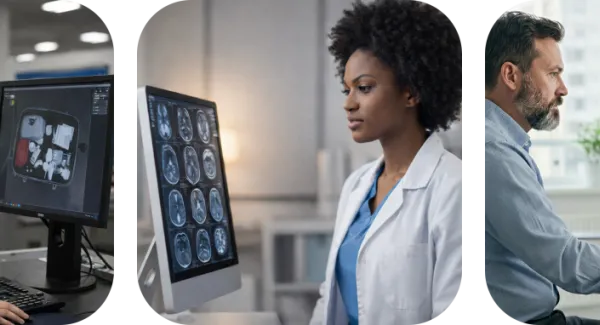
From there, the issue turns to where these dynamics play out in practice. Julia Cecil and colleagues examine what changes when doctors work alongside AI in healthcare, while Jaroslava Kaňková discusses the consequences of asking chatbots for health advice in everyday life. Sophia Wingen and Laura Schenk look at AI's growing presence in supermarkets, where the promise of convenience often comes at the cost of transparency. Both cases raise the same underlying question in different settings: who is really in control when human and algorithmic judgment are combined?
That question brings us to our final contribution. Regulators increasingly call for “human oversight” of AI systems, a reassuring phrase that Markus Langer and colleagues subject to scrutiny: what does meaningful human oversight actually require, and is it even achievable in practice? Answering that, Markus Langer and colleagues argue, is a job for psychological science as much as for policy, and it is a fitting note on which to close an issue devoted to understanding minds, human and artificial alike.
Together, these pieces reflect a field very much in motion. Psychology does not yet have settled answers about artificial intelligence, but it has the tools, and the responsibility, to keep asking the right questions.
We hope this special issue offers not a final verdict, but a starting point: a way of thinking about AI that keeps human psychology, in all its complexity, at the center of the conversation.
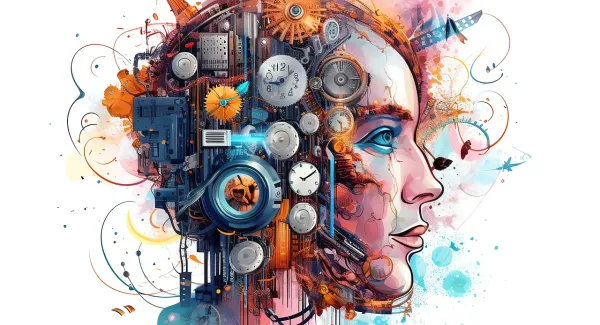
Image source
Bart Fish & Power Tools of AI / https://betterimagesofai.org / https://creativecommons.org/licenses/by/4.0/