

Frank Fincham

Frank Fincham
Frank Fincham obtained a doctoral degree in social psychology while a Rhodes Scholar at Oxford University. He then completed postdoctoral training in clinical psychology at Stony Brook University before assuming a position as assistant professor at University of Illinois where he ultimately became professor and Director of Clinical Training. He was SUNY Distinguished Professor at University at Buffalo before assuming his current position as Eminent Scholar at Florida State University.
Elisa Bisagno
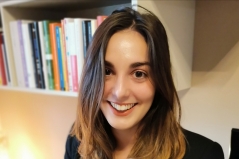
Elisa Bisagno
Dr. Elisa Bisagno is a trained developmental and sport psychologist currently working as assistant professor at the University of Modena and Reggio Emilia (Italy). In her research, she is interested in cognitive development, especially concerning working memory and executive functioning, motor learning and the relationship between sports participation and cognitive, affective and moral development in youth athletes. From 2019 on, she has been involved in numerous research projects and funded European projects aimed at fostering social inclusion through sport.
Angela Ka-yee Leung

Angela Ka-yee Leung
Angela Ka-yee Leung received hers from the University of Illinois from Urbana-Champaign (UIUC). She is an Assistant Professor of Social Sciences at the Singapore Management University and is interested in the dynamic effects of intercultural interactions and their implications for cultural competence. Mail: angelakyl@gmail.com.
Elena Benini
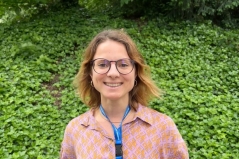
Elena Benini
Elena Benini is Head of Editorial Management at the English version of In-Mind. She is a postdoctoral researcher in Cognitive and Experimental Psychology at RWTH Aachen University (Germany), where she obtained her PhD in May 2024. Her research interests span from cognitive control in multitasking settings, to associative processes such as feature binding and episodic retrieval and to bilingualism and language control processes. Find her here. elena.benini[at]psych[dot]rwth-aachen.de
Suzanne Oosterwijk
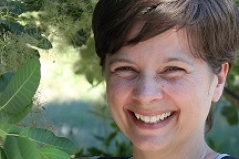
Suzanne Oosterwijk
Suzanne Oosterwijk received her Ph.D. from the University of Amsterdam. After working as a postdoc at Northeastern University in Boston for three years, she is now back at the University of Amsterdam. One of her main research interests is how the brain constructs emotion. More specifically, she studies how neural systems implement the interaction between concepts and bodily states to produce emotion experience and emotion understanding. Recently, she started to investigate morbid curiosity: the phenomenon that people regularly approach and explore highly intense negative stimuli. E-mail: s.oosterwijk@in-mind.org
Roland Imhoff
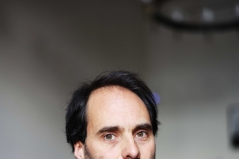
Roland Imhoff
Prof. Roland Imhoff is chair for social and legal psychology at the University of Mainz, Germany. His research interests cover conspiracy mentality, categorization and stereotyping, representations of history, cognitive biases, and social comparisons. @rolandimhoff.bsky.social
Donald Lucas

Donald Lucas
Dr. Lucas is the chair of the psychology department at Northwest Vista College (NVC)-a community college with more than 17,000 students in San Antonio, Texas. Before joining the department in 1999, he was a postdoctoral fellow at Smith-Kettlewell Research Institute in San Francisco, and took his Ph.D. in Psychology with a specialty in Neuroscience and Behavior from Northern Illinois University.
He publishes and presents on a variety of topics about human behavior, including, psychophysics, family & domestic violence, teaching & learning, and life satisfaction. He is the author of the book, Being: Your Happiness, Pleasure, and Contentment (Hayden-McNeil). He has been teaching for 25 years; courses in Human Sexuality, Social Psychology, Abnormal Psychology, Developmental Psychology, and Positive Psychology.
He was featured in the San Antonio Express-News newspaper and magazine SCENE in SA Monthly as one of San Antonio's top professors. His teaching has earned him a number of awards, including the NVC Excellence in Teaching Award, The San Antonio Chamber of Commerce Doctoral Achievement Award, and the National Institute for Staff and Organizational Development Excellence Award. He is a Minnie Stevens Piper award winner-the oldest and most prestigious teaching award for higher education in the state of Texas.
He and his wife, Lisa, have two children, Sember and Rayen, and two purebred mutts, Macy and Barney.
Verena Steiner-Hofbauer
Verena Steiner-Hofbauer
Verena Hofbauer is a post-doctoral researcher at and head of the Research Centre Transitional Psychiatry of the Karl Landsteiner University of Health Science, which is concerned with topics regarding the mental health and mental illness of transition-age youth. She is an academic psychologist with a special interest in media psychology in clinical and non-clinical settings.
Jenny C. Su

Jenny C. Su
Jenny Su is an assistant professor in the Department of Psychology at St. Lawrence University in Canton, New York. She received her PhD in 2008 from the University of Minnesota and served as a faculty member in the Department of Psychology at National Taiwan University from 2011 to 2014. Her research focuses on culture, self-regulation, and well-being.