
Irene van Driel

Irene van Driel
Irene I. van Driel received her Bachelor Degree in Neuropsychology from the University of Amsterdam. She currently pursues a Master in Neuroscience at the Free University, also in Amsterdam. While she is basically interested in “any kind of brain related topics”, she primarily focuses on issues related to diseases, dysfunctions, and brain damage.
Kevin Winter
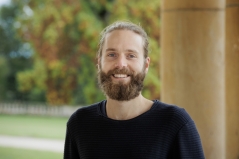
Kevin Winter
Kevin Winter is a postdoctoral researcher at the Department of Sustainable Behavior and Management at the University of Hohenheim. In his research, he examines ways to mitigate polarized attitudes and the negative consequences of conspiracy beliefs. He is particularly interested in finding ways to foster sustainable behavior.
Twitter: @KevinWinter91
Bluesky: https://bsky.app/profile/kwinter.bsky.social
Cláudia Simão
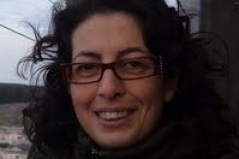
Cláudia Simão
Cláudia Simão received her Bachelor in Psychology from the University of Algarve, Portugal. She currently works on her PhD project, for which she received a grant from the Portuguese science foundation, at CIS, Lisbon University Institute, Portugal. Cláudia’s main research interests concern social relationships and emotions.
Charlotte Behlau

Charlotte Behlau
Dr. Charlotte Behlau is a post-doctoral researcher at the Department of Sport and Exercise Psychology at the University of Muenster. Her research focuses on shared decision making in team sports and the influence on performance, as well as the study of sport teams in crisis. Furthermore, she works as a sport psychologist consultant with elite athletes and teams, to prepare and achieve their peak level performance. Among others she works in cooperation with the Olympic training center Westphalia.
Abdolhossein Abdollahi
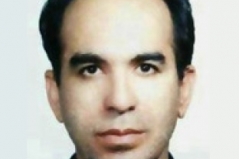
Abdolhossein Abdollahi
Abdolhossein Abdollahi is an Associate Professor of Psychology at the Islamic Azad University-Zarand Branch, Iran. His main area of interest is Terror Management Theory (TMT), a social psychological theory positing that much human social behavior is driven by the need to avoid thoughts of one's death and mortality.He is also interested in such areas as false memory, judgment and decision making, evolutionary psychology, social cognition, and social embodiment.
Jerry Prosper Medernach
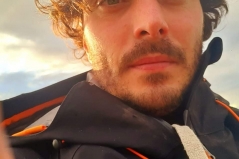
Jerry Prosper Medernach
Born in 1985 in Luxembourg, Dr. Jerry Medernach began his sports studies in 2006 at the German Sport University Cologne. He graduated (Ph.D.) in 2015 and has over two decades of experience as a climbing coach, more than 10 years as a sports scientist, and eight years as a physical education teacher. In his primary profession, he currently works as an expert in cognition and sports psychology at the National Institute of Physical Activity and Sports in Luxembourg, where he educates coaches, athletes, and teachers. In his second life, he works as a post-doc researcher at the Institute of Exercise Training and Sports Informatics of the German Sports University. Given that climbing has always been a pivotal component of his life, he is currently investigating perceptual and cognitive skills of climbers. He started climbing in 2002, became a member of the German National Climbing Team NRW, and has climbed routes up to 8b+.
Carina Giesen
Carina Giesen
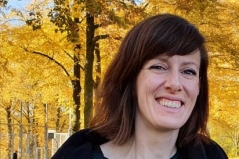
Carina G. Giesen is Professor of Cognitive Psychology at the HMU Health and Medical University Erfurt in Erfurt, Germany. She studied psychology in Jena, Germany, and Glasgow, UK and received her PhD in Jena. Her research focuses on automatic action regulation. Stimulus-response binding and retrieval processes are therefore a core feature of her research, which she relates to learning phenomena, such as observational learning, contingency learning, and evaluative learning.
Martin Schwichow
Martin Schwichow
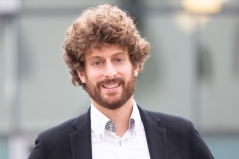
Dr. Martin Schwichow is Professor of Physics and its Didactics at the Pädagogische Hochschule Freiburg - University of Education. He studied physics and geography at the Philipps University of Marburg and holds a doctorate in physics didactics. In his research, he focuses on the role of language in learning physics, the promotion of experimental skills and climate education in physics lessons. He is particularly interested in the extent to which an understanding of scientific ways of thinking and working facilitates a willingness to act in the context of climate change.
Kathryn Bartlett Anderson

Kathryn Bartlett Anderson
Kathryn B. Anderson is a Social Psychologist and Professor at Our Lady of the Lake University in San Antonio, Texas. She has conducted research on the causes of aggression and violence for over 20 years. She is particularly interested in the "intersectionality" of current feminist and multicultural thought with research on aggression.
Shana Cole

Shana Cole
Shana Cole is is a social psychology PhD candidate at New York University. Her research broadly explores the ways in which visual perception informs, guides, and serves successful self-regulation. She studies this within a wide variety of domains, including health, culture, relationships, politics, and emotion regulation. Her dissertation work focuses on the role of visual perception in self-control conflicts, detailing visual biases that emerge as people struggle to remain committed to long-term goals in the face of temptation.