
Jean-Philippe Melchior
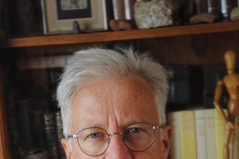
Jean-Philippe Melchior
Jean-Philippe Melchior is a Professor at Le Mans University and affiliated with the ESO laboratory. With a Ph.D. in political science and sociology, he is an associate professor of sociology at the University of Maine. He is a member of the ESO-Le Mans laboratory (UMR 6590-CNRS) and associated with GTM (Paris X). His research focuses on three areas within the sociology of work. The first area concerns work organization and working conditions. In the face of transformations in these areas, he examines employee adaptations. The second area concerns working time and its articulation with other social times.
Arno van Voorst

Arno van Voorst
Arno van Voorst, chief bibliography and the primary author of this article, completed both his Bachelor and Master Degrees at the Free University, Amsterdam. His research focuses on emotions, emotion regulation, leadership and power, social relationships with pets, and general motivation science. Indeed, going from his research interests, it should not come as a surprise that he has picked up a keen interest in evolutionary perspectives.
Michaela Forrai

Michaela Forrai
Michaela Forrai is a PhD candidate in the Department of Communication at the University of Vienna and a member of the Vienna Media Change and Innovation Lab (VMCI). In her dissertation, supervised by Univ.-Prof. Dr. Desirée Schmuck, she focuses on young people’s interactions with communicative artificial intelligence agents (e.g., ChatGPT and Replika) and how this relates to their well-being. Further research interests generally concern the areas of media change and media innovation, media psychology, and health communication, such as (social) media use and well-being/mental health/suicide prevention.
Scott Sleek

Scott Sleek
Scott Sleek is the news director for the Association for Psychological Science, where he is in charge of promoting the public understanding of psychological research. He runs a variety of public education campaigns on scientific topics such as, the teen brain, learning styles, and post-traumatic stress disorder.
Marcel A.G. van Aken
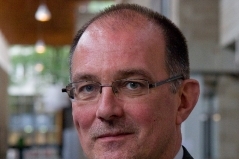
Marcel A.G. van Aken
Prof. Dr. Marcel A.G. van Aken is Professor of Developmental Psychology at Utrecht University. Email: m.a.g.vanaken@uu.nl
Robin Edelstein
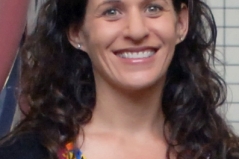
Robin Edelstein
Robin Edelstein is an Associate Professor of Psychology at the University of Michigan. Her work is devoted to understanding individual differences in emotional experience, regulation, and reactivity. She is particularly interested in how emotional processes unfold in an interpersonal context and the implications of these processes for close relationships.
Dr. Avelina Lovis Schmidt

Dr. Avelina Lovis Schmidt
Dr. Avelina Lovis-Schmidt works as a research associate at the Chair of Educational and Developmental Psychology at TU Chemnitz. Her research focuses on emotional competencies in their diversity and how to promote them across different groups of people. She offers various projects to support early-career researchers at the Institute of Psychology, from which this article originated.
Wilhelm Hofmann
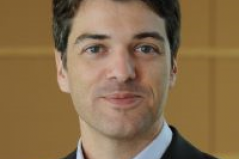
Wilhelm Hofmann
Wilhelm Hofmann is Professor of Economic and Social Cognition at the University of Cologne, Germany. His research interests include social cognition, self-control, and health behavior decision-making. He can be contacted at wilhelm.hofmann@uni-koeln.de.
Sanne Houben

Sanne Houben
Sanne Houben is an assistant professor at Maastricht University. She is specialized in the memory effects of EMDR and Imagery Rescripting, and therapeutic side effects.
Peter Hegarty
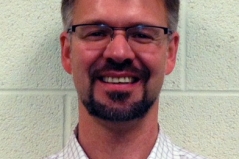
Peter Hegarty
Peter Hegarty is Professor of Psychology at the University of Surrey. He is the author of Gentlemen’s Disagreement: Alfred Kinsey, Lewis Terman and the Sexual Politics of Smart Men (Chicago, 2013) and From homophobia to LGBT: A Recent History of Lesbian and Gay Psychology (Routledge, 2017).