
Henk Aarts
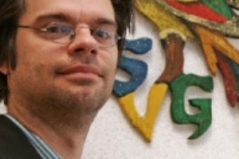
Henk Aarts
Henk Aarts is trained as an experimental social psychologist at Nijmegen University where he worked on habit and decision making, and received his PhD in 1996. Since 2004 he is a Full Professor in Social Psychology at Utrecht University. His work deals with several topics related to the role of goals in automatic processes of social cognition and behavior and is published in fundamental and applied journals.
Markus Raab
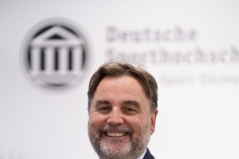
Markus Raab
Prof. Dr. Dr. Markus Raab is a sport scientist, psychologist, professor and head of the Section Performance Psychology of the Institute of Psychology at the German Sport University Cologne.
Thomas Schubert
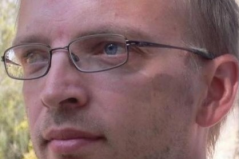
Thomas Schubert
Thomas W. Schubert received his Diploma and PhD in Psychology from the University of Jena in Germany. After staying as a postdoc at the International Graduate Colleage of Conflict and Cooperation in Jena and at the University of Würzburg, Germany, he obtained a Feodor-Lynen-Fellowship from the Humboldt Foundation and came to the Netherlands to work at the VU University Amsterdam and Utrecht University. Thomas' primary research interests focus on the embodiment of social relations, and experiences in virtual environments. Mail:schubert@igroup.org
Matteo Masi
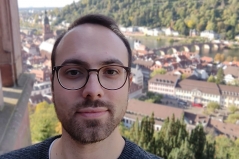
Matteo Masi
Matteo Masi received his Ph.D. from the University of Milano-Bicocca and the University of Surrey, and he is now a postdoctoral fellow at the University of Milano-Bicocca. His interests are in social psychology, in particular social cognition and impression formation, that is how we represent others in our minds and how we judge them by combining available information.
Laysee Ong

Laysee Ong
Lay See Ong is a postgraduate student at the Singapore Management University. Supervised by Angela Leung, her research interests varies (too broadly for her own good!) from creativity to mobility and self-regulation. One of her recent research projects investigated the beliefs about hierarchy among high and low relational mobility individuals. To know more her research exploits, you can visit her website. As a side project, she is also exploring and advocating the use of the virtual world, Second Life, for psychological research. While she’s not working, she enjoys good music, reading, and her pole dancing classes. E-mail: l.ong@in-mind.org
Dr. Gizem Samdan
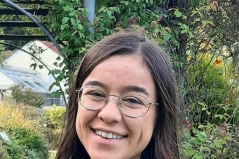
Dr. Gizem Samdan
Dr. Gizem Samdan is a Research Fellow at Heidelberg University, Germany, in the Department of Developmental Psychology. She is currently working on a longitudinal study, where she is contributing to the understanding of early childhood development and how it shapes later life, with a focus on the role of socio-ecological factors.
Maike Ramrath

Maike Ramrath
Maike Ramrath is part of In-Mind magazine's Social Media Team. She holds a Master of Science in Applied Cognitive and Media Science from the University of Duisburg-Essen and is currently pursuing a PhD in Psychology at the University of Wuppertal. Her research interests include human-technology-interaction and organizational psychology, with her doctoral research primarily focusing on critical system information in high-risk-work-environments. Additionally, she is an active member of the User Research working group of the German UPA. ramrath[at]uni-wuppertal.de
Cathleen Clerkin

Cathleen Clerkin
Cathleen Clerkin is a research faculty member at the Center for Creative Leadership in Greensboro, North Carolina. Cathleen is an interdisiplinary psychologist whose work draws upon organizational psychology, social and personality psychology, political science, and social cognitive neuroscience. Her recent research has examined the integration of multiple social identities, the link between identity management and creativity, innovation in the workplace, women in STEM, and penalties faced by women and minority leaders. Cathleen earned her B.A. from the University of California, Berkeley, and her Masters and Ph.D. degrees in psychology from the University of Michigan, Ann Arbor.
Sara Holland Levin
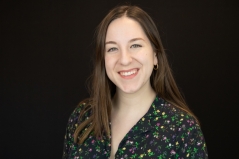
Sara Holland Levin
Sara Holland Levin (Ph.D., University of Connecticut) is an assistant professor in the Department of Communication and Media at West Chester University of Pennsylvania. Her research area focuses on political communication, misinformation, and social media. Specifically, her work uses computational and survey methods to explore topics of politicization and polarization, especially concerning traditional and social media as sources of information.