
  • EN
  • DE
  • FR
  • IT
  • NL

User account menu

  • Log in
Home
  • Magazine
    • All issues
    • Glossary
  • Blog
    • All blog posts
  • Submit to In-Mind
    • Articles
    • Blog posts
  • About In-Mind
    • Team
    • Join In-Mind
    • What is In-Mind?
    • Credits
  • Search

Psychology for You!

  • Magazine Issue
    09/2026

    Teamwork today and tomorrow: The skills that matter and how to build them

    • written by
    • Lara Watermann,
    • Natalie Hogh,
    • Joshua Braun,
    • Simone Kubowitsch
    Teams today collaborate across screens, time zones, and digital tools, but better technology does not always mean better teamwork. Hybrid meetings, information overload, and workflows supported by artificial intelligence (AI) create new challenges. Drawing on expert insights and psychological research, this article explores which team skills matter most and how teams can build them.
    Read more
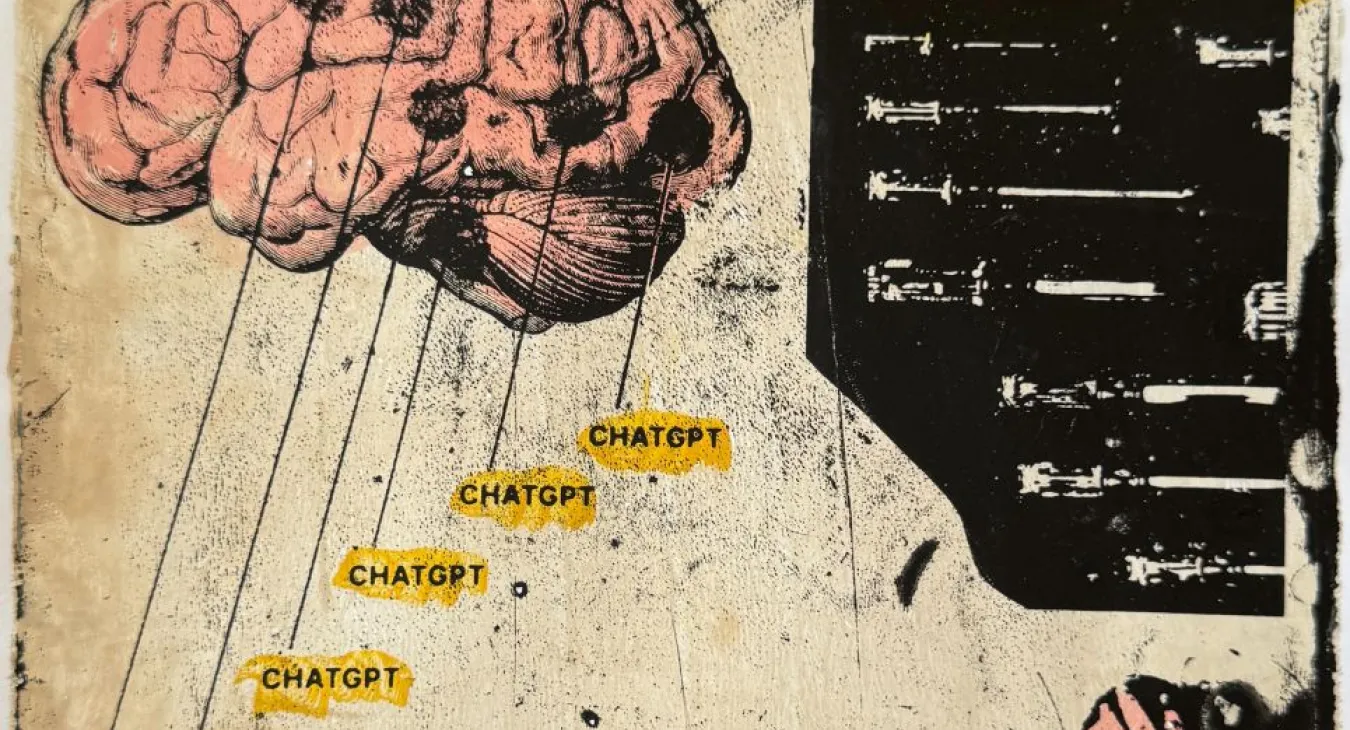
  • a brain with areas marked as responsible for chatGPT processing
    Magazine Issue
    08/2026 - SpeciaI issue on artificial intelligence

    Editorial for the special issue "Artificial intelligence, real consequences: Exploring the psychological dimensions of AI"

    • written by
    • Magdalena Wischnewski,
    • Stella Wernicke
    Not long ago, artificial intelligence was mostly found in science fiction and computer science departments. Today, it drafts our emails, recommends our next purchase, tutors our children, and occasionally tells us it understands how we feel. This shift has happened so quickly that our psychological vocabulary is still catching up. What does it mean to trust a system that has no body, no history, and no stake in the outcome but communicates like us? Why do we sometimes treat a chatbot with the same politeness we'd extend to a colleague, and other times discard it the moment it makes a...
    Read more
  • AI in healthcare
    Magazine Issue
    08/2026 - SpeciaI issue on artificial intelligence

    Doctor, meet AI: How AI systems influence human decision-making in healthcare

    • written by
    • Julia Cecil,
    • Selina Angerer,
    • Eesha Kokje,
    • Susanne Gaube,
    • Anne-Kathrin Kleine,
    • Eva Lermer
    Artificial Intelligence (AI) is revolutionizing healthcare, from enhancing radiology diagnoses to supporting mental health treatment. But while it promises efficiency and accuracy, its integration raises questions of trust, bias, and decision-making dynamics. Will AI become an indispensable medical partner, or will barriers hinder its adoption? This article explores AI’s expanding role, its impact on healthcare professionals, and the road ahead.
    Read more
  • Man using ChatGPT
    Magazine Issue
    08/2026 - SpeciaI issue on artificial intelligence

    Benefits and risks of asking AI for health advice

    • written by
    • Jaroslava Kaňková
    Can ChatGPT become your new health advisor – or even your therapist? Generative AI tools are changing how we access health information, offering speed and convenience like never before. But alongside the benefits come real risks. This article explores the promise and pitfalls of AI in non-clinical health settings.
    Read more
  • In-Mind Blog

    Join the In-Mind team: Help us make psychology accessible to everyone!

    written by: Rinat Meerson, Stella Wernicke, Jana Dreston
  • Magazine Issue 09/2026

    Teamwork today and tomorrow: The skills that matter and how to build them

    written by: Lara Watermann, Natalie Hogh, Joshua Braun, Simone Kubowitsch
  • In-Mind Blog

    After "Adolescence": What we know (and don’t know) about gender attitudes and online misogyny

    written by: Kate Schramm, Silvana Weber
  • Magazine Issue 08/2026 - SpeciaI issue on artificial intelligence

    Benefits and risks of asking AI for health advice

    written by: Jaroslava Kaňková
  • Magazine Issue 10/2024

    "We are on the same wavelength!" The creation of a shared reality and its relationship with uncertainty reduction and connection with others

    written by: Matteo Masi, Yael Bar-Shachar
    People seek connection by finding that they share the same understanding of things in the world. This creates a shared reality that builds connection and confidence, reinforcing shared reality itself... more
  • Magazine Issue 10/2024

    Trauma(tic) media - What does it even look like? 

    written by: Kristen Leer
    Understanding how trauma appears in media and impacts vulnerable communities is important for researchers from various fields to investigate. However, to begin to understand this specific type of media, we must ask... more
  • Magazine Issue 09/2024

    The psychology of digital disconnection: Why we want to use digital media less and if we should even try to

    written by: Julius Klingelhoefer, Alicia Gilbert
    Digital detox, digital minimalism, and smartphone free schools reveal a desire to reduce or change how we use technologies. However, disconnecting from digital communication like smartphones and social media is... more
  • Magazine Issue 09/2024

    How body language helps us understand other people’s emotions

    written by: Britta Krüger, Julia Bachmann, Jörn Munzert
    Social interaction is a complex phenomenon. When we want to know what our fellow human beings are feeling, we have various sources of information at our disposal. One major source... more
  • Magazine Issue 08/2024

    Bug or feature? Boredom feels aversive, and this is why it matters

    written by: Wanja Wolff, Katja Rewitz, Dr. Maik Bieleke
    In class, during exercise, at work: boredom is an everyday experience that is generally regarded as an annoying and rather useless nuisance. In keeping with this attested uselessness, boredom had... more
  • Magazine Issue 06/2024 - Special issue on sport psychology

    “Keeping the Olympic flame burning”: Protecting athletes from vurnout in sport

    written by: Sandrine Isoard-Gautheur, Henrik Gustafsson, Daniel Madigan
    Athlete burnout is a growing concern in sport, particularly among elite athletes who compete at the highest level, such as the Olympic Games. It is characterized by the symptoms of... more
  • Load More Issues

In-Mind Blog

  • 02.01.2018 | Announcements and News

    Call for Blogs and Bloggers

    written by: Amanda Sesko, Mitch Brown
    Call for Blogs: In-Mind Magazine We invite you to submit a blog entry (1,000 words or less) for In-Mind Magazine, the flagship online journal of the In-Mind Foundation. In-Mind Magazine... more
  • 28.12.2017 | Announcements and News

    Call for Papers

    written by: Matthew Baldwin, Lucas Keefer
    Call for Papers: In-Mind Magazine We invite you to submit short review articles for In-Mind Magazine, the flagship online journal of the In-Mind Foundation. In-Mind Magazine is a peer-reviewed online... more
  • 28.12.2017 | Announcements and News

    Call for Book Reviews and Reviewers

    written by: Lucas Keefer
    Call for Book Reviews: In-Mind Magazine In-Mind Magazine is currently seeking reviewers interested in contributing short (< 2,500 words) book reviews. This may include retrospective discussions of classic works in... more
  • 18.02.2017 | Other

    Adverse Childhood Experiences and its lifelong consequences

    written by: Marly van Oirschot
    Unfortunately, some children grow up with maltreatment and household dysfunction. In this post, I will explain how these adverse childhood experiences (ACEs) not only have a negative influence during childhood, but later on in life as well, and I will give some advice about how to prevent these long-lasting negative outcomes. more
  • 15.02.2017 |

    Video: Social Dilemmas

    written by: Diana Onu
    A social dilemma is a situation where our short-term individual interest clashes with the collective long-term interest. Social dilemmas are everywhere! Recycling, responsible energy use, regulating fishing in international waters, reaching global agreement on carbon emissions, endemic corruption in society - these are just some examples of social dilemmas. In this video, Nils Köbis and Paul van Lange discuss some lessons from social dilemmas research on how to achieve and sustain cooperation. more
  • 02.06.2016 |

    Video: Stereotypes

    written by: Susan Fiske, Diana Onu
    Susan Fiske discusses research on stereotypes. She presents an outline of its origins in European immigration and interracial relations in the US, the automatic nature of stereotopes and implicit prejudice, and the main basic dimensions of group stereotypes (competence and warmth). She discusses the social consequences of stereotyping and ways to mitigate their effects. more
  • Load more blog posts

Editors' Choice

  • Magazine Issue 09/2026

    Teamwork today and tomorrow: The skills that matter and how to build them

    written by: Lara Watermann, Natalie Hogh, Joshua Braun, Simone Kubowitsch
  • In-Mind Blog
    a boy sitting next to a laptop using his phone

    After "Adolescence": What we know (and don’t know) about gender attitudes and online misogyny

    written by: Kate Schramm, Silvana Weber
  • Magazine Issue 08/2026 - SpeciaI issue on artificial intelligence
    Man using ChatGPT

    Benefits and risks of asking AI for health advice

    written by: Jaroslava Kaňková

Most Read

  • Magazine Issue 02/2014

    The good, the bad, and the ugly of the Dove Campaign for Real Beauty

    written by: Angela Celebre, Ashley Waggoner Denton
  • Magazine Issue 09/2025

    Viral and harmful: Violence in media and its impact on empathy

    written by: Mira Fauth-Bühler
  • Magazine Issue 03/2026

    Children in front of a screen: what is the impact of technology on their development?

    written by: Marica Notte, Daniela Renzi

The Inquisitive Mind is supported by:

  • DGPs – Deutsche Gesellschaft für Psychologie
  • C-SEB – Center for Social and Economic Behavior

Menu

  • Magazine
  • Blog
  • Submit to In-Mind
  • About In-Mind
  • Search
  • LinkedIn
  • Bluesky
  • Instagram
  • Print
  • RSS Feed
  • Cookie settings

About Us

In-Mind is a voluntary science communication project. We enable scientifically working psychologists to present their research topics in a scientifically sound, understandable and entertaining way for an interested audience: Psychology by scientists for everyone....more

Footer menu

  • Imprint
  • Data Protection