  • INT
  • DE
  • FR
  • IT
  • NL

User account menu

  • Log in
Home
  • Magazine
    • All issues
    • Glossary
  • Blog
    • All blog posts
  • Book Reviews
    • Book Reviews
  • Submit to In-Mind
    • Articles
    • Blog posts
  • About In-Mind
    • Team
    • What is In-Mind?
    • Credits

Psychology for You!

  • Magazine Issue
    08/2026 - SpeciaI issue on artificial intelligence

    Understanding the mind-AI connection – how cognitive abilities shape AI use

    • written by
    • Magnus Liebherr,
    • Eva Gößwein
    The impact of Artificial Intelligence (AI) is closely tied to human cognitive abilities – mental processes that determine how we interpret, evaluate, and respond to AI-generated information. Understanding this interplay is essential for designing AI systems that align with human cognition, enhancing user engagement while reducing risks such as automation bias (the tendency to overtrust AI outputs) and cognitive overload (the state in which information exceeds mental capacity). In this article, we introduce the concepts of working memory, cognitive flexibility, and attention and explore how they shape the way we interact with AI. We illustrate how these cognitive functions influence...
    Read more
    • Log in to post comments
  • Human oversight
    Magazine Issue
    08/2026 - SpeciaI issue on artificial intelligence

    Human oversight of AI: An effective remedy for AI risks or a way to induce unwarranted trust in AI?

    • written by
    • Markus Langer,
    • Kevin Baum,
    • Johann Laux
    When AI determines medical treatments or prison sentences, we may find comfort in the idea of a “human touch” in decisions, for instance, in the form of human oversight mandated in AI regulation. But does human oversight add something meaningful or does it merely serve to convince us to trust AI?
    Read more
    • Log in to post comments
  • Digital price tags
    Magazine Issue
    08/2026 - SpeciaI issue on artificial intelligence

    How artificial intelligence in supermarkets influences customer experiences

    • written by
    • Sophia Wingen,
    • Laura Schenk
    A supermarket with prices that can change at any time and fully automated checkouts is no longer fiction but a reality enabled by artificial intelligence. This raises important questions about the consequences for consumers. Besides greater convenience, efficiency, and a personalized shopping experience, AI-driven supermarkets may reduce price and payment transparency and create a less comfortable atmosphere for consumers. This article explores the use of AI in supermarkets from a psychological perspective.
    Read more
    • Log in to post comments
  • AI-generated content may reflect gender stereotypes
    Magazine Issue
    08/2026 - SpeciaI issue on artificial intelligence

    Blaming the biased bot? Gender bias in AI-generated content

    • written by
    • Alexandra Wölfle
    With the growing popularity and increasing capabilities of generative AI, more and more attention is also drawn to AI model biases, in particular, gender biases. But what exactly does bias mean in this context, how should it be addressed, and what role do humans play in all this?
    Read more
    • Log in to post comments
  • Magazine Issue 08/2026 - SpeciaI issue on artificial intelligence

    Understanding the mind-AI connection – how cognitive abilities shape AI use

    written by: Magnus Liebherr, Eva Gößwein
  • Magazine Issue 08/2026 - SpeciaI issue on artificial intelligence

    Human oversight of AI: An effective remedy for AI risks or a way to induce unwarranted trust in AI?

    written by: Markus Langer, Kevin Baum, Johann Laux
  • Magazine Issue 08/2026 - SpeciaI issue on artificial intelligence

    How artificial intelligence in supermarkets influences customer experiences

    written by: Sophia Wingen, Laura Schenk
  • Magazine Issue 08/2026 - SpeciaI issue on artificial intelligence

    Blaming the biased bot? Gender bias in AI-generated content

    written by: Alexandra Wölfle
  • Magazine Issue 03/2024

    Context matters: Why women are not worse negotiators than men

    written by: Moritz Burmester, Yannik Escher, Danna Oomen, Hannes Petrowsky
    Mastering the art of negotiation is key to being successful in everyday life and in a highly competitive and dynamic professional world. One widespread belief among laypeople is that women... more
  • Magazine Issue 02/2024

    That's cringe! – Wait a minute. What is cringe?

    written by: Thomas Feiler, Fabian Hutmacher
    The word “cringe” is on everyone's lips. What does it mean? How can it be described? An attempt to explain the phenomenon using established psychological constructs. more
  • Magazine Issue 02/2024

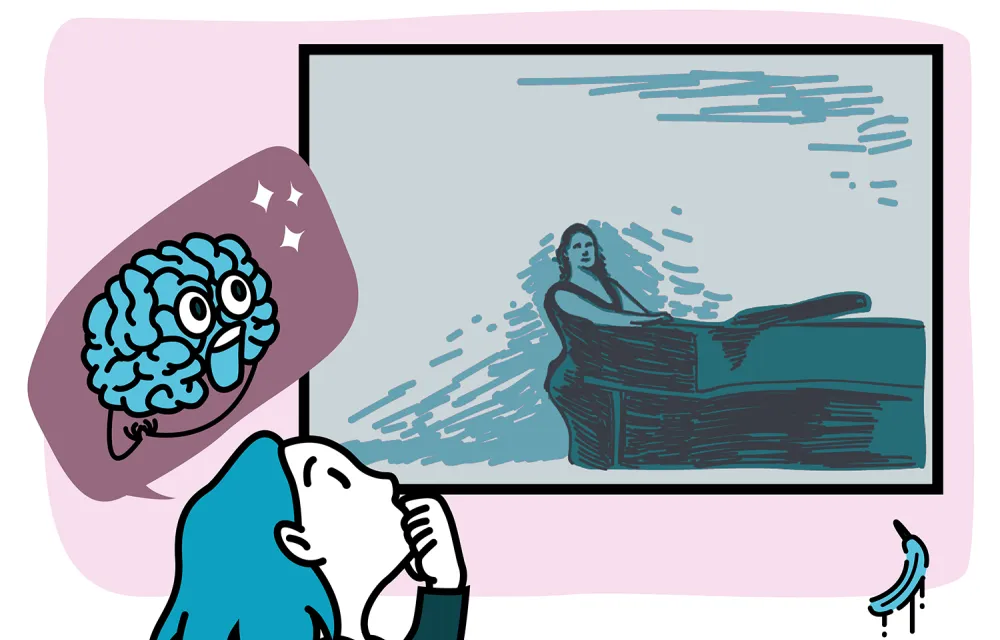
    Is there an art center in our brain? That’s bananas!

    written by: Sophie G. Elschner
    Artworks can move us deeply. But does that mean our brain treats them in a special way? We can find out by looking at how the brain processes art and... more
  • Magazine Issue 06/2023

    Learning styles: Why they don't exist but still persist

    written by: Martin Daumiller, Benedikt Wisniewski
    It is a common myth that for optimal learning, individual learning styles should be identified and specifically supported. This might include identifying someone as a visual learner and designing the... more
  • Magazine Issue 12/2021

    Are victim or eyewitness statements credible? Several ways to check them

    written by: Nurul Arbiyah, Henry Otgaar, Eric Rassin
    In 2014, two teachers and six janitors were accused of child sexual abuse at Indonesia's Jakarta International School (JIS). Three preschool children reported that they had been repeatedly sexually abused... more
  • Magazine Issue 05/2021

    How much does the menstrual cycle affect emotional life?

    written by: Maria Gröndal
    Around 1.6 billion women of fertile age currently have an ongoing menstrual cycle, and a larger group of women will experience or have already experienced this. Everyone probably knows a... more
  • Load More Issues

In-Mind Blog

  • 15.11.2014 | Social Influence & Negotiations

    Is social psychology ready for the big science revolution?

    written by: Frank Bosco
    In this blog post, I will describe perhaps the greatest challenge facing social psychology (and other social sciences) in the coming decades: The curation and increased accessibility of research findings. I describe several big science efforts that lead to an eventual goal – a search engine of research findings capable of producing instant empirical summaries and translating findings using lay terms. more
  • 13.11.2014 | Meaning Making

    Hot or cold morality? (Part 1)

    written by: Andrew Monroe
    How do we make moral judgments? Are people cold, calculating Vulcans? Or are they affectively hot hedonists? Researchers often present morality as a war between vying ‘hot’ and ‘cold’ processes, but in this two-part blog post I argue that the distinction is a false choice. Morality is both hot and cold, but not in the way previous research leads people to believe. more
  • 12.11.2014 | Culture

    Sorry, the relationship with your mother still matters for your achievement in life

    written by: Marieke van Egmond
    Play dates or homework? Piano lessons or TV? Mothers generally want the best for their children. However, what is ‘the best’? Happiness or academic achievement? And, how should parents go about raising their children in the ‘best’ way possible? One answer to this question is to be a ‘tiger parent’. This rather harsh ‘Chinese’ parenting style has been advocated to guarantee successful children. In this post, I will discuss if this means that all mothers should become a bit more ferocious when it comes to parenting. more
  • 31.10.2014 | Political Psychology

    Never give up: The persistence of misinformation effects

    written by: Alina Feinholdt
    Politicians, corporations, journalists and even scientists sometimes do it – they tell people things that later on turn out to be incorrect. Yet, getting rid of this so-called misinformation is often easier said than done as false beliefs are particularly sticky. In this blog, I zoom in on the current state of the art in misinformation research. more
  • 26.10.2014 | Race & Ethnicity, Self-Control & Decision-Making

    Does discrimination fit a prototype?

    written by: Aaron Moss
    In this blog post, I discuss what information people use to decide whether a behavior constitutes discrimination. Similar to the way people organize categories and identify objects, I review research showing that people rely on prototypes when deciding what is and is not discrimination. more
  • 18.10.2014 | Happiness & Well-being

    The missing heritability problem

    written by: Marcus Munafo
    In my last post I described the transition from candidate gene studies to genome-wide association studies, and argued that the corresponding change in the methods used, focusing on the whole genome rather than on a handful of genes of presumed biological relevance, has transformed our understanding of the genetic basis of complex traits. In this post I discuss the reasons why, despite this success, we still have not accounted for all the genetic influences we expect to find. more
  • Load more blog posts

Book Reviews

Buried Secrets: Rememberance of Things Past, a Review by Christopher Perez

reviewed by: Christopher Perez

The Coddling of the American Mind, reviewed by Dylan Selterman

reviewed by: Dylan Selterman

My Year of Rest and Relaxation, reviewed by Andrew Archer

reviewed by: Andrew Archer

The Hope Circuit, Reviewed by Joe Smith

reviewed by: Joe Smith

Social Psychology: Revisiting the Classics (2nd Edition)

reviewed by: Richard Skaff

Most Read

  • Magazine Issue 02/2025

    Do we really like what we like? How social influence processes shape our experiences when we are online

    written by: Dr. A. Marthe Möller
  • Magazine Issue 04/2024

    Does nudging have a place in politics? How decision-making contexts inevitably influence our behavior

    written by: Mario Herberz
  • Magazine Issue 06/2024 - Special issue on sport psychology

    In the shades of the rings – experiences of interpersonal violence in elite sports

    written by: Julia T. Schwender, Teresa Greither, Helena Schmitz, Laurie Schwab
  • Magazine Issue 08/2024

    Bug or feature? Boredom feels aversive, and this is why it matters

    written by: Wanja Wolff, Katja Rewitz, Dr. Maik Bieleke
  • Magazine Issue 10/2009

    The Ghost in the System: Where Free Will Lurks in Human Minds

    written by: Jay Michaels, Robin Vallacher

The Inquisitive Mind Magazine is supported by:

  • DGPs
  • C-SEB

Menu

  • Magazine
  • Blog
  • Book Reviews
  • Submit to In-Mind
  • About In-Mind
  • facebook
  • twitter
  • instagram
  • print
  • RSS Feed

About Us

In-Mind is a voluntary science communication project. We enable scientifically working psychologists to present their research topics in a scientifically sound, understandable and entertaining way for an interested audience: Psychology by scientists for everyone....more

Footer menu

  • Imprint
  • Data Protection
Clear keys input element