  • EN
  • DE
  • FR
  • IT
  • NL

User account menu

  • Log in
Home
  • Magazine
    • All issues
    • Glossary
  • Blog
    • All blog posts
  • Submit to In-Mind
    • Articles
    • Blog posts
  • About In-Mind
    • Team
    • Join In-Mind
    • What is In-Mind?
    • Credits
  • Search

Psychology for You!

  • Magazine Issue
    09/2026

    Teamwork today and tomorrow: The skills that matter and how to build them

    • written by
    • Lara Watermann,
    • Natalie Hogh,
    • Joshua Braun,
    • Simone Kubowitsch
    Teams today collaborate across screens, time zones, and digital tools, but better technology does not always mean better teamwork. Hybrid meetings, information overload, and workflows supported by artificial intelligence (AI) create new challenges. Drawing on expert insights and psychological research, this article explores which team skills matter most and how teams can build them.
    Read more
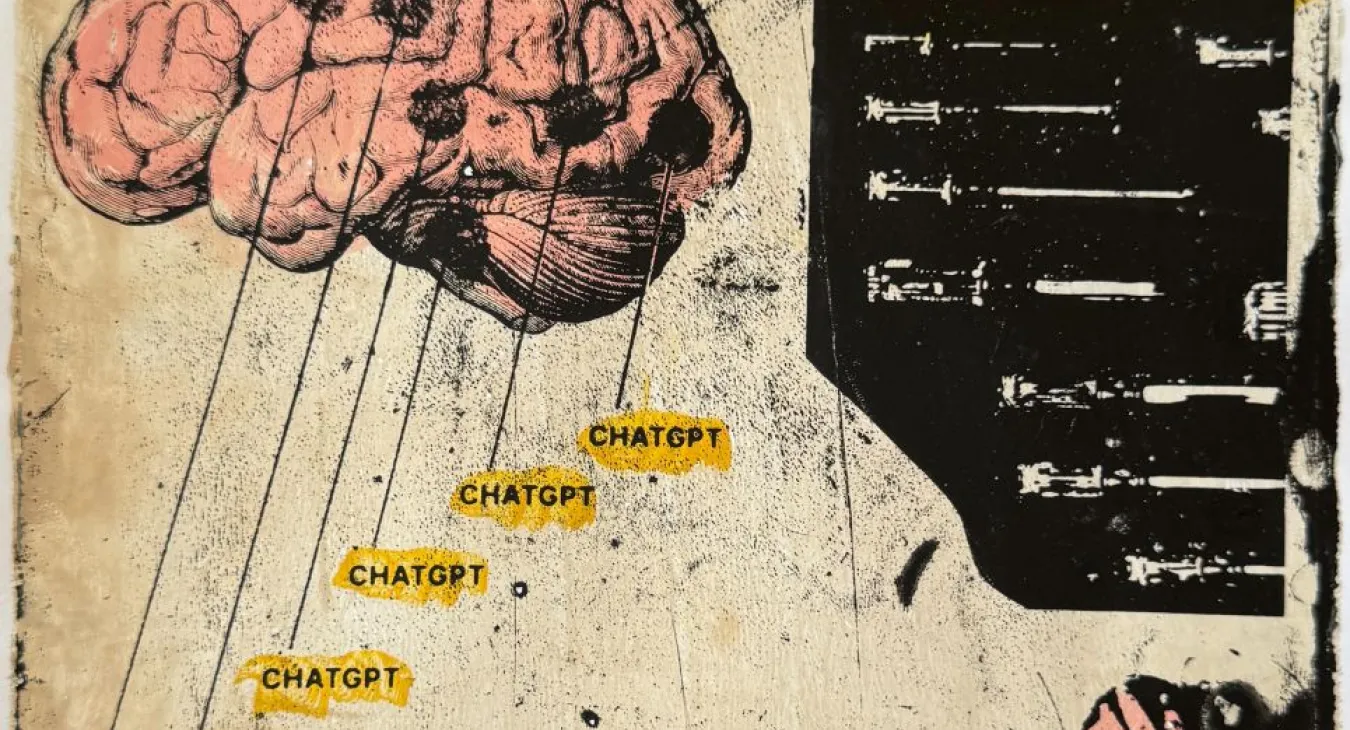
  • a brain with areas marked as responsible for chatGPT processing
    Magazine Issue
    08/2026 - SpeciaI issue on artificial intelligence

    Editorial for the special issue "Artificial intelligence, real consequences: Exploring the psychological dimensions of AI"

    • written by
    • Magdalena Wischnewski,
    • Stella Wernicke
    Not long ago, artificial intelligence was mostly found in science fiction and computer science departments. Today, it drafts our emails, recommends our next purchase, tutors our children, and occasionally tells us it understands how we feel. This shift has happened so quickly that our psychological vocabulary is still catching up. What does it mean to trust a system that has no body, no history, and no stake in the outcome but communicates like us? Why do we sometimes treat a chatbot with the same politeness we'd extend to a colleague, and other times discard it the moment it makes a...
    Read more
  • AI in healthcare
    Magazine Issue
    08/2026 - SpeciaI issue on artificial intelligence

    Doctor, meet AI: How AI systems influence human decision-making in healthcare

    • written by
    • Julia Cecil,
    • Selina Angerer,
    • Eesha Kokje,
    • Susanne Gaube,
    • Anne-Kathrin Kleine,
    • Eva Lermer
    Artificial Intelligence (AI) is revolutionizing healthcare, from enhancing radiology diagnoses to supporting mental health treatment. But while it promises efficiency and accuracy, its integration raises questions of trust, bias, and decision-making dynamics. Will AI become an indispensable medical partner, or will barriers hinder its adoption? This article explores AI’s expanding role, its impact on healthcare professionals, and the road ahead.
    Read more
  • Man using ChatGPT
    Magazine Issue
    08/2026 - SpeciaI issue on artificial intelligence

    Benefits and risks of asking AI for health advice

    • written by
    • Jaroslava Kaňková
    Can ChatGPT become your new health advisor – or even your therapist? Generative AI tools are changing how we access health information, offering speed and convenience like never before. But alongside the benefits come real risks. This article explores the promise and pitfalls of AI in non-clinical health settings.
    Read more
  • In-Mind Blog

    Join the In-Mind team: Help us make psychology accessible to everyone!

    written by: Rinat Meerson, Stella Wernicke, Jana Dreston
  • Magazine Issue 09/2026

    Teamwork today and tomorrow: The skills that matter and how to build them

    written by: Lara Watermann, Natalie Hogh, Joshua Braun, Simone Kubowitsch
  • In-Mind Blog

    After "Adolescence": What we know (and don’t know) about gender attitudes and online misogyny

    written by: Kate Schramm, Silvana Weber
  • Magazine Issue 08/2026 - SpeciaI issue on artificial intelligence

    Benefits and risks of asking AI for health advice

    written by: Jaroslava Kaňková
  • Magazine Issue 05/2021

    From derogation to reclamation: How does language change?

    written by: Samuel Sturaro, Fabio Fasoli
    Derogatory labels are offensive words that can be reclaimed by a stigmatized group; however, the process of reclaiming can carry risks. more
  • Magazine Issue 05/2021

    How much does the menstrual cycle affect emotional life?

    written by: Maria Gröndal
    Around 1.6 billion women of fertile age currently have an ongoing menstrual cycle, and a larger group of women will experience or have already experienced this. Everyone probably knows a... more
  • Magazine Issue 02/2021 - Special Issue: Human Sexuality

    The sex tips you won’t see in magazines: Science-backed ways to stay sexually satisfied in long-term relationships

    written by: Jessica Maxwell
    Women should insert jade eggs into their vaginas to increase the chance of orgasm(1). Don’t believe in sexual soulmates(2). For a happier life, have sex once... more
  • Magazine Issue 02/2021 - Special Issue: Human Sexuality

    A primer on porn and relationships

    written by: Dan Miller, Gert Martin Hald
    The ease of access to pornography via the Internet has sparked a renewed interest in the effects of porn on consumers, with much of the public debate on the topic... more
  • Magazine Issue 02/2021 - Special Issue: Human Sexuality

    When I get that boring feeling: Sex as escape from boredom

    written by: Andrew Moynihan
    Everyone gets bored from time to time. What do you do when you have these everyday feelings of boredom? In some cases, psychologists found that during such bouts, people sometimes... more
  • Magazine Issue 02/2021 - Special Issue: Human Sexuality

    Nuances of sexual consent: Who? What? When? Where? Why? How?

    written by: Malachi Willis
    People keep talking about sexual consent, but what is it? Let’s dive into some recent research and discover that there is more to sexual consent than you might think. Sexual... more
  • Load More Issues

In-Mind Blog

  • 31.10.2014 | Political Psychology

    Never give up: The persistence of misinformation effects

    written by: Alina Feinholdt
    Politicians, corporations, journalists and even scientists sometimes do it – they tell people things that later on turn out to be incorrect. Yet, getting rid of this so-called misinformation is often easier said than done as false beliefs are particularly sticky. In this blog, I zoom in on the current state of the art in misinformation research. more
  • 26.10.2014 | Race & Ethnicity, Self-Control & Decision-Making

    Does discrimination fit a prototype?

    written by: Aaron Moss
    In this blog post, I discuss what information people use to decide whether a behavior constitutes discrimination. Similar to the way people organize categories and identify objects, I review research showing that people rely on prototypes when deciding what is and is not discrimination. more
  • 18.10.2014 | Happiness & Well-being

    The missing heritability problem

    written by: Marcus Munafo
    In my last post I described the transition from candidate gene studies to genome-wide association studies, and argued that the corresponding change in the methods used, focusing on the whole genome rather than on a handful of genes of presumed biological relevance, has transformed our understanding of the genetic basis of complex traits. In this post I discuss the reasons why, despite this success, we still have not accounted for all the genetic influences we expect to find.As I discussed previously, genome-wide association studies (GWAS) have been extremely successful in identifying genetic variants associated with a range of disease outcomes – countless replicable associations have emerged over the last few years. Nevertheless, despite this success, the proportion of variability in specific traits accounted for so far is much less than what twin, family and adoption studies would lead us to expect. The individual variants identified are associated with a very small proportion of variance in the trait of interest (typically 0.1% of less), so that together they still only account for a modest proportion. Twin, family and adoption studies would lead us to expect that 50% or more of the variance in many complex traits is attributable to genetic influences, but so far we have found only a small fraction of that total. This has become known as the “missing heritability” problem. Where are the other genes? Should we be seeking common genetic variants of smaller and smaller effect, in larger and larger studies? Or is there a role for rare variants (i.e., those which occur with a low frequency in a particular population, typically a minor allele frequency less than 5%), which may have a larger effect? more
  • 14.10.2014 | Solid Science

    When science selects for fraud

    written by: Shauna Gordon-McKeon
    Are fraud and other questionable practices in science caused by a few bad apples, or a culture that rewards based on results, not rigor? In this post, I will argue that our scientific environment is selecting for the wrong kind of scientist. more
  • 20.09.2014 | Culture, Happiness & Well-being

    The reason that you need to feel good about yourself in order to be happy might not be what you think it is

    written by: Marieke van Egmond
    Do you feel the need to feel good about yourself in order to be happy? Research suggests that if you have a lot of opportunities to make new friends, it is more likely that you will answer this question with a ‘yes’ than when you have more of a set group of people you spend time with. In this blog, I will describe the recent research on the influence of relational mobility and how it relates to the way in which we develop our self-esteem and happiness. more
  • 20.09.2014 | Race & Ethnicity, Culture

    Patriot Acts: Why the USA’s recent decrease in national glorification might be a good sign

    written by: Cathleen Clerkin
    In this blog post, I share a recent report which says that Americans are less fervent about their country now than they’ve been in the recent past. However, I also review some political psychology research on different styles of patriotism which suggests that this particular type of decrease might actually be a good thing for Americans. more
  • Load more blog posts

Editors' Choice

  • Magazine Issue 09/2026

    Teamwork today and tomorrow: The skills that matter and how to build them

    written by: Lara Watermann, Natalie Hogh, Joshua Braun, Simone Kubowitsch
  • In-Mind Blog
    a boy sitting next to a laptop using his phone

    After "Adolescence": What we know (and don’t know) about gender attitudes and online misogyny

    written by: Kate Schramm, Silvana Weber
  • Magazine Issue 08/2026 - SpeciaI issue on artificial intelligence
    Man using ChatGPT

    Benefits and risks of asking AI for health advice

    written by: Jaroslava Kaňková

Most Read

  • Magazine Issue 02/2014

    The good, the bad, and the ugly of the Dove Campaign for Real Beauty

    written by: Angela Celebre, Ashley Waggoner Denton
  • Magazine Issue 09/2025

    Viral and harmful: Violence in media and its impact on empathy

    written by: Mira Fauth-Bühler
  • Magazine Issue 03/2026

    Children in front of a screen: what is the impact of technology on their development?

    written by: Marica Notte, Daniela Renzi

The Inquisitive Mind is supported by:

  • DGPs – Deutsche Gesellschaft für Psychologie
  • C-SEB – Center for Social and Economic Behavior

Menu

  • Magazine
  • Blog
  • Submit to In-Mind
  • About In-Mind
  • Search
  • LinkedIn
  • Bluesky
  • Instagram
  • Print
  • RSS Feed
  • Cookie settings

About Us

In-Mind is a voluntary science communication project. We enable scientifically working psychologists to present their research topics in a scientifically sound, understandable and entertaining way for an interested audience: Psychology by scientists for everyone....more

Footer menu

  • Imprint
  • Data Protection