  • EN
  • DE
  • FR
  • IT
  • NL

User account menu

  • Log in
Home
  • Magazine
    • All issues
    • Glossary
  • Blog
    • All blog posts
  • Submit to In-Mind
    • Articles
    • Blog posts
  • About In-Mind
    • Team
    • Join In-Mind
    • What is In-Mind?
    • Credits
  • Search

Psychology for You!

  • Magazine Issue
    09/2026

    Teamwork today and tomorrow: The skills that matter and how to build them

    • written by
    • Lara Watermann,
    • Natalie Hogh,
    • Joshua Braun,
    • Simone Kubowitsch
    Teams today collaborate across screens, time zones, and digital tools, but better technology does not always mean better teamwork. Hybrid meetings, information overload, and workflows supported by artificial intelligence (AI) create new challenges. Drawing on expert insights and psychological research, this article explores which team skills matter most and how teams can build them.
    Read more
  • Magazine Issue
    08/2026 - SpeciaI issue on artificial intelligence

    Understanding the mind-AI connection – how cognitive abilities shape AI use

    • written by
    • Magnus Liebherr,
    • Eva Gößwein
    The impact of Artificial Intelligence (AI) is closely tied to human cognitive abilities – mental processes that determine how we interpret, evaluate, and respond to AI-generated information. Understanding this interplay is essential for designing AI systems that align with human cognition, enhancing user engagement while reducing risks such as automation bias (the tendency to overtrust AI outputs) and cognitive overload (the state in which information exceeds mental capacity). In this article, we introduce the concepts of working memory, cognitive flexibility, and attention and explore how they shape the way we interact with AI. We illustrate how these cognitive functions influence...
    Read more
  • Human oversight
    Magazine Issue
    08/2026 - SpeciaI issue on artificial intelligence

    Human oversight of AI: An effective remedy for AI risks or a way to induce unwarranted trust in AI?

    • written by
    • Markus Langer,
    • Kevin Baum,
    • Johann Laux
    When AI determines medical treatments or prison sentences, we may find comfort in the idea of a “human touch” in decisions, for instance, in the form of human oversight mandated in AI regulation. But does human oversight add something meaningful or does it merely serve to convince us to trust AI?
    Read more
  • Digital price tags
    Magazine Issue
    08/2026 - SpeciaI issue on artificial intelligence

    How artificial intelligence in supermarkets influences customer experiences

    • written by
    • Sophia Wingen,
    • Laura Schenk
    A supermarket with prices that can change at any time and fully automated checkouts is no longer fiction but a reality enabled by artificial intelligence. This raises important questions about the consequences for consumers. Besides greater convenience, efficiency, and a personalized shopping experience, AI-driven supermarkets may reduce price and payment transparency and create a less comfortable atmosphere for consumers. This article explores the use of AI in supermarkets from a psychological perspective.
    Read more
  • In-Mind Blog

    Join the In-Mind team: Help us make psychology accessible to everyone!

    written by: Rinat Meerson, Stella Wernicke, Jana Dreston
  • Magazine Issue 09/2026

    Teamwork today and tomorrow: The skills that matter and how to build them

    written by: Lara Watermann, Natalie Hogh, Joshua Braun, Simone Kubowitsch
  • In-Mind Blog

    After "Adolescence": What we know (and don’t know) about gender attitudes and online misogyny

    written by: Kate Schramm, Silvana Weber
  • Magazine Issue 08/2026 - SpeciaI issue on artificial intelligence

    Benefits and risks of asking AI for health advice

    written by: Jaroslava Kaňková
  • Magazine Issue 04/2018

    Fake Posttraumatic Stress Disorder (PTSD) Costs Real Money

    written by: Irena Boskovic, Harald Merckelbach
    As a diagnosis, Posttraumatic stress disorder ( PTSD) rests entirely on what people report about their symptoms. Thus, many people, such as Robert, Lisa, and even a Senator, who strive... more
  • Magazine Issue 01/2018

    Selfie-Esteem: The Relationship Between Body Dissatisfaction and Social Media in Adolescent and Young Women

    written by: Bindal Makwana, Yaeeun Lee, Susannah Parkin, Leland Farmer
    Social media platforms like Instagram and Facebook have become ingrained in the lives of countless individuals. With adolescents and young adults, particularly young women, being the primary users of such... more
  • Magazine Issue 01/2018

    Cooperation in social dilemmas: How can psychology help to meet climate change goals?

    written by: Rachel New, Julian Savulescu, Nadira S. Faber
    Effectively managing shared natural resources is essential to protecting and improving our physical environment. This cannot be done without cooperation at international, national and local levels. Bringing together research on... more
  • Magazine Issue 01/2018

    Welcome to the Matrix! Opportunities and Risks of the Virtual World

    written by: Sarah Mayr
    It's been almost 20 years since Neo, "The One", booted up to fight the machines in the global smash hit The Matrix. Once painted as a dark and foreboding frontier... more
  • Magazine Issue 07/2017

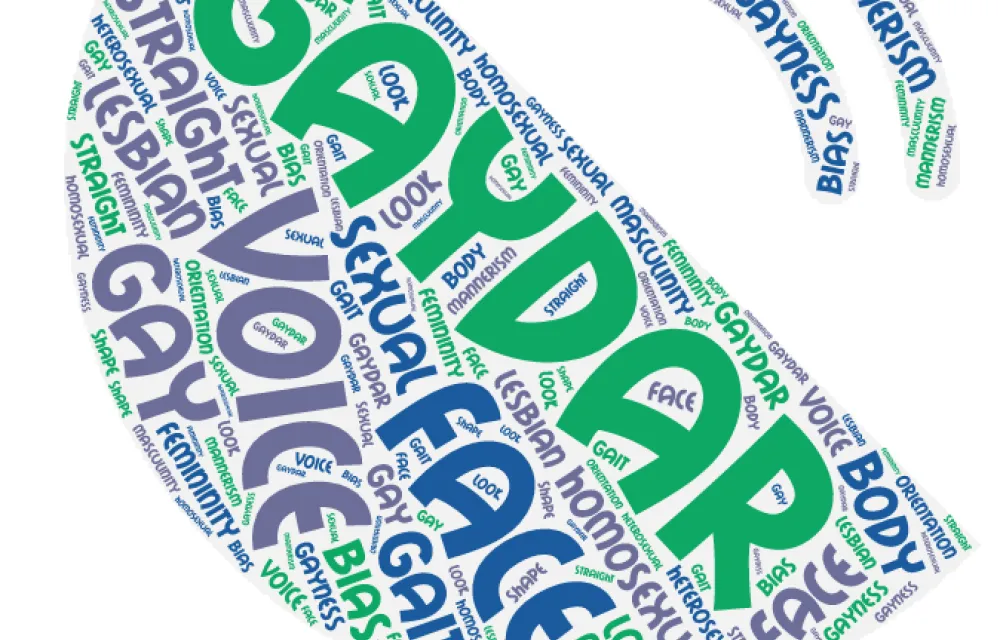
    Straight talk about gaydar: How do individuals guess others’ sexual orientation?

    written by: Fabio Fasoli, Peter Hegarty
    Individuals guess women’s and men’s sexual orientation on the basis of visual, non-verbal, and vocal cues. People use these cues as signs of others’ sexual orientation. Here, we review research... more
  • Magazine Issue 07/2017

    The Face of Leadership: How CEOs’ Facial Appearance Predicts Business Success

    written by: Daniel E. Re, Nicholas O. Rule
    Recent research in social psychology has demonstrated that the facial appearance of Chief Executive Officers (CEOs) and other business leaders predicts their companies’ financial performance. In this article, we review... more
  • Load More Issues

In-Mind Blog

  • 24.02.2014 | Political Psychology

    Are voters rational?

    written by: Ellie Shockley
    Are voters rational? There is, unfortunately, no easy answer to the question. Social psychological science, like all science, is a quest for knowledge in a complicated world. However, research helps us advance closer to a genuine understanding of voter rationality – or irrationality, as the case may be. As a part of a three-part series on the subject of voter rationality, my colleagues Matt Motyl, Mark Brandt, and I will discuss some theories and research dealing with voters’ attitudes and behaviors. We hope you will stay a part of the conversation with us! more
  • 20.02.2014 | Political Psychology

    Everyone is prejudiced, too

    written by: Jarret Crawford
    In this blog post, I will discuss new research in political psychology that is changing our understanding of what prejudice is, and who is prejudiced. more
  • 12.02.2014 | Culture

    Re-thinking how we think about conformity

    written by: Robert Thomson
    In this post, I recount part of my journey into the nitty-gritty of cross-cultural differences in behavior. More specifically, I discuss the link between skateboarding across the USA, attractive Japanese women in tights, and the paradoxical nuances in conformity between cultures. more
  • 06.02.2014 | Romance & Friendship

    Does parental disapproval lead to love or dissolution? The Romeo and Juliet effect vs. the social network effect

    written by: Chelsea Ellithorpe
    In this post, I assert that two opposing theories about how opinions friends and family hold affect one’s romantic relationship (Romeo and Juliet effect vs. social network effect) can actually coexist. Though there is little empirical support for the Romeo and Juliet effect, current research demonstrates that this effect may exist in certain circumstances. more
  • 29.01.2014 | Political Psychology

    Everyone is biased

    written by: Jarret Crawford
    My first blog post tells the story of my discovery of the conditions that reveal the political biases of liberals and conservatives. It’s also a story of coming to terms with my own biases. more
  • 04.01.2014 | Big Questions in Society

    After Trayvon: The science of protecting innocent black men

    written by: Scott Sleek
    Even though the death of Trayvon Martin drew much public attention in the last year and a half, the shooting of an unarmed, innocent black male is in no way an isolated case in America. Jonathan Ferrell, a 24-year-old African-American man in Florida, was recently killed by police officers when he was looking for help after crashing his car. Roy Middleton, a 60-year-old Florida man, was crippled after the sheriff’s deputies mistook him for a car thief and shot him 15 times in his own driveway. Omar Edwards, an African-American policeman, was shot in Harlem by another officer who mistook him for a car thief. And Jordan Davis, 17, was shot and killed by a 45-year-old man who said he felt threatened in an argument at a gas station. more
  • Load more blog posts

Editors' Choice

  • Magazine Issue 09/2026

    Teamwork today and tomorrow: The skills that matter and how to build them

    written by: Lara Watermann, Natalie Hogh, Joshua Braun, Simone Kubowitsch
  • In-Mind Blog
    a boy sitting next to a laptop using his phone

    After "Adolescence": What we know (and don’t know) about gender attitudes and online misogyny

    written by: Kate Schramm, Silvana Weber
  • Magazine Issue 08/2026 - SpeciaI issue on artificial intelligence
    Man using ChatGPT

    Benefits and risks of asking AI for health advice

    written by: Jaroslava Kaňková

Most Read

  • Magazine Issue 02/2014

    The good, the bad, and the ugly of the Dove Campaign for Real Beauty

    written by: Angela Celebre, Ashley Waggoner Denton
  • Magazine Issue 09/2025

    Viral and harmful: Violence in media and its impact on empathy

    written by: Mira Fauth-Bühler
  • Magazine Issue 03/2026

    Children in front of a screen: what is the impact of technology on their development?

    written by: Marica Notte, Daniela Renzi

The Inquisitive Mind is supported by:

  • DGPs – Deutsche Gesellschaft für Psychologie
  • C-SEB – Center for Social and Economic Behavior

Menu

  • Magazine
  • Blog
  • Submit to In-Mind
  • About In-Mind
  • Search
  • LinkedIn
  • Bluesky
  • Instagram
  • Print
  • RSS Feed
  • Cookie settings

About Us

In-Mind is a voluntary science communication project. We enable scientifically working psychologists to present their research topics in a scientifically sound, understandable and entertaining way for an interested audience: Psychology by scientists for everyone....more

Footer menu

  • Imprint
  • Data Protection