  • EN
  • DE
  • FR
  • IT
  • NL

User account menu

  • Log in
Home
  • Magazine
    • All issues
    • Glossary
  • Blog
    • All blog posts
  • Submit to In-Mind
    • Articles
    • Blog posts
  • About In-Mind
    • Team
    • Join In-Mind
    • What is In-Mind?
    • Credits
  • Search

Psychology for You!

  • Magazine Issue
    11/2026

    Can an outfit be more persuasive than a speech? Aesthetic signals, identity, and the path to radicalization

    • written by
    • Paola D'Elia
    Can an outfit be persuasive? This article explores how shared aesthetic styles – from subcultures to online communities – can strengthen group identity and subtly influence which ideas feel natural and legitimate. In certain contexts, belonging may precede persuasion and contribute to polarization.

    Read more
  • a kid and their psychotherapist
    Magazine Issue
    10/2026

    Shedding light on the shadows of psychotherapy – monitoring side effects

    • written by
    • Anna Backus,
    • Sanne Houben,
    • Brechje Dandachi-FitzGerald
    Psychotherapy is an umbrella term for various psychological interventions, which can help reduce symptoms of mental illness and increase quality of life [1, 2, 3]. However, many people aren’t aware that psychotherapy can have certain side effects, just like pharmaceutical treatments, [4]. This article seeks to answer the question of what these side effects are and how we can monitor them?
    Read more
  • Magazine Issue
    09/2026

    Teamwork today and tomorrow: The skills that matter and how to build them

    • written by
    • Lara Watermann,
    • Natalie Hogh,
    • Joshua Braun,
    • Simone Kubowitsch
    Teams today collaborate across screens, time zones, and digital tools, but better technology does not always mean better teamwork. Hybrid meetings, information overload, and workflows supported by artificial intelligence (AI) create new challenges. Drawing on expert insights and psychological research, this article explores which team skills matter most and how teams can build them.
    Read more
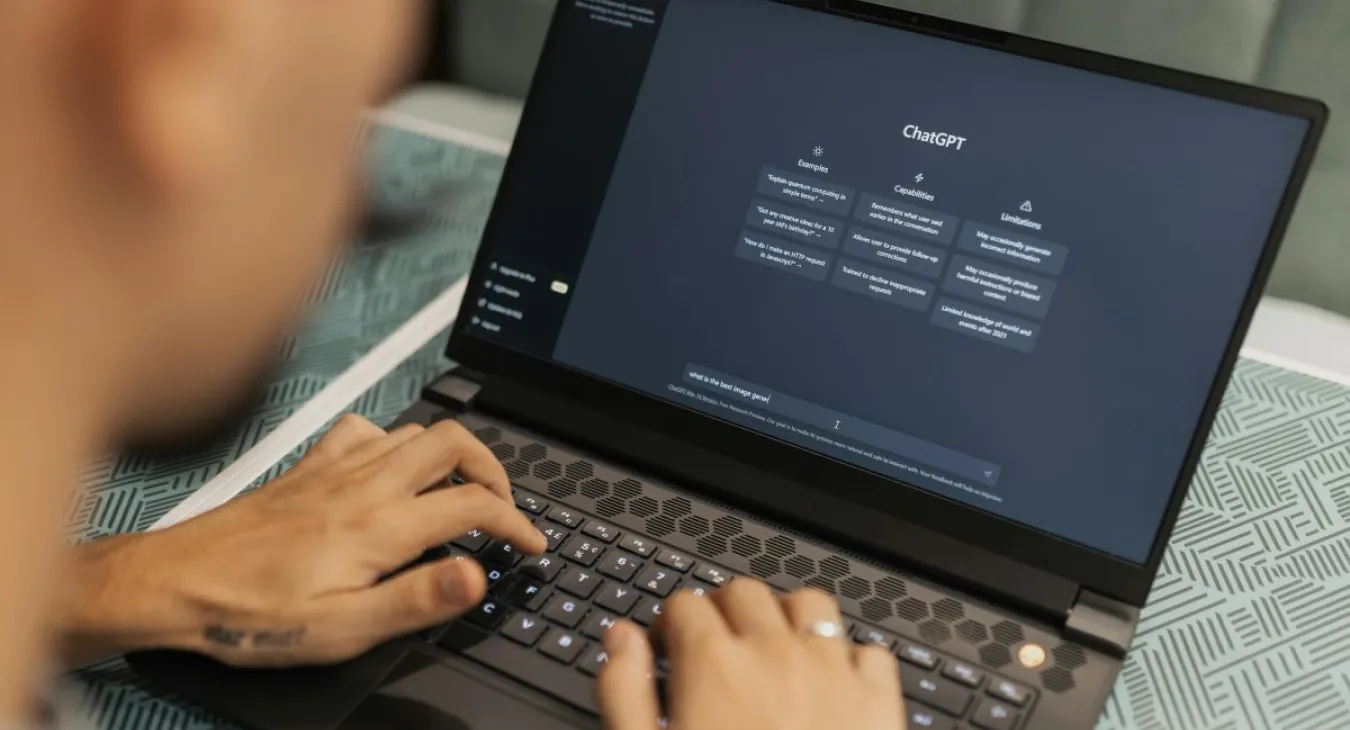
  • Man using ChatGPT
    Magazine Issue
    08/2026 - Special issue on artificial intelligence

    Benefits and risks of asking AI for health advice

    • written by
    • Jaroslava Kaňková
    Can ChatGPT become your new health advisor – or even your therapist? Generative AI tools are changing how we access health information, offering speed and convenience like never before. But alongside the benefits come real risks. This article explores the promise and pitfalls of AI in non-clinical health settings.
    Read more
  • Magazine Issue 11/2026

    Can an outfit be more persuasive than a speech? Aesthetic signals, identity, and the path to radicalization

    written by: Paola D'Elia
  • Magazine Issue 10/2026

    Shedding light on the shadows of psychotherapy – monitoring side effects

    written by: Anna Backus, Sanne Houben, Brechje Dandachi-FitzGerald
  • In-Mind Blog

    Join the In-Mind team: Help us make psychology accessible to everyone!

    written by: Rinat Meerson, Stella Wernicke, Jana Dreston
  • Magazine Issue 09/2026

    Teamwork today and tomorrow: The skills that matter and how to build them

    written by: Lara Watermann, Natalie Hogh, Joshua Braun, Simone Kubowitsch
  • Magazine Issue 09/2024

    The psychology of digital disconnection: Why we want to use digital media less and if we should even try to

    written by: Julius Klingelhoefer, Alicia Gilbert
    Digital detox, digital minimalism, and smartphone free schools reveal a desire to reduce or change how we use technologies. However, disconnecting from digital communication like smartphones and social media is... more
  • Magazine Issue 09/2024

    How body language helps us understand other people’s emotions

    written by: Britta Krüger, Julia Bachmann, Jörn Munzert
    Social interaction is a complex phenomenon. When we want to know what our fellow human beings are feeling, we have various sources of information at our disposal. One major source... more
  • Magazine Issue 08/2024

    Bug or feature? Boredom feels aversive, and this is why it matters

    written by: Wanja Wolff, Katja Rewitz, Maik Bieleke
    In class, during exercise, at work: boredom is an everyday experience that is generally regarded as an annoying and rather useless nuisance. In keeping with this attested uselessness, boredom had... more
  • Magazine Issue 06/2024 - Special issue on sport psychology

    “Keeping the Olympic Flame Burning”: Protecting Athletes from Burnout in Sport

    written by: Sandrine Isoard-Gautheur, Henrik Gustafsson, Daniel Madigan
    Athlete burnout is a growing concern in sport, particularly among elite athletes who compete at the highest level, such as the Olympic Games. It is characterized by the symptoms of... more
  • Magazine Issue 06/2024 - Special issue on sport psychology

    Heart rate variability (HRV): How Olympic athletes can use the heart-mind connection to boost their performance

    written by: Sylvain Laborde, Stefan Ackermann, Carla Alfonso, Uirassu Borges, Eva Crone, Maša Iskra, Marko Jackovič, Valerie Haydt, Leon Hunder, Rabeea Maqsood, Frederike Midderhoff, Emma Mosley, Denise Paykoç, Caterina Salvotti, Charlotte Sanden, Rebekka Schubert, Maximilian Schmaußer, Laura Voigt
    In Olympic athletes, the heart and the mind team up to achieve success. This synergy can be tracked using heart rate variability (HRV). In this article, you will learn how... more
  • Magazine Issue 06/2024 - Special issue on sport psychology

    There is no place like home – How the French crowd may impact the athletes at the Paris 2024 Olympic Games

    written by: Edda van Meurs, Charlotte Behlau, Bernd Strauss
    Athletes and fans believe to be superior when competing at home. Will the French believe the same at this year’s Olympics in Paris? We review the psychological explanations for a... more
  • Load More Issues

In-Mind Blog

  • 13.12.2015 | Big Questions in Society

    Refugees work placement: Call for collaboration

    written by: Sanja Djordjevic
    In the Netherlands only, more than 25.000 refugees arrived this year, and the numbers are rapidly increasing. One of the biggest challenges for refugees is to acclimatize, adapt, and find jobs in a new country. As a group of behavioral change experts, we want to help them, but we need some expert collaborators. This is a call for collaboration with a programmer, translator, and refugee organizations. more
  • Rows of lit tea candles in the dark
    25.11.2015 | Big Questions in Society, Current Events

    Empathy and prejudice after attacks in Paris and Beirut

    written by: Marly van Oirschot
    In this blog, I will try to explain why we showed more empathy for victims in Paris than in Beirut, and how feelings of fear after such a terrorist attack can lead to prejudice against out-groups, especially against Muslims. more
  • 11.10.2015 | Self-Control & Decision-Making

    What does your selfie say about you?

    written by: Lin Qiu
    Selfie is a new form of self-expression in this digital age. In this post, I will discuss our research on how selfies reveal the personality of their owners and how people judge others’ personality based on selfies (Qiu, Lu, Qu, & Zhu, 2015). more
  • 31.08.2015 | Culture

    Bicultural minds: How capable are you in responding culturally appropriate?

    written by: Katerina Pouliasi
    When individuals live actively with two cultures (in families, organizations or society at large) they, partly unconsciously, partly deliberately, may change towards acquiring a ‘bicultural mind’. I will discuss here whether these individuals are capable of spontaneously producing appropriate responses that fit the expectation patterns of either of their two cultures. more
  • 21.08.2015 | Big Questions in Society, Current Events, Gender

    Why gender neutral toy aisles might help children’s development stay on target

    written by: Cathleen Clerkin
    In this blog post I will discuss how Target’s recent decision to do away with gender specific toy aisles could actually help children develop new cognitive skills, and as well as increase their willingness to play with different types of toys. more
  • 01.08.2015 | Self-Control & Decision-Making

    Why do we still have a cognitive bias that makes us send innocent people to jail? – Explanations of the confirmation bias

    written by: Marly van Oirschot
    The confirmation bias – seeking and interpreting information to support your pre-existing beliefs – can have tremendous consequences. In this blog, I will explain the existence of the confirmation bias in the criminal justice system and give two possible explanations to why we still have this bias. more
  • Load more blog posts

Editors' Choice

  • Magazine Issue 02/2026

    A step-by-step guide to writing science communication articles

    written by: Maike Ramrath, Stella Wernicke
  • Magazine Issue 02/2026

    Scrolling through the past: How digital tools change the way we remember

    written by: Kate Schramm, Fabian Hutmacher
  • Magazine Issue 06/2023

    Learning styles: Why they don't exist but still persist

    written by: Martin Daumiller, Benedikt Wisniewski

Most Read

  • Magazine Issue 09/2025

    Viral and harmful: Violence in media and its impact on empathy

    written by: Mira Fauth-Bühler
  • Magazine Issue 03/2026

    Children in front of a screen: what is the impact of technology on their development?

    written by: Marica Notte, Daniela Renzi
  • Magazine Issue 09/2025

    Digital moral distortion: How social media can negatively shape our judgement of right and wrong

    written by: Tim-Dorian Knöchel, Sarah Vahed

The Inquisitive Mind is supported by:

  • DGPs – Deutsche Gesellschaft für Psychologie
  • C-SEB – Center for Social and Economic Behavior

Menu

  • Magazine
  • Blog
  • Submit to In-Mind
  • About In-Mind
  • Search
  • LinkedIn
  • Bluesky
  • Instagram
  • Print
  • RSS Feed
  • Cookie settings

About Us

In-Mind is a voluntary science communication project. We enable scientifically working psychologists to present their research topics in a scientifically sound, understandable and entertaining way for an interested audience: Psychology by scientists for everyone....more

Footer menu

  • Imprint
  • Data Protection