  • EN
  • DE
  • FR
  • IT
  • NL

User account menu

  • Log in
Home
  • Magazine
    • All issues
    • Glossary
  • Blog
    • All blog posts
  • Submit to In-Mind
    • Articles
    • Blog posts
  • About In-Mind
    • Team
    • What is In-Mind?
    • Credits
  • Search

Psychology for You!

  • Magazine Issue
    09/2026

    Teamwork today and tomorrow: The skills that matter and how to build them

    • written by
    • Lara Watermann,
    • Natalie Hogh,
    • Joshua Braun,
    • Simone Kubowitsch
    Teams today collaborate across screens, time zones, and digital tools, but better technology does not always mean better teamwork. Hybrid meetings, information overload, and workflows supported by artificial intelligence (AI) create new challenges. Drawing on expert insights and psychological research, this article explores which team skills matter most and how teams can build them.

    Read more
  • AI-generated content may reflect gender stereotypes
    Magazine Issue
    08/2026 - SpeciaI issue on artificial intelligence

    Blaming the biased bot? Gender bias in AI-generated content

    • written by
    • Alexandra Wölfle
    With the growing popularity and increasing capabilities of generative AI, more and more attention is also drawn to AI model biases, in particular, gender biases. But what exactly does bias mean in this context, how should it be addressed, and what role do humans play in all this?
    Read more
  • What AIs are made of
    Magazine Issue
    08/2026 - SpeciaI issue on artificial intelligence

    Does ChatGPT think like humans?

    • written by
    • Jannis Friedrich
    AIs like ChatGPT are trained only on texts and do not actually experience the world. It’s been argued that for this reason, AI’s cannot really ‘understand’. This is called the symbol grounding problem: symbols have to be connected to perception and action. To address the question whether AIs can think like humans, this article looks at research on cognition and language.
    Read more
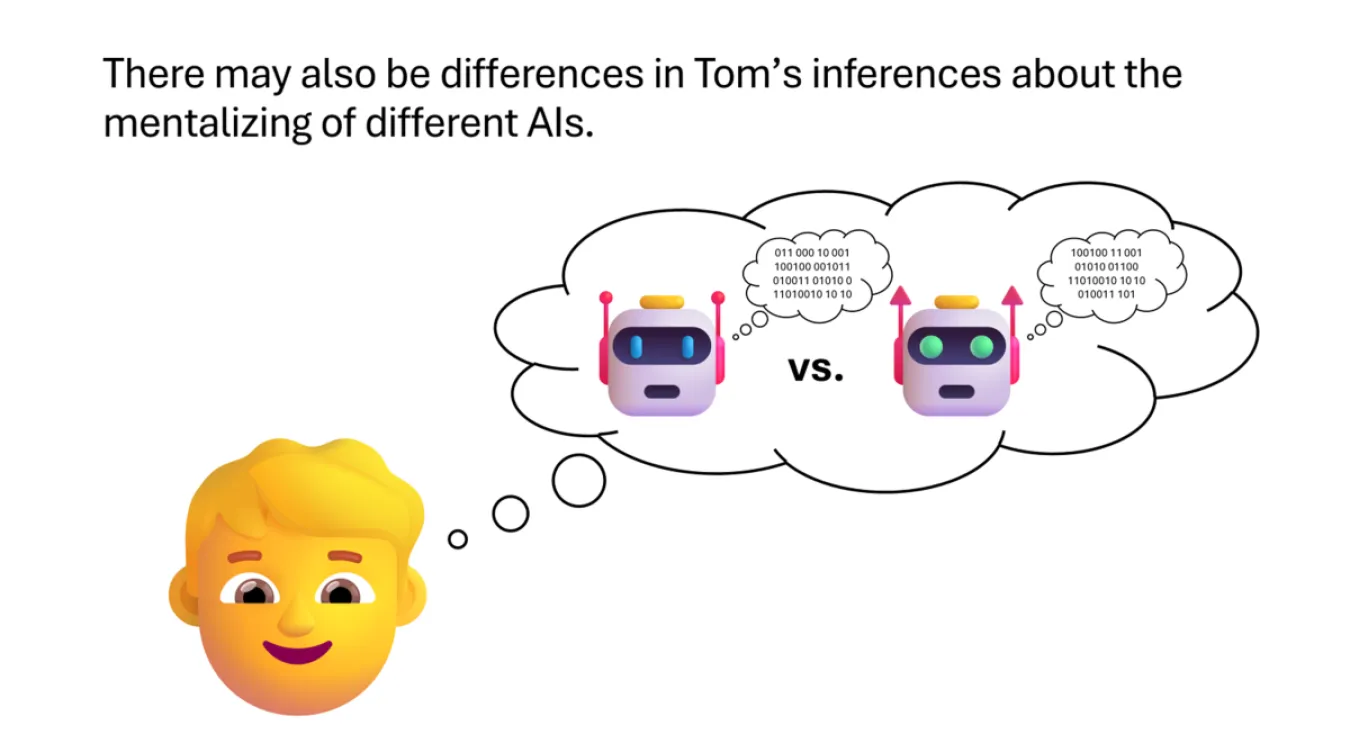
  • Cartoon of boy with speech ballon with 2 robots
    Magazine Issue
    08/2026 - SpeciaI issue on artificial intelligence

    How humans form beliefs about conversational AI

    • written by
    • Tobias R. Rebholz
    Why do we treat Alexa or ChatGPT like a helpful coworker – or even a friend? This article explores how talking to conversational AI shapes the beliefs we form about machines.
    Read more
  • In-Mind Blog

    Join the In-Mind team: Help us make psychology accessible to everyone!

    written by: Rinat Meerson, Stella Wernicke, Jana Dreston
  • Magazine Issue 09/2026

    Teamwork today and tomorrow: The skills that matter and how to build them

    written by: Lara Watermann, Natalie Hogh, Joshua Braun, Simone Kubowitsch
  • In-Mind Blog

    After "Adolescence": What we know (and don’t know) about gender attitudes and online misogyny

    written by: Kate Schramm, Silvana Weber
  • Magazine Issue 08/2026 - SpeciaI issue on artificial intelligence

    Benefits and risks of asking AI for health advice

    written by: Jaroslava Kaňková
  • Magazine Issue 06/2024 - Special issue on sport psychology

    “Keeping the Olympic Flame Burning”: Protecting Athletes from Burnout in Sport

    written by: Sandrine Isoard-Gautheur, Henrik Gustafsson, Daniel Madigan
    Athlete burnout is a growing concern in sport, particularly among elite athletes who compete at the highest level, such as the Olympic Games. It is characterized by the symptoms of... more
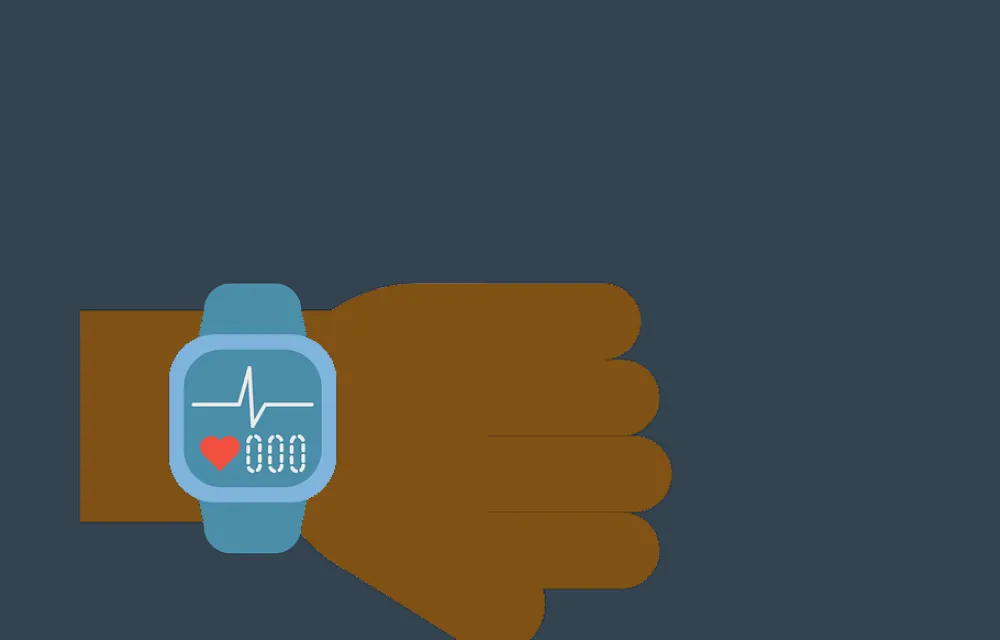
  • Magazine Issue 06/2024 - Special issue on sport psychology

    Heart rate variability (HRV): How Olympic athletes can use the heart-mind connection to boost their performance

    written by: Sylvain Laborde, Stefan Ackermann, Carla Alfonso, Uirassu Borges, Eva Crone, Maša Iskra, Marko Jackovič, Valerie Haydt, Leon Hunder, Rabeea Maqsood, Frederike Midderhoff, Emma Mosley, Denise Paykoç, Caterina Salvotti, Charlotte Sanden, Rebekka Schubert, Maximilian Schmaußer, Laura Voigt
    In Olympic athletes, the heart and the mind team up to achieve success. This synergy can be tracked using heart rate variability (HRV). In this article, you will learn how... more
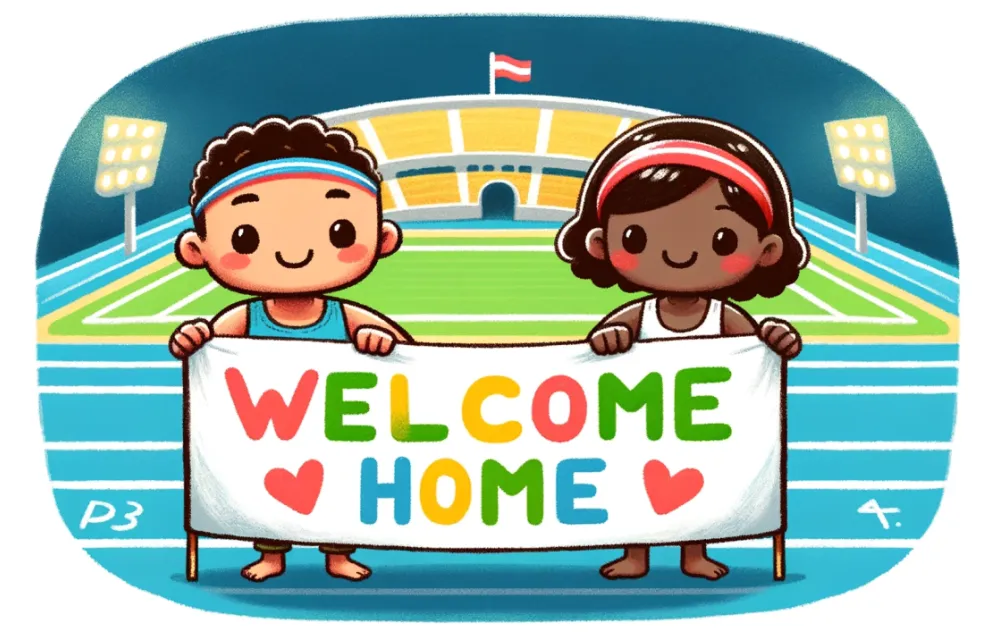
  • Magazine Issue 06/2024 - Special issue on sport psychology

    There is no place like home – How the French crowd may impact the athletes at the Paris 2024 Olympic Games

    written by: Edda van Meurs, Charlotte Behlau, Bernd Strauss
    Athletes and fans believe to be superior when competing at home. Will the French believe the same at this year’s Olympics in Paris? We review the psychological explanations for a... more
  • Magazine Issue 06/2024 - Special issue on sport psychology

    Essential psychological aspects of the Olympic Mind

    written by: Nico W. Van Yperen
    It is a common myth that perfection and ‘rising above yourself’ are required to clinch Olympic gold. Very rarely, however, do athletes realize a perfect race or match. If athletes... more
  • Magazine Issue 06/2024 - Special issue on sport psychology

    Players behind the scenes: How parents join their children’s road to the Olympics

    written by: Valeria C. Eckardt, Noémie Lienhart, Travis E. Dorsch
    At the end of their Olympic careers, many athletes acknowledge the contributions of a hidden participant: their parents. In the present article, the authors review the pivotal impact of parents’... more
  • Magazine Issue 06/2024 - Special issue on sport psychology

    Use your breath to gain a performance advantage

    written by: Maša Iskra, Caterina Salvotti, Nina Zammit
    Inhale. Exhale. Inhale. Exhale. Are you mindful of your breathing pattern? In sports, having control over one’s own breathing pattern and its regulation represents a prominent advantage. The authors draw... more
  • Load More Issues

In-Mind Blog

  • 17.04.2016 |

    Video: Helping

    written by: Diana Onu
    David Schroeder briefly introduces the social psychology of helping, looking at the conditions that facilitate helping, the types of people most likely to help others and their motivations for helping. more
  • 07.03.2016 | Race & Ethnicity, Culture

    Marginal and Happy – How can people be culturally detached and well adjusted?

    written by: Régine Debrosse
    Belonging to several cultural groups at the same time can be associated with complex feelings of group membership. In this post, I will provide an explanation for the phenomenon whereby many immigrants marginalize—feel detached from the mainstream culture they live in and the heritage culture they grew up in—while feeling happy. more
  • 07.02.2016 | Political Psychology

    Are conservatives really simple-minded?

    written by: Lucian Gideon Conway III
    The current consensus in psychology is that political conservatives are uniquely simple-minded. Indeed, even the famous critic of political bias and Heterodox contributor Jonathan Haidt (and colleagues) suggested that there is a “consistent difference between liberals and conservatives” on several measurements related to cognitive complexity (Joseph, Graham, & Haidt, 2009, p. 176). more
  • 30.01.2016 | Meaning Making

    Foetus or child? Language and attitudes toward abortion

    written by: Gosia Mikołajczak
    Due to moral, religious and cultural sensibilities, the topic of abortion still gives rise to controversy in many countries. In this post, I will discuss our research showing how language used in abortion discourse can affect people’s attitudes by changing their attributions of humanity to unborn (Mikołajczak & Bilewicz, 2015). more
  • 13.12.2015 | Big Questions in Society

    Refugees work placement: Call for collaboration

    written by: Sanja Djordjevic
    In the Netherlands only, more than 25.000 refugees arrived this year, and the numbers are rapidly increasing. One of the biggest challenges for refugees is to acclimatize, adapt, and find jobs in a new country. As a group of behavioral change experts, we want to help them, but we need some expert collaborators. This is a call for collaboration with a programmer, translator, and refugee organizations. more
  • 25.11.2015 | Big Questions in Society, Current Events

    Empathy and prejudice after attacks in Paris and Beirut

    written by: Marly van Oirschot
    In this blog, I will try to explain why we showed more empathy for victims in Paris than in Beirut, and how feelings of fear after such a terrorist attack can lead to prejudice against out-groups, especially against Muslims. more
  • Load more blog posts

Editors' Choice

  • Magazine Issue 09/2026

    Teamwork today and tomorrow: The skills that matter and how to build them

    written by: Lara Watermann, Natalie Hogh, Joshua Braun, Simone Kubowitsch
  • In-Mind Blog
    a boy sitting next to a laptop using his phone

    After "Adolescence": What we know (and don’t know) about gender attitudes and online misogyny

    written by: Kate Schramm, Silvana Weber
  • Magazine Issue 08/2026 - SpeciaI issue on artificial intelligence
    Man using ChatGPT

    Benefits and risks of asking AI for health advice

    written by: Jaroslava Kaňková

Most Read

  • Magazine Issue 02/2014

    The good, the bad, and the ugly of the Dove Campaign for Real Beauty

    written by: Angela Celebre, Ashley Waggoner Denton
  • Magazine Issue 03/2026

    Children in front of a screen: what is the impact of technology on their development?

    written by: Marica Notte, Daniela Renzi
  • Magazine Issue 09/2025

    Viral and harmful: Violence in media and its impact on empathy

    written by: Mira Fauth-Bühler

The Inquisitive Mind is supported by:

  • DGPs – Deutsche Gesellschaft für Psychologie
  • C-SEB – Center for Social and Economic Behavior

Menu

  • Magazine
  • Blog
  • Submit to In-Mind
  • About In-Mind
  • Search
  • LinkedIn
  • Bluesky
  • Instagram
  • Print
  • RSS Feed
  • Cookie settings

About Us

In-Mind is a voluntary science communication project. We enable scientifically working psychologists to present their research topics in a scientifically sound, understandable and entertaining way for an interested audience: Psychology by scientists for everyone....more

Footer menu

  • Imprint
  • Data Protection