  • EN
  • DE
  • FR
  • IT
  • NL

User account menu

  • Log in
Home
  • Magazine
    • All issues
    • Glossary
  • Blog
    • All blog posts
  • Submit to In-Mind
    • Articles
    • Blog posts
  • About In-Mind
    • Team
    • What is In-Mind?
    • Credits
  • Search

Psychology for You!

  • Magazine Issue
    09/2026

    Teamwork today and tomorrow: The skills that matter and how to build them

    • written by
    • Lara Watermann,
    • Natalie Hogh,
    • Joshua Braun,
    • Simone Kubowitsch
    Teams today collaborate across screens, time zones, and digital tools, but better technology does not always mean better teamwork. Hybrid meetings, information overload, and workflows supported by artificial intelligence (AI) create new challenges. Drawing on expert insights and psychological research, this article explores which team skills matter most and how teams can build them.
    Read more
  • AI-generated content may reflect gender stereotypes
    Magazine Issue
    08/2026 - SpeciaI issue on artificial intelligence

    Blaming the biased bot? Gender bias in AI-generated content

    • written by
    • Alexandra Wölfle
    With the growing popularity and increasing capabilities of generative AI, more and more attention is also drawn to AI model biases, in particular, gender biases. But what exactly does bias mean in this context, how should it be addressed, and what role do humans play in all this?
    Read more
  • What AIs are made of
    Magazine Issue
    08/2026 - SpeciaI issue on artificial intelligence

    Does ChatGPT think like humans?

    • written by
    • Jannis Friedrich
    AIs like ChatGPT are trained only on texts and do not actually experience the world. It’s been argued that for this reason, AI’s cannot really ‘understand’. This is called the symbol grounding problem: symbols have to be connected to perception and action. To address the question whether AIs can think like humans, this article looks at research on cognition and language.
    Read more
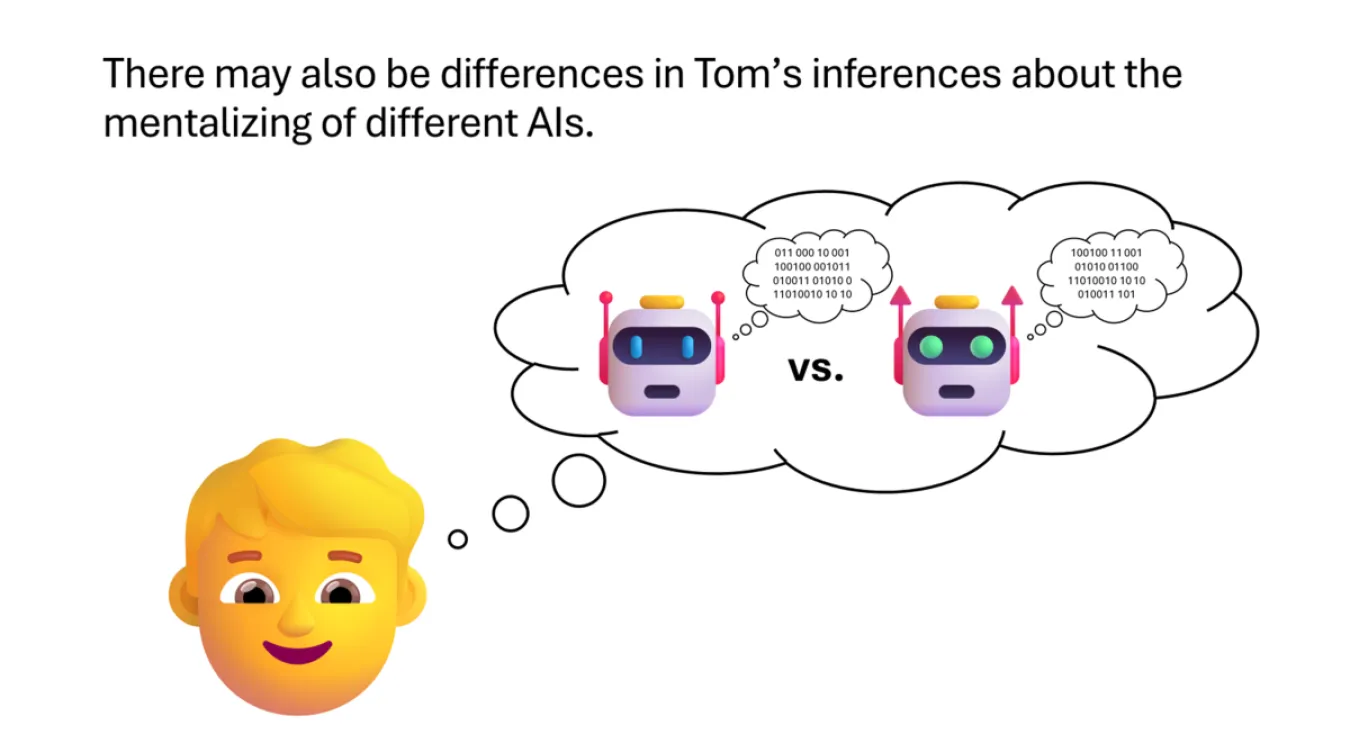
  • Cartoon of boy with speech ballon with 2 robots
    Magazine Issue
    08/2026 - SpeciaI issue on artificial intelligence

    How humans form beliefs about conversational AI

    • written by
    • Tobias R. Rebholz
    Why do we treat Alexa or ChatGPT like a helpful coworker – or even a friend? This article explores how talking to conversational AI shapes the beliefs we form about machines.
    Read more
  • In-Mind Blog

    Join the In-Mind team: Help us make psychology accessible to everyone!

    written by: Rinat Meerson, Stella Wernicke, Jana Dreston
  • Magazine Issue 09/2026

    Teamwork today and tomorrow: The skills that matter and how to build them

    written by: Lara Watermann, Natalie Hogh, Joshua Braun, Simone Kubowitsch
  • In-Mind Blog

    After "Adolescence": What we know (and don’t know) about gender attitudes and online misogyny

    written by: Kate Schramm, Silvana Weber
  • Magazine Issue 08/2026 - SpeciaI issue on artificial intelligence

    Benefits and risks of asking AI for health advice

    written by: Jaroslava Kaňková
  • Magazine Issue 11/2020

    How "The Good Place" illustrates an unorthodox theory in moral psychology

    written by: Alan Jern
    On The Good Place, people are judged on the morality of virtually everything they do. This might seem unfair, but what really counts as moral and non-moral? Evidence from psychology... more
  • Magazine Issue 11/2020

    How The Good Place illustrates an unorthodox theory in moral psychology

    written by:
    On The Good Place, people are judged on the morality of virtually everything they do. This might seem unfair, but what really counts as moral and non-moral? Evidence from psychology... more
  • Magazine Issue 01/2020

    Are you Instagram-official? - Love, social media, and their impact on each other

    written by: Lili Fejes-Vékássy, Adrienn Ujhelyi
    Have you ever thought about the criteria used for being recognized as an official couple on social media? Maybe you felt annoyed when your partner’s new profile picture had been... more
  • Magazine Issue 01/2020

    Can we believe in our own lies?

    written by: Fabiana Battista, Ivan Mangiulli, Antonietta Curci, Paul Riesthuis, Henry Otgaar
    Can we believe in our own lies? Such a question eventually boils down to the issue of whether lying affects memory. ­­­­­­­This is particularly relevant in the legal arena, where... more
  • Magazine Issue 12/2019 - Gender Special Issue

    Sex differences in the perception of sexual arousal

    written by: Andreas Baranowski, Rudolf Stark
    “Men are from mars, women are from Venus” [1] this saying often appears as common knowledge. Particularly the sexuality of men and women is often considered to be fundamentally different... more
  • Magazine Issue 12/2019 - Gender Special Issue

    What are the positive and negative side effects of gender quotas?

    written by: Angela Dorrough, Christa Nater, Monika Leszczyńska
    To decrease inequality between men and women in the workplace, multiple European countries have introduced legislated quota regulations in favor of women. Since 2016, a gender quota has been entrenched... more
  • Load More Issues

In-Mind Blog

  • 16.09.2014 | Meaning Making

    When having meaning in life helps – and why

    written by: Matthew A. Sanders
    This blog examines the search for meaning in life and gives an explanation for why people seek meaning.  Briefly, modern life (relative to our hunter-gatherer past) places people in an uncertain position, and meaning in life can give us a sense that difficulties in life will pay-off. more
  • 30.08.2014 | Culture

    Look at me! (Or don’t): Of society and showing off on Facebook

    written by: Robert Thomson
    Shameless self-promotion on Facebook. Love it or hate it, there’s always someone doing it. And many of us are guilty of it. But why do we do it? Comparing Facebook users in the US and Japan, I suggest it’s the power of the social context that may determine who struts their stuff, and why. more
  • 28.08.2014 | Solid Science

    Can you replicate that?

    written by: Aaron Moss
    The two previous “Solid Science” posts for this blog have covered important changes taking place in experimental psychology. If you have not read them, I recommend you do (post1, post2). In this post I report on another, larger change occurring in the field: the replication movement. more
  • 18.08.2014 | Meaning Making

    Blame. What is it good for?

    written by: Andrew Monroe
    Humans blame, and perhaps only humans do, but what is blame for? Is blame about meting out retribution and revenge? Or is blame a tool for managing others’ behavior? I argue that while the former answer is dominant in social psychology, it predicts a dysfunctional system of blame that explains only a small portion of why people blame. Instead, I suggest that blame is better understood as a tool for changing the way people behave. more
  • 28.07.2014 | Violence & Aggression

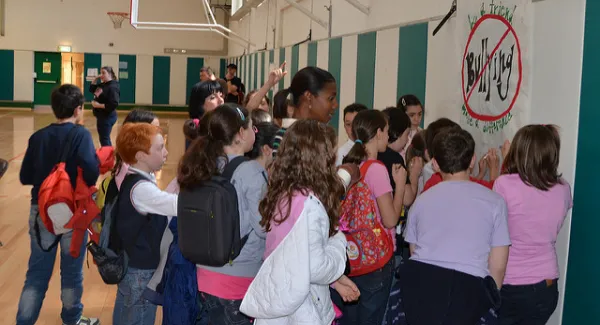
    Foul-weather friends: Social psychology and school aggression

    written by: Sian Jones
    In my last post, I discussed a striking observational study why peer only help infrequently, but I focused my discussion on the point of view of those who are bullying. In this post, I'll look at the perspective of the bullied victims. When it comes to the social psychology of aggression in schools, it seems that groups can both be a part of the problem and the solution, and I will discuss ways on how to attain this. more
  • 14.07.2014 | Culture

    Smile! And I tell you where you’re from

    written by: Marieke van Egmond
    Although a popular belief (and a heartwarming children’s song) hold that we all laugh in the same language, recent research has found that people are remarkably adapt at detecting local accents in the way that emotions are expressed.  In this blog, I will review research that suggests that the long-assumed universality of emotions is limited. more
  • Load more blog posts

Editors' Choice

  • Magazine Issue 09/2026

    Teamwork today and tomorrow: The skills that matter and how to build them

    written by: Lara Watermann, Natalie Hogh, Joshua Braun, Simone Kubowitsch
  • In-Mind Blog
    a boy sitting next to a laptop using his phone

    After "Adolescence": What we know (and don’t know) about gender attitudes and online misogyny

    written by: Kate Schramm, Silvana Weber
  • Magazine Issue 08/2026 - SpeciaI issue on artificial intelligence
    Man using ChatGPT

    Benefits and risks of asking AI for health advice

    written by: Jaroslava Kaňková

Most Read

  • Magazine Issue 02/2014

    The good, the bad, and the ugly of the Dove Campaign for Real Beauty

    written by: Angela Celebre, Ashley Waggoner Denton
  • Magazine Issue 03/2026

    Children in front of a screen: what is the impact of technology on their development?

    written by: Marica Notte, Daniela Renzi
  • Magazine Issue 09/2025

    Viral and harmful: Violence in media and its impact on empathy

    written by: Mira Fauth-Bühler

The Inquisitive Mind is supported by:

  • DGPs – Deutsche Gesellschaft für Psychologie
  • C-SEB – Center for Social and Economic Behavior

Menu

  • Magazine
  • Blog
  • Submit to In-Mind
  • About In-Mind
  • Search
  • LinkedIn
  • Bluesky
  • Instagram
  • Print
  • RSS Feed
  • Cookie settings

About Us

In-Mind is a voluntary science communication project. We enable scientifically working psychologists to present their research topics in a scientifically sound, understandable and entertaining way for an interested audience: Psychology by scientists for everyone....more

Footer menu

  • Imprint
  • Data Protection