  • INT
  • DE
  • FR
  • IT
  • NL

User account menu

  • Log in
Home
  • Magazine
    • All issues
    • Glossary
  • Blog
    • All blog posts
  • Book Reviews
    • Book Reviews
  • Submit to In-Mind
    • Articles
    • Blog posts
  • About In-Mind
    • Team
    • What is In-Mind?
    • Credits

Psychology for You!

  • Magazine Issue
    08/2026 - SpeciaI issue on artificial intelligence

    Understanding the mind-AI connection – how cognitive abilities shape AI use

    • written by
    • Magnus Liebherr,
    • Eva Gößwein
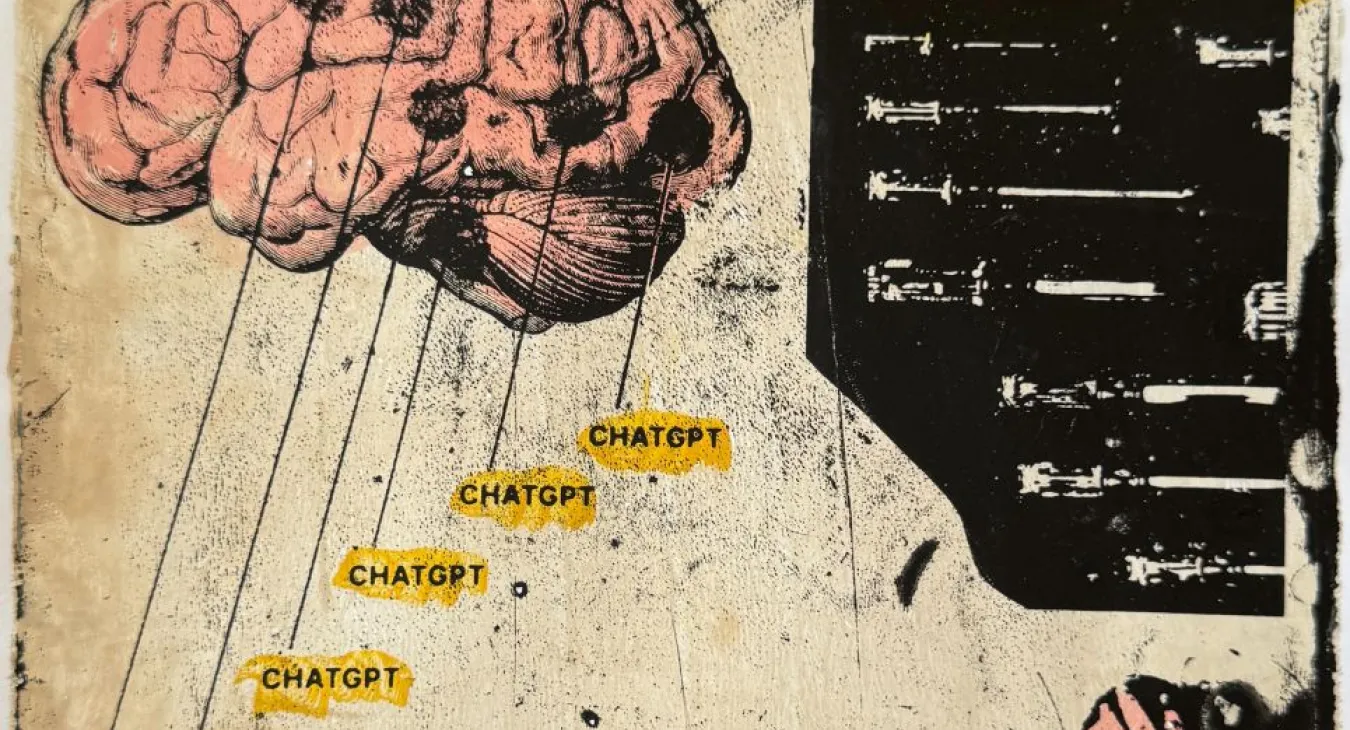
    The impact of Artificial Intelligence (AI) is closely tied to human cognitive abilities – mental processes that determine how we interpret, evaluate, and respond to AI-generated information. Understanding this interplay is essential for designing AI systems that align with human cognition, enhancing user engagement while reducing risks such as automation bias (the tendency to overtrust AI outputs) and cognitive overload (the state in which information exceeds mental capacity). In this article, we introduce the concepts of working memory, cognitive flexibility, and attention and explore how they shape the way we interact with AI. We illustrate how these cognitive functions influence...
    Read more
    • Log in to post comments
  • Human oversight
    Magazine Issue
    08/2026 - SpeciaI issue on artificial intelligence

    Human oversight of AI: An effective remedy for AI risks or a way to induce unwarranted trust in AI?

    • written by
    • Markus Langer,
    • Kevin Baum,
    • Johann Laux
    When AI determines medical treatments or prison sentences, we may find comfort in the idea of a “human touch” in decisions, for instance, in the form of human oversight mandated in AI regulation. But does human oversight add something meaningful or does it merely serve to convince us to trust AI?
    Read more
    • Log in to post comments
  • Digital price tags
    Magazine Issue
    08/2026 - SpeciaI issue on artificial intelligence

    How artificial intelligence in supermarkets influences customer experiences

    • written by
    • Sophia Wingen,
    • Laura Schenk
    A supermarket with prices that can change at any time and fully automated checkouts is no longer fiction but a reality enabled by artificial intelligence. This raises important questions about the consequences for consumers. Besides greater convenience, efficiency, and a personalized shopping experience, AI-driven supermarkets may reduce price and payment transparency and create a less comfortable atmosphere for consumers. This article explores the use of AI in supermarkets from a psychological perspective.
    Read more
    • Log in to post comments
  • AI-generated content may reflect gender stereotypes
    Magazine Issue
    08/2026 - SpeciaI issue on artificial intelligence

    Blaming the biased bot? Gender bias in AI-generated content

    • written by
    • Alexandra Wölfle
    With the growing popularity and increasing capabilities of generative AI, more and more attention is also drawn to AI model biases, in particular, gender biases. But what exactly does bias mean in this context, how should it be addressed, and what role do humans play in all this?
    Read more
    • Log in to post comments
  • Magazine Issue 08/2026 - SpeciaI issue on artificial intelligence

    Understanding the mind-AI connection – how cognitive abilities shape AI use

    written by: Magnus Liebherr, Eva Gößwein
  • Magazine Issue 08/2026 - SpeciaI issue on artificial intelligence

    Human oversight of AI: An effective remedy for AI risks or a way to induce unwarranted trust in AI?

    written by: Markus Langer, Kevin Baum, Johann Laux
  • Magazine Issue 08/2026 - SpeciaI issue on artificial intelligence

    How artificial intelligence in supermarkets influences customer experiences

    written by: Sophia Wingen, Laura Schenk
  • Magazine Issue 08/2026 - SpeciaI issue on artificial intelligence

    Blaming the biased bot? Gender bias in AI-generated content

    written by: Alexandra Wölfle
  • Magazine Issue 01/2019

    From Pervasive Beliefs To Wrongful Convictions

    written by: Enide Maegherman, Robert Horselenberg, Karl Ask, Peter J. Van Koppen
    Popular series like “Making a Murderer” and “The Confession Tapes” have raised public awareness of the possibility of wrongful convictions. Can cognitive psychology resolve why evidence of innocence is overlooked... more
  • Magazine Issue 01/2019

    Refugees wel(l)come: The impact of social support on refugees’ well-being

    written by: Ina-Maria Döring
    To date, the refugee crisis has been a central issue for society and associated with several challenges. This article focuses on the well-being of refugees as a basis for successful... more
  • Magazine Issue 09/2018

    Social Machines: Social Aspects of Human-Computer Interaction

    written by: Flora Almosdi, Adrienn Ujhelyi
    Have you ever experienced the frustration of your computer not behaving as it should? Maybe it started to reboot during your most important meeting, or it simply froze and despite... more
  • Magazine Issue 09/2018

    Understanding Online Child Sexual Abuse and How to Talk to Children About it

    written by: Malin Joleby, Carolina Lunde, Linda Jonsson
    The new digital technology provides children with endless opportunities to explore and communicate. Still, it is important to prepare them for potential risks that they might encounter online, just as... more
  • Magazine Issue 09/2018

    Risk assessment tools and criminal reoffending: Does bias determine who is “high risk”?

    written by: Jennifer Kamorowski, Maartje Schreuder, Corine de Ruiter, Marko Jelícic, Karl Ask
    In The Netherlands in 1993, a man named Thomas was convicted of an arson in which no one was injured. Thomas was sentenced to four years in prison and involuntary... more
  • Magazine Issue 09/2018

    The Effect of Acute Stress on Memory: How It Helps and How It Hurts

    written by: Carey Marr, Melanie Sauerland, Henry Otgaar, Conny Quaedflieg, Lorraine Hope
    Although we often perceive the effect of stress negatively, research suggests that stress effects are not always detrimental. This review paper examines the impact that acute stress has on memory... more
  • Load More Issues

In-Mind Blog

  • 05.05.2014 | Culture

    Can music create intercultural understanding? According to Madonna (and psychological research), it can!

    written by: Marieke van Egmond
    In my last blog, I argued that Madonna’s lyric of ‘music makes the people come together’ has a scientific basis. There are scientific studies that support the claim that music indeed increases cooperation and, thus, brings people together. But, as you might remember, the second line in the chorus of Madonna’s song is: ‘Music mix the bourgeoisie and the rebel’. In this blog, I will discuss whether she is citing the literature correctly or not. more
  • 02.05.2014 | Solid Science

    Pre-registration watch part 1: Detecting deception

    written by: Anna van 't Veer
    In this blog post, I will report on the experiences of social psychologists, such as myself, with committing ourselves to detailed descriptions of the hypotheses and other specifics of experiments before we run them. In part 1, I briefly cover some basics about this so-called pre-registration and then I will discuss my own experience with a pre-registration in the online journal Frontiers about unconscious deception detection. more
  • 28.04.2014 | Meaning Making

    Free will without metaphysics

    written by: Andrew Monroe
    Despite the resurgence of interest in free will, there remains confusion and disagreement regarding free will’s role in social life, in particular, how people understand free will and whether free will guides blame and praise for others. In this blog post I argue that we need to pay closer attention to the folk concept of free will in order to resolve the confusion surrounding free will in everyday life. more
  • 25.04.2014 | Happiness & Well-being

    Where are the genes for psychological traits?

    written by: Marcus Munafo
    In this blog post, I will discuss the methodologies available for identifying genetic influences on psychological traits, why it has proved so difficult to reliably identify specific genes, despite 20 years of effort, and what this tells us about the nature of these genetic influences. more
  • 21.04.2014 | Gender

    Marrying smart or marrying instead of being smart? The goal conflict between MRS degrees and STEM degrees

    written by: Cathleen Clerkin
    In this blog post, I review a number of studies that suggest that telling women to focus on their MRS degree (aka getting married) while in college can make women less interested in earning a STEM degree (Science, Technology, Engineering & Math). Why does this matter? Because the STEM fields are in desperate need of women. Luckily, research also suggests that women in STEM are more desirable than women may realize. more
  • 18.04.2014 | Violence & Aggression

    Sticks and stones and breaking bones: Social psychology and school aggression

    written by: Sian Jones
    Bullying is a pervasive issue in schools today. This is one of two blog posts that will look at school aggression from the perspective of contemporary social psychology. In this post, I'll examine the role of groups in encouraging bullying. In my next post, I'll look at the perspective of the bullied victims. When it comes to bullying, it seems that groups can both be a part of the problem and the solution. more
  • Load more blog posts

Book Reviews

Buried Secrets: Rememberance of Things Past, a Review by Christopher Perez

reviewed by: Christopher Perez

The Coddling of the American Mind, reviewed by Dylan Selterman

reviewed by: Dylan Selterman

My Year of Rest and Relaxation, reviewed by Andrew Archer

reviewed by: Andrew Archer

The Hope Circuit, Reviewed by Joe Smith

reviewed by: Joe Smith

Social Psychology: Revisiting the Classics (2nd Edition)

reviewed by: Richard Skaff

Most Read

  • Magazine Issue 02/2025

    Do we really like what we like? How social influence processes shape our experiences when we are online

    written by: Dr. A. Marthe Möller
  • Magazine Issue 04/2024

    Does nudging have a place in politics? How decision-making contexts inevitably influence our behavior

    written by: Mario Herberz
  • Magazine Issue 06/2024 - Special issue on sport psychology

    In the shades of the rings – experiences of interpersonal violence in elite sports

    written by: Julia T. Schwender, Teresa Greither, Helena Schmitz, Laurie Schwab
  • Magazine Issue 08/2024

    Bug or feature? Boredom feels aversive, and this is why it matters

    written by: Wanja Wolff, Katja Rewitz, Dr. Maik Bieleke
  • Magazine Issue 10/2009

    The Ghost in the System: Where Free Will Lurks in Human Minds

    written by: Jay Michaels, Robin Vallacher

The Inquisitive Mind Magazine is supported by:

  • DGPs
  • C-SEB

Menu

  • Magazine
  • Blog
  • Book Reviews
  • Submit to In-Mind
  • About In-Mind
  • facebook
  • twitter
  • instagram
  • print
  • RSS Feed

About Us

In-Mind is a voluntary science communication project. We enable scientifically working psychologists to present their research topics in a scientifically sound, understandable and entertaining way for an interested audience: Psychology by scientists for everyone....more

Footer menu

  • Imprint
  • Data Protection
Clear keys input element