  • INT
  • DE
  • FR
  • IT
  • NL

User account menu

  • Log in
Home
  • Magazine
    • All issues
    • Glossary
  • Blog
    • All blog posts
  • Book Reviews
    • Book Reviews
  • Submit to In-Mind
    • Articles
    • Blog posts
  • About In-Mind
    • Team
    • What is In-Mind?
    • Credits

Psychology for You!

  • Magazine Issue
    08/2026 - SpeciaI issue on artificial intelligence

    Understanding the mind-AI connection – how cognitive abilities shape AI use

    • written by
    • Magnus Liebherr,
    • Eva Gößwein
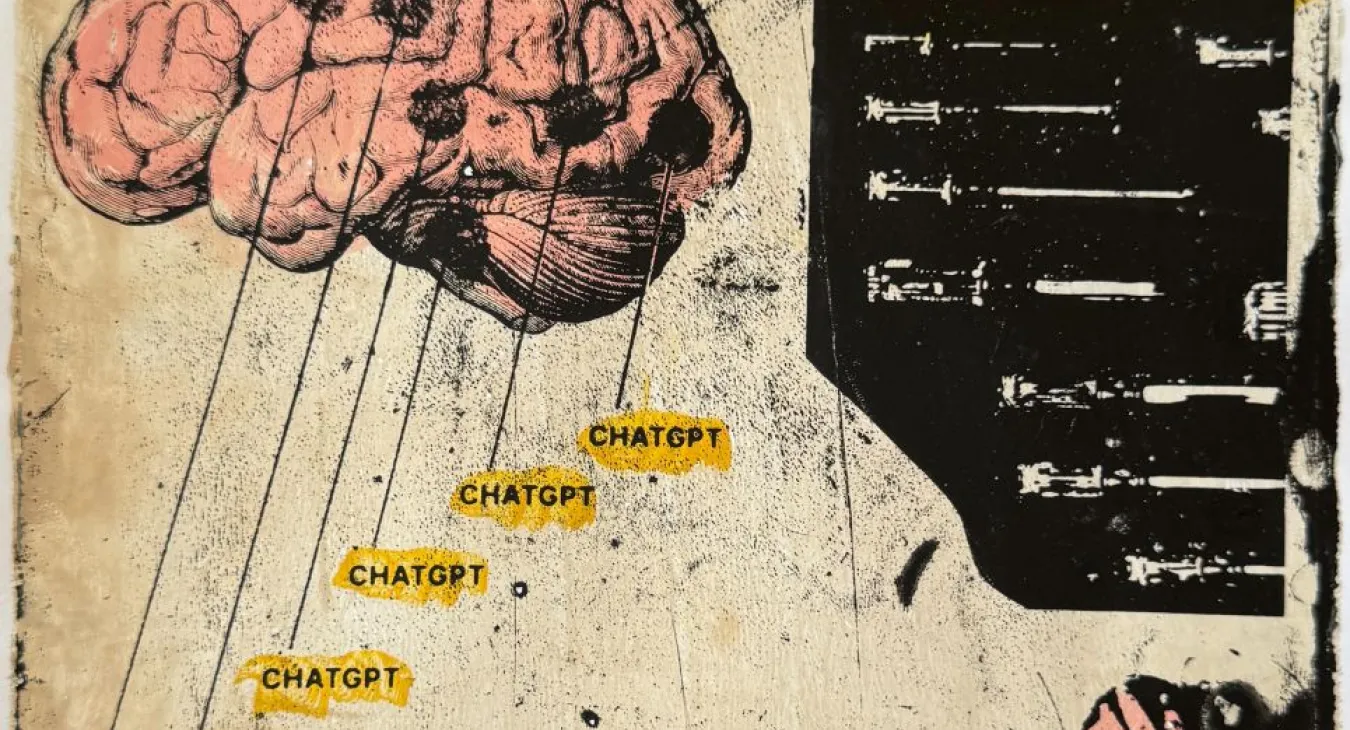
    The impact of Artificial Intelligence (AI) is closely tied to human cognitive abilities – mental processes that determine how we interpret, evaluate, and respond to AI-generated information. Understanding this interplay is essential for designing AI systems that align with human cognition, enhancing user engagement while reducing risks such as automation bias (the tendency to overtrust AI outputs) and cognitive overload (the state in which information exceeds mental capacity). In this article, we introduce the concepts of working memory, cognitive flexibility, and attention and explore how they shape the way we interact with AI. We illustrate how these cognitive functions influence...
    Read more
    • Log in to post comments
  • Human oversight
    Magazine Issue
    08/2026 - SpeciaI issue on artificial intelligence

    Human oversight of AI: An effective remedy for AI risks or a way to induce unwarranted trust in AI?

    • written by
    • Markus Langer,
    • Kevin Baum,
    • Johann Laux
    When AI determines medical treatments or prison sentences, we may find comfort in the idea of a “human touch” in decisions, for instance, in the form of human oversight mandated in AI regulation. But does human oversight add something meaningful or does it merely serve to convince us to trust AI?
    Read more
    • Log in to post comments
  • Digital price tags
    Magazine Issue
    08/2026 - SpeciaI issue on artificial intelligence

    How artificial intelligence in supermarkets influences customer experiences

    • written by
    • Sophia Wingen,
    • Laura Schenk
    A supermarket with prices that can change at any time and fully automated checkouts is no longer fiction but a reality enabled by artificial intelligence. This raises important questions about the consequences for consumers. Besides greater convenience, efficiency, and a personalized shopping experience, AI-driven supermarkets may reduce price and payment transparency and create a less comfortable atmosphere for consumers. This article explores the use of AI in supermarkets from a psychological perspective.
    Read more
    • Log in to post comments
  • AI-generated content may reflect gender stereotypes
    Magazine Issue
    08/2026 - SpeciaI issue on artificial intelligence

    Blaming the biased bot? Gender bias in AI-generated content

    • written by
    • Alexandra Wölfle
    With the growing popularity and increasing capabilities of generative AI, more and more attention is also drawn to AI model biases, in particular, gender biases. But what exactly does bias mean in this context, how should it be addressed, and what role do humans play in all this?
    Read more
    • Log in to post comments
  • Magazine Issue 08/2026 - SpeciaI issue on artificial intelligence

    Understanding the mind-AI connection – how cognitive abilities shape AI use

    written by: Magnus Liebherr, Eva Gößwein
  • Magazine Issue 08/2026 - SpeciaI issue on artificial intelligence

    Human oversight of AI: An effective remedy for AI risks or a way to induce unwarranted trust in AI?

    written by: Markus Langer, Kevin Baum, Johann Laux
  • Magazine Issue 08/2026 - SpeciaI issue on artificial intelligence

    How artificial intelligence in supermarkets influences customer experiences

    written by: Sophia Wingen, Laura Schenk
  • Magazine Issue 08/2026 - SpeciaI issue on artificial intelligence

    Blaming the biased bot? Gender bias in AI-generated content

    written by: Alexandra Wölfle
  • Magazine Issue 05/2018

    Remembering what never occurred? Children’s false memories for repeated experiences

    written by: Bruna Calado, Henry Otgaar, Timothy J. Luke, Sara Landström
    “Memory, my dear Cecily, is the diary that we all carry about with us.” “Yes, but it usually chronicles the things that have never happened, and couldn't possibly have happened.”... more
  • Magazine Issue 05/2018

    Origins of Common Fears: A Review

    written by: Arash Emamzadeh
    Whether you cower while looking down from great heights or fear looking up to the stormy skies, whether you fear the bite of a fat venomous snake or fear the... more
  • Magazine Issue 05/2018

    White lies and black lies: What they have in common and how they differ

    written by: Janina Steinmetz, Ann-Christin Posten
    Black lies, or telling a lie to gain a personal benefit, are universally condemned. In contrast, white lies, or telling a lie to please another person, are seen as an... more
  • Magazine Issue 04/2018

    Fake Posttraumatic Stress Disorder (PTSD) Costs Real Money

    written by: Irena Boskovic, Harald Merckelbach
    As a diagnosis, Posttraumatic stress disorder ( PTSD ) rests entirely on what people report about their symptoms. Thus, many people, such as Robert, Lisa, and even a Senator, who... more
  • Magazine Issue 04/2018

    Bad day? How it can seem even worse for some

    written by: Michelle Lemay, Brittney Holcomb
    Many people do not realize how often our emotions affect us. Our emotions dictate what things we focus on or attend to, how we interpret things, and what things we... more
  • Magazine Issue 04/2018

    Improving the Disclosure of Information in an Investigative Interview: Rapport building and the Physical Environment

    written by: Katherine Hoogesteyn, Ewout Meijer, Aldert Vrij, Harald Merckelbach
    When you think about an interrogation room, what do you picture? A small, dull, and anxiety -provoking room? You may be right; some interrogation rooms look like this. However, does... more
  • Load More Issues

In-Mind Blog

  • 14.04.2014 | Solid Science

    The year the journals changed

    written by: Roger Giner-Sorolla
    Where do all the studies come from? Behind every headline trumpeting a new finding in psychology, you can usually find an article in a peer-reviewed psychology journal. But how reliable are these findings? This is what many scientists have recently started to wonder. Because of this, journals in psychology are starting to insist on better reporting of research studies. In this first post of a two-part series, I will explain some of the standards that have typically been used to judge whether a study deserves publication or not. more
  • 09.04.2014 | Culture

    Colorful Culture

    written by: Charis Eisen, Keiko Ishii
    As a world without colors would be extremely boring, we are luckily able to perceive various different colors that enrich our environment. Recently, Keiko Ishii and colleagues found that the colors we prefer and use for our paintings vary systematically across cultures. But that doesn’t mean that tomorrow’s multi-cultural world is becoming black-and-white or grey, rather there is hope that it will become even more colorful than it is today. In this post, we will illustrate how individuals and cultures engage in mutual construction and thus enhance variety. more
  • 31.03.2014 | Announcements and News

    Inequality: Minority disadvantage or White privilege? - And why it matters

    written by: Ellie Shockley
    In this blog post, I will discuss research showing how framing ethnic inequality in terms of White advantage versus minority disadvantage impacts how Whites and minorities understand inequality and thus how we should address inequality. more
  • 28.03.2014 | Political Psychology

    Bleeding-heart liberals and hard-hearted conservatives: Political dehumanization in the United States

    written by: Jarret Crawford
    My previous blog post covered new research showing that liberals and conservatives are prejudiced against one another to an equal degree. In this post, I will review evidence that liberals’ and conservatives’ prejudices lead them to dehumanize their political opponents—that is, to see them as less than human. more
  • 24.03.2014 | Culture

    Why Madonna was right: Music really does make the people come together

    written by: Marieke van Egmond
    In August 2000, global superstar Madonna released the single “Music” from her soon to be hit album. Other than the brilliant lyrics “Do you like to Boogie woogie”, you might remember that one of the lines in the chorus was “Music makes the people come together.” In this post, I will discuss the social psychological research, which suggests that she was more right then even she must have thought. more
  • 21.03.2014 | Interdisciplinary Inquiries, Current Events, Political Psychology

    Is banning bossy enough to enact real social change? Celebrity activism and the “Ban Bossy” campaign

    written by: Jessica Tomory
    Recently celebrity activists such as Beyoncé, Jenifer Garner, and Sheryl Sandberg have thrown their weight behind a campaign to ban the term “bossy” to describe women (banbossy.com, #banbossy). The goal of the campaign is to encourage young women to step into leadership roles and to assert themselves in the classroom and in life. In this blog I highlight the social value of celebrity activism and I highlight important caveats of celebrity activism based on science. more
  • Load more blog posts

Book Reviews

Buried Secrets: Rememberance of Things Past, a Review by Christopher Perez

reviewed by: Christopher Perez

The Coddling of the American Mind, reviewed by Dylan Selterman

reviewed by: Dylan Selterman

My Year of Rest and Relaxation, reviewed by Andrew Archer

reviewed by: Andrew Archer

The Hope Circuit, Reviewed by Joe Smith

reviewed by: Joe Smith

Social Psychology: Revisiting the Classics (2nd Edition)

reviewed by: Richard Skaff

Most Read

  • Magazine Issue 02/2025

    Do we really like what we like? How social influence processes shape our experiences when we are online

    written by: Dr. A. Marthe Möller
  • Magazine Issue 04/2024

    Does nudging have a place in politics? How decision-making contexts inevitably influence our behavior

    written by: Mario Herberz
  • Magazine Issue 06/2024 - Special issue on sport psychology

    In the shades of the rings – experiences of interpersonal violence in elite sports

    written by: Julia T. Schwender, Teresa Greither, Helena Schmitz, Laurie Schwab
  • Magazine Issue 08/2024

    Bug or feature? Boredom feels aversive, and this is why it matters

    written by: Wanja Wolff, Katja Rewitz, Dr. Maik Bieleke
  • Magazine Issue 10/2009

    The Ghost in the System: Where Free Will Lurks in Human Minds

    written by: Jay Michaels, Robin Vallacher

The Inquisitive Mind Magazine is supported by:

  • DGPs
  • C-SEB

Menu

  • Magazine
  • Blog
  • Book Reviews
  • Submit to In-Mind
  • About In-Mind
  • facebook
  • twitter
  • instagram
  • print
  • RSS Feed

About Us

In-Mind is a voluntary science communication project. We enable scientifically working psychologists to present their research topics in a scientifically sound, understandable and entertaining way for an interested audience: Psychology by scientists for everyone....more

Footer menu

  • Imprint
  • Data Protection
Clear keys input element