  • INT
  • DE
  • FR
  • IT
  • NL

User account menu

  • Log in
Home
  • Magazine
    • All issues
    • Glossary
  • Blog
    • All blog posts
  • Book Reviews
    • Book Reviews
  • Submit to In-Mind
    • Articles
    • Blog posts
  • About In-Mind
    • Team
    • What is In-Mind?
    • Credits

Psychology for You!

  • Magazine Issue
    08/2026 - SpeciaI issue on artificial intelligence

    Understanding the mind-AI connection – how cognitive abilities shape AI use

    • written by
    • Magnus Liebherr,
    • Eva Gößwein
    The impact of Artificial Intelligence (AI) is closely tied to human cognitive abilities – mental processes that determine how we interpret, evaluate, and respond to AI-generated information. Understanding this interplay is essential for designing AI systems that align with human cognition, enhancing user engagement while reducing risks such as automation bias (the tendency to overtrust AI outputs) and cognitive overload (the state in which information exceeds mental capacity). In this article, we introduce the concepts of working memory, cognitive flexibility, and attention and explore how they shape the way we interact with AI. We illustrate how these cognitive functions influence...
    Read more
    • Log in to post comments
  • Human oversight
    Magazine Issue
    08/2026 - SpeciaI issue on artificial intelligence

    Human oversight of AI: An effective remedy for AI risks or a way to induce unwarranted trust in AI?

    • written by
    • Markus Langer,
    • Kevin Baum,
    • Johann Laux
    When AI determines medical treatments or prison sentences, we may find comfort in the idea of a “human touch” in decisions, for instance, in the form of human oversight mandated in AI regulation. But does human oversight add something meaningful or does it merely serve to convince us to trust AI?
    Read more
    • Log in to post comments
  • Digital price tags
    Magazine Issue
    08/2026 - SpeciaI issue on artificial intelligence

    How artificial intelligence in supermarkets influences customer experiences

    • written by
    • Sophia Wingen,
    • Laura Schenk
    A supermarket with prices that can change at any time and fully automated checkouts is no longer fiction but a reality enabled by artificial intelligence. This raises important questions about the consequences for consumers. Besides greater convenience, efficiency, and a personalized shopping experience, AI-driven supermarkets may reduce price and payment transparency and create a less comfortable atmosphere for consumers. This article explores the use of AI in supermarkets from a psychological perspective.
    Read more
    • Log in to post comments
  • AI-generated content may reflect gender stereotypes
    Magazine Issue
    08/2026 - SpeciaI issue on artificial intelligence

    Blaming the biased bot? Gender bias in AI-generated content

    • written by
    • Alexandra Wölfle
    With the growing popularity and increasing capabilities of generative AI, more and more attention is also drawn to AI model biases, in particular, gender biases. But what exactly does bias mean in this context, how should it be addressed, and what role do humans play in all this?
    Read more
    • Log in to post comments
  • Magazine Issue 08/2026 - SpeciaI issue on artificial intelligence

    Understanding the mind-AI connection – how cognitive abilities shape AI use

    written by: Magnus Liebherr, Eva Gößwein
  • Magazine Issue 08/2026 - SpeciaI issue on artificial intelligence

    Human oversight of AI: An effective remedy for AI risks or a way to induce unwarranted trust in AI?

    written by: Markus Langer, Kevin Baum, Johann Laux
  • Magazine Issue 08/2026 - SpeciaI issue on artificial intelligence

    How artificial intelligence in supermarkets influences customer experiences

    written by: Sophia Wingen, Laura Schenk
  • Magazine Issue 08/2026 - SpeciaI issue on artificial intelligence

    Blaming the biased bot? Gender bias in AI-generated content

    written by: Alexandra Wölfle
  • Magazine Issue 01/2018

    Welcome to the Matrix! Opportunities and Risks of the Virtual World

    written by: Sarah Mayr

    It's been almost 20 years since Neo, "The One", booted up to fight the machines in the global smash hit The Matrix. Once painted as a dark and foreboding frontier... more
  • Magazine Issue 01/2018

    Cooperation in social dilemmas: How can psychology help to meet climate change goals?

    written by: Rachel New, Julian Savulescu, Nadira S. Faber
    Effectively managing shared natural resources is essential to protecting and improving our physical environment. This cannot be done without cooperation at international, national and local levels. Bringing together research on... more
  • Magazine Issue 01/2018

    Selfie-Esteem: The Relationship Between Body Dissatisfaction and Social Media in Adolescent and Young Women

    written by: Bindal Makwana, Yaeeun Lee, Susannah Parkin, Leland Farmer
    Social media platforms like Instagram and Facebook have become ingrained in the lives of countless individuals. With adolescents and young adults, particularly young women, being the primary users of such... more
  • Magazine Issue 07/2017

    The Face of Leadership: How CEOs’ Facial Appearance Predicts Business Success

    written by: Daniel E. Re, Nicholas O. Rule
    Recent research in social psychology has demonstrated that the facial appearance of Chief Executive Officers (CEOs) and other business leaders predicts their companies’ financial performance. In this article, we review... more
  • Magazine Issue 07/2017

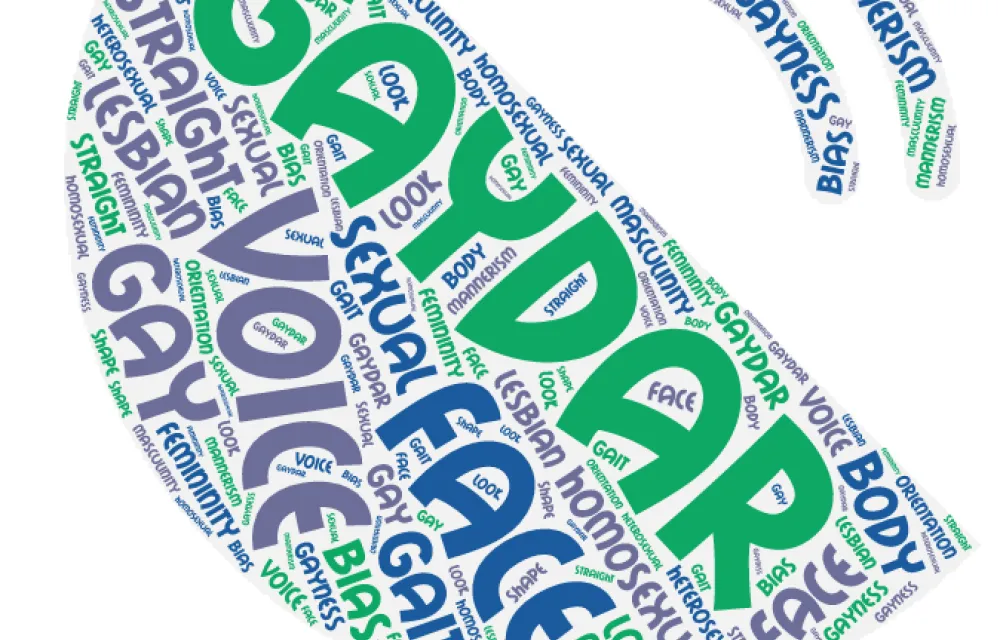
    Straight talk about gaydar: How do individuals guess others’ sexual orientation?

    written by: Fabio Fasoli, Peter Hegarty
    Individuals guess women’s and men’s sexual orientation on the basis of visual, non-verbal, and vocal cues. People use these cues as signs of others’ sexual orientation . Here, we review... more
  • Magazine Issue 03/2017

    In Defense of Anger: An Evolutionary Necessity and its Contemporary Applicability

    written by: Cameron Stuart Kay
    Anger is defined as an unpleasant feeling that results from an unpleasant event and it is, therefore, not particularly surprising that so many people dismiss it as a pointless emotion... more
  • Load More Issues

In-Mind Blog

  • 14.03.2014 | Happiness & Well-being

    Variety and motivation: The crux to lasting happiness

    written by: Alina Feinholdt
    Most people seek lasting happiness but only a few are aware of the fact that false expectations and a tedious lifestyle can speed up the disappearance of happiness. In this blog post, I explain how exciting activities and motivation may curb the dwindling of happiness. more
  • 10.03.2014 | Political Psychology

    Being rational and emotional are not (necessarily) contradictions

    written by: Mark Brandt
    In the first part of this three part series, my colleague Ellie Shockley described how rational thinking may drive political attitudes and voting behavior. In the second part of the series, Matt Moytl described how emotion may drive political attitudes and voting behavior. In the final part of this series, I discuss how emotions and reasons are not necessarily in conflict. more
  • 07.03.2014 | Meaning Making

    CEO’s, morality, and minds: How good and bad guide our perceptions of others

    written by: Andrew Monroe
    Morality colors the way we view the world, but how it influences our judgments of others is a controversial debate. One popular view is that morality biases people’s perceptions of others—specifically others’ intentions. I suggest that this view is incorrect. Instead, valence, not morality, guides perception, and it does so in a way that may be adaptive. more
  • 01.03.2014 | Political Psychology

    Political convictions emerge from the gut

    written by: Matt Motyl
    In the first part of this three part series, my colleague Ellie Shockley described how rational thinking may drive political attitudes and voting behavior. In this second part of the series, I describe how emotion may drive political attitudes and voting behavior. In the final part of this series, Mark Brandt will discuss how emotion and reason each contribute to people’s political attitudes and behaviors. more
  • 27.02.2014 | Violence & Aggression

    Fifty Shades of arousal misattribution and cognitive associations: How Christian Grey is making us believe that women find BDSM “hot”

    written by: Kathryn Bartlett Anderson
    Does Fifty Shades of Grey make you wonder if BDSM is arousing? If women secretly want to be spanked? This post explains how Fifty Shades readers may develop this belief, how it may affect their behavior, and how it may increase sexual aggression against women. more
  • 24.02.2014 | Political Psychology

    Are voters rational?

    written by: Ellie Shockley
    Are voters rational? As a part of a three-part series on the subject of voter rationality, my colleagues Matt Motyl, Mark Brandt, and I will discuss some theories and research dealing with voters’ attitudes and behaviors. We hope you will stay a part of the conversation with us! more
  • Load more blog posts

Book Reviews

Buried Secrets: Rememberance of Things Past, a Review by Christopher Perez

reviewed by: Christopher Perez

The Coddling of the American Mind, reviewed by Dylan Selterman

reviewed by: Dylan Selterman

My Year of Rest and Relaxation, reviewed by Andrew Archer

reviewed by: Andrew Archer

The Hope Circuit, Reviewed by Joe Smith

reviewed by: Joe Smith

Social Psychology: Revisiting the Classics (2nd Edition)

reviewed by: Richard Skaff

Most Read

  • Magazine Issue 02/2025

    Do we really like what we like? How social influence processes shape our experiences when we are online

    written by: Dr. A. Marthe Möller
  • Magazine Issue 04/2024

    Does nudging have a place in politics? How decision-making contexts inevitably influence our behavior

    written by: Mario Herberz
  • Magazine Issue 06/2024 - Special issue on sport psychology

    In the shades of the rings – experiences of interpersonal violence in elite sports

    written by: Julia T. Schwender, Teresa Greither, Helena Schmitz, Laurie Schwab
  • Magazine Issue 08/2024

    Bug or feature? Boredom feels aversive, and this is why it matters

    written by: Wanja Wolff, Katja Rewitz, Dr. Maik Bieleke
  • Magazine Issue 10/2009

    The Ghost in the System: Where Free Will Lurks in Human Minds

    written by: Jay Michaels, Robin Vallacher

The Inquisitive Mind Magazine is supported by:

  • DGPs
  • C-SEB

Menu

  • Magazine
  • Blog
  • Book Reviews
  • Submit to In-Mind
  • About In-Mind
  • facebook
  • twitter
  • instagram
  • print
  • RSS Feed

About Us

In-Mind is a voluntary science communication project. We enable scientifically working psychologists to present their research topics in a scientifically sound, understandable and entertaining way for an interested audience: Psychology by scientists for everyone....more

Footer menu

  • Imprint
  • Data Protection
Clear keys input element