  • EN
  • DE
  • FR
  • IT
  • NL

User account menu

  • Log in
Home
  • Magazine
    • All issues
    • Glossary
  • Blog
    • All blog posts
  • Submit to In-Mind
    • Articles
    • Blog posts
  • About In-Mind
    • Team
    • What is In-Mind?
    • Credits
  • Search

Psychology for You!

  • Magazine Issue
    09/2026

    Teamwork today and tomorrow: The skills that matter and how to build them

    • written by
    • Lara Watermann,
    • Natalie Hogh,
    • Joshua Braun,
    • Simone Kubowitsch
    Teams today collaborate across screens, time zones, and digital tools, but better technology does not always mean better teamwork. Hybrid meetings, information overload, and workflows supported by artificial intelligence (AI) create new challenges. Drawing on expert insights and psychological research, this article explores which team skills matter most and how teams can build them.

    Read more
  • AI in healthcare
    Magazine Issue
    08/2026 - SpeciaI issue on artificial intelligence

    Doctor, meet AI: How AI systems influence human decision-making in healthcare

    • written by
    • Julia Cecil,
    • Selina Angerer,
    • Eesha Kokje,
    • Susanne Gaube,
    • Anne-Kathrin Kleine,
    • Eva Lermer
    Artificial Intelligence (AI) is revolutionizing healthcare, from enhancing radiology diagnoses to supporting mental health treatment. But while it promises efficiency and accuracy, its integration raises questions of trust, bias, and decision-making dynamics. Will AI become an indispensable medical partner, or will barriers hinder its adoption? This article explores AI’s expanding role, its impact on healthcare professionals, and the road ahead.
    Read more
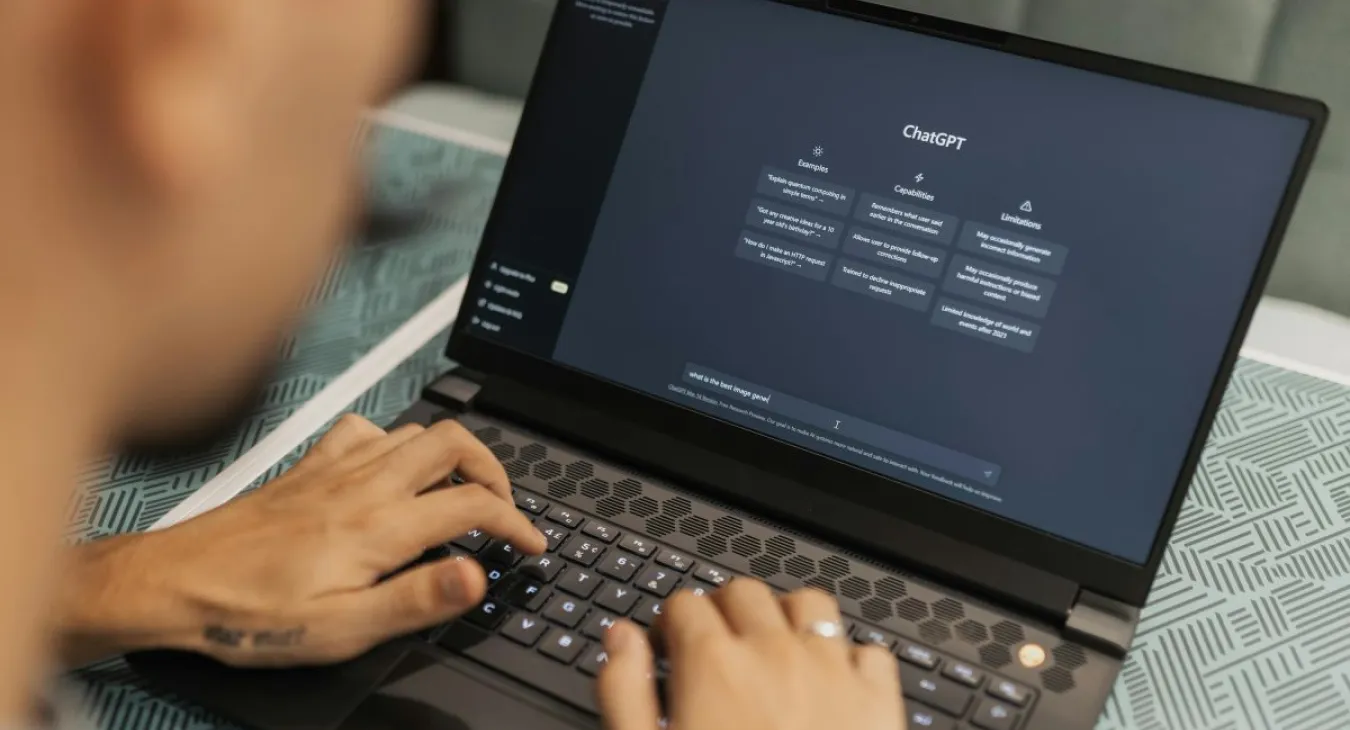
  • Man using ChatGPT
    Magazine Issue
    08/2026 - SpeciaI issue on artificial intelligence

    Benefits and risks of asking AI for health advice

    • written by
    • Jaroslava Kaňková
    Can ChatGPT become your new health advisor – or even your therapist? Generative AI tools are changing how we access health information, offering speed and convenience like never before. But alongside the benefits come real risks. This article explores the promise and pitfalls of AI in non-clinical health settings.
    Read more
  • Magazine Issue
    08/2026 - SpeciaI issue on artificial intelligence

    Understanding the mind-AI connection – how cognitive abilities shape AI use

    • written by
    • Magnus Liebherr,
    • Eva Gößwein
    The impact of Artificial Intelligence (AI) is closely tied to human cognitive abilities – mental processes that determine how we interpret, evaluate, and respond to AI-generated information. Understanding this interplay is essential for designing AI systems that align with human cognition, enhancing user engagement while reducing risks such as automation bias (the tendency to overtrust AI outputs) and cognitive overload (the state in which information exceeds mental capacity). In this article, we introduce the concepts of working memory, cognitive flexibility, and attention and explore how they shape the way we interact with AI. We illustrate how these cognitive functions influence...
    Read more
  • In-Mind Blog

    Join the In-Mind team: Help us make psychology accessible to everyone!

    written by: Rinat Meerson, Stella Wernicke, Jana Dreston
  • Magazine Issue 09/2026

    Teamwork today and tomorrow: The skills that matter and how to build them

    written by: Lara Watermann, Natalie Hogh, Joshua Braun, Simone Kubowitsch
  • In-Mind Blog

    After "Adolescence": What we know (and don’t know) about gender attitudes and online misogyny

    written by: Kate Schramm, Silvana Weber
  • Magazine Issue 08/2026 - SpeciaI issue on artificial intelligence

    Benefits and risks of asking AI for health advice

    written by: Jaroslava Kaňková
  • Magazine Issue 12/2019 - Gender Special Issue

    Just a compliment? Why positive gender stereotypes can be more harmful than they seem

    written by: Lea Hartwich, Julia C. Becker
    Most people would probably agree that “women can’t drive” is a sexist statement. But what about saying that “women are nurturing”? Isn’t that just a nice compliment? At first glance... more
  • Magazine Issue 12/2019 - Gender Special Issue

    What career should I choose? How self-stereotyping can influence career decisions

    written by: Tanja Hentschel, Lisa Horvath
    Stereotypical self-characterizations of women and men can result in different career decisions – contributing to the continuing gender imbalance in leadership and many career fields. We explain how stereotypical self-characterizations... more
  • Magazine Issue 12/2019 - Gender Special Issue

    To which gender’s disadvantage are school grades biased – girls or boys?

    written by: Carolin Schuster
    School grades do not only provide students with feedback on their current performance, they also determine the chances of admission to universities and the success of job applications. The question... more
  • Magazine Issue 10/2019

    Fair enough? The inequality paradox, inequality awareness, and system justification

    written by: Carmen Cervone, Andrea Scatolon
    Picture society. Some people are rich, some are poor and that’s just the way it is. After all, rich people have worked hard to get where they are, and anyone... more
  • Magazine Issue 10/2019

    Going the extra mile at work: Helpful or harmful?

    written by: Marc Cubrich
    Is it helpful or harmful to go the extra mile at work? While generally regarded favorably, organizational researchers are increasingly considering the potential dark side of discretionary work behaviors that... more
  • Magazine Issue 04/2019

    Can vacations live up to their reputation?

    written by: Ina-Maria Döring
    Especially in the time before summer, people look forward to the beginning of their summer vacations. On the one hand, holidays are an integral part of life of our society... more
  • Load More Issues

In-Mind Blog

  • 09.07.2014 | Happiness & Well-being

    Smartphones: A threat to well-being?

    written by: Alina Feinholdt
    Nowadays, smartphones appear to play an inevitable role both in our work and private life. However, when it comes to work-related use, smartphones can hamper recovery and thus, pose a threat to our well-being. In this blog-post, I review recent studies on how and when potential side-effects may occur. more
  • 05.07.2014 | Violence & Aggression

    Why Are We Still Spanking Our Kids?

    written by: Kathryn Bartlett Anderson, Donald Lucas
    Although it is counterintuitive, violence in America today is most likely to occur within the home (Rennison, 2003). Might the origin of violence be within the home as well, specifically the use of physical punishment on children?  Public opinion condoning physical punishment in America has been declining in recent years (Gershoff, 2008); however, more than 65% of parents report using corporal punishment on their children (Socolar, Savage & Evans, 2007).  In this blog post we discuss legal, attitudinal and motivational factors that explain why we use physical punishment with children, specifically: (1) the United States, unlike most other countries, does not legislate against it, (2) attitudes condoning corporal punishment remain strong, particularly in some U.S. regions and cultures, (3) situational precipitating factors, impulsive appraisal, and cognitive scripts for aggressive punishment can interact to result in a spanking episode. We also describe the harmful psychological effects of physical punishment and the potential next steps needed to stop this common form of violence. more
  • 26.06.2014 | Happiness & Well-being

    From candidate genes to genome-wide association studies

    written by: Marcus Munafo
    In my last post I asked where the genes for psychological traits are, and argued that over the last two decades candidate gene studies have failed to identify genes that are reliably associated with complex behavioral phenotypes. In this post, I will discuss more recent whole genome methods, such as genome-wide association studies, and what we have learned from these. more
  • 20.06.2014 | Romance & Friendship

    Now I ain’t sayin she’s a gold digger, but will she get with someone who makes less than her, either?

    written by: Cathleen Clerkin
    In this post I review research showing that women do not care about partner’s income as much as people may think.  In fact, the research suggests that both men and women overestimate the degree to which the other gender cares about money in relationships.  These findings are particularly relevant given that some opponents of the 2014 U.S. Paycheck Fairness Act have stated that women prefer to make less money than their romantic partners. more
  • 04.06.2014 | Romance & Friendship

    Learning from our dreams

    written by: Dylan Selterman
    In this post, I describe how dreams are associated with people’s behavior after waking up, especially in the context of their close relationships. Have you ever felt upset at someone after what they did in your dream? There are several theories to explain how and why this happens, along with some references to Friends and The Matrix. more
  • 02.06.2014 | Meaning Making

    Only searching for a plane? What the disappearance of Flight MH 370 reveals about the human need for meaning and certainty

    written by: Aaron Moss
    In this post, I describe how two core motives of human social behavior—the need for understanding and the need for control—shape people’s responses to disaster. Using the disappearance of Malaysian Airlines Flight 370 as an example, I describe how people seek to maintain meaning (related to understanding) and to re-establish certainty (related to control) after unforeseen disasters. more
  • Load more blog posts

Editors' Choice

  • Magazine Issue 09/2026

    Teamwork today and tomorrow: The skills that matter and how to build them

    written by: Lara Watermann, Natalie Hogh, Joshua Braun, Simone Kubowitsch
  • In-Mind Blog
    a boy sitting next to a laptop using his phone

    After "Adolescence": What we know (and don’t know) about gender attitudes and online misogyny

    written by: Kate Schramm, Silvana Weber
  • Magazine Issue 08/2026 - SpeciaI issue on artificial intelligence
    Man using ChatGPT

    Benefits and risks of asking AI for health advice

    written by: Jaroslava Kaňková

Most Read

  • Magazine Issue 02/2014

    The good, the bad, and the ugly of the Dove Campaign for Real Beauty

    written by: Angela Celebre, Ashley Waggoner Denton
  • Magazine Issue 03/2026

    Children in front of a screen: what is the impact of technology on their development?

    written by: Marica Notte, Daniela Renzi
  • Magazine Issue 09/2025

    Viral and harmful: Violence in media and its impact on empathy

    written by: Mira Fauth-Bühler

The Inquisitive Mind is supported by:

  • DGPs – Deutsche Gesellschaft für Psychologie
  • C-SEB – Center for Social and Economic Behavior

Menu

  • Magazine
  • Blog
  • Submit to In-Mind
  • About In-Mind
  • Search
  • LinkedIn
  • Bluesky
  • Instagram
  • Print
  • RSS Feed
  • Cookie settings

About Us

In-Mind is a voluntary science communication project. We enable scientifically working psychologists to present their research topics in a scientifically sound, understandable and entertaining way for an interested audience: Psychology by scientists for everyone....more

Footer menu

  • Imprint
  • Data Protection