  • EN
  • DE
  • FR
  • IT
  • NL

User account menu

  • Log in
Home
  • Magazine
    • All issues
    • Glossary
  • Blog
    • All blog posts
  • Submit to In-Mind
    • Articles
    • Blog posts
  • About In-Mind
    • Team
    • What is In-Mind?
    • Credits
  • Search

Psychology for You!

  • Magazine Issue
    09/2026

    Teamwork today and tomorrow: The skills that matter and how to build them

    • written by
    • Lara Watermann,
    • Natalie Hogh,
    • Joshua Braun,
    • Simone Kubowitsch
    Teams today collaborate across screens, time zones, and digital tools, but better technology does not always mean better teamwork. Hybrid meetings, information overload, and workflows supported by artificial intelligence (AI) create new challenges. Drawing on expert insights and psychological research, this article explores which team skills matter most and how teams can build them.
    Read more
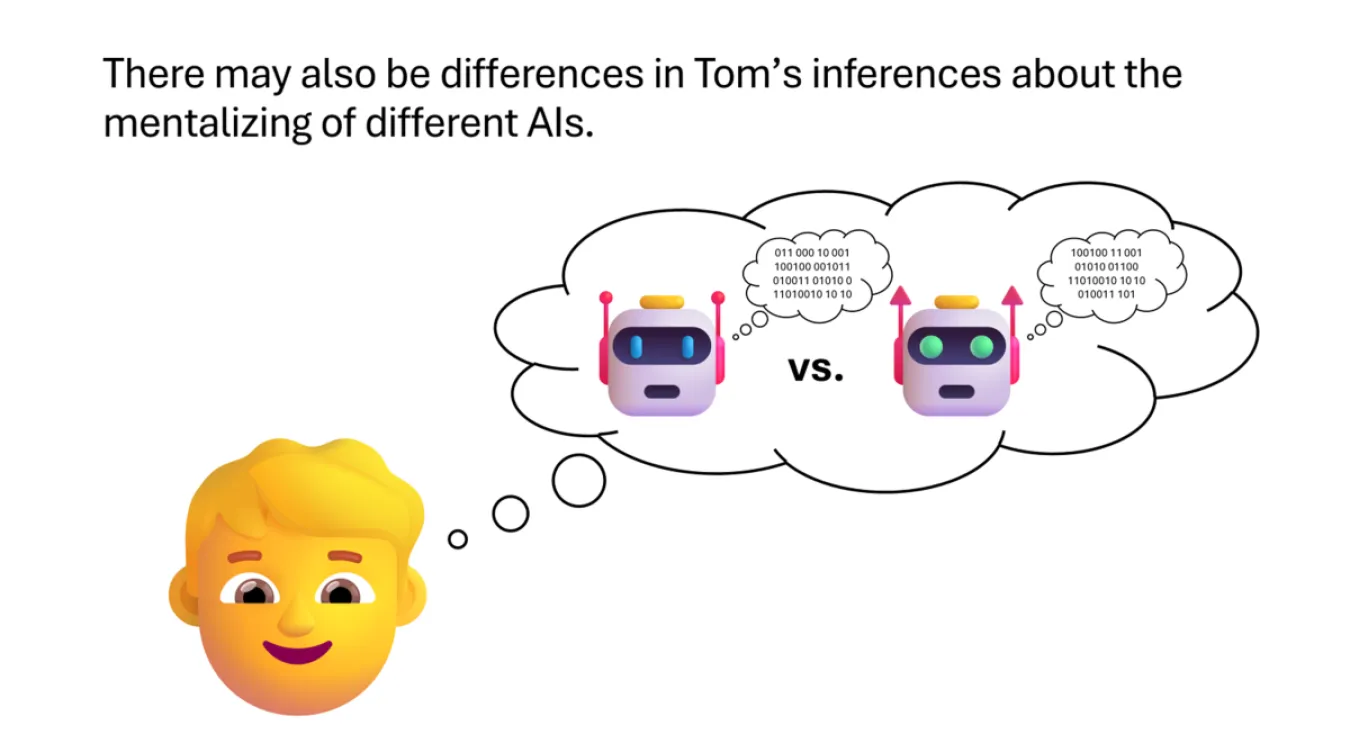
  • Cartoon of boy with speech ballon with 2 robots
    Magazine Issue
    08/2026 - SpeciaI issue on artificial intelligence

    How humans form beliefs about conversational AI

    • written by
    • Tobias R. Rebholz
    Why do we treat Alexa or ChatGPT like a helpful coworker – or even a friend? This article explores how talking to conversational AI shapes the beliefs we form about machines.
    Read more
  • Magazine Issue
    08/2026 - SpeciaI issue on artificial intelligence

    Why putting humans in the loop can make decision-making with AI worse

    • written by
    • Tobias Rieger,
    • Dietrich Manzey,
    • Eileen Roesler,
    • Linda Onnasch
    AI’s decisions are often comprised with a human in the loop. Why? The person tries to improve the decisions but ends up making it worse despite good intentions. Our need to contribute interferes with these systems. In this article, we discuss this issue and whether explainable AI can foster true human-AI teamwork for better choices.
    Read more
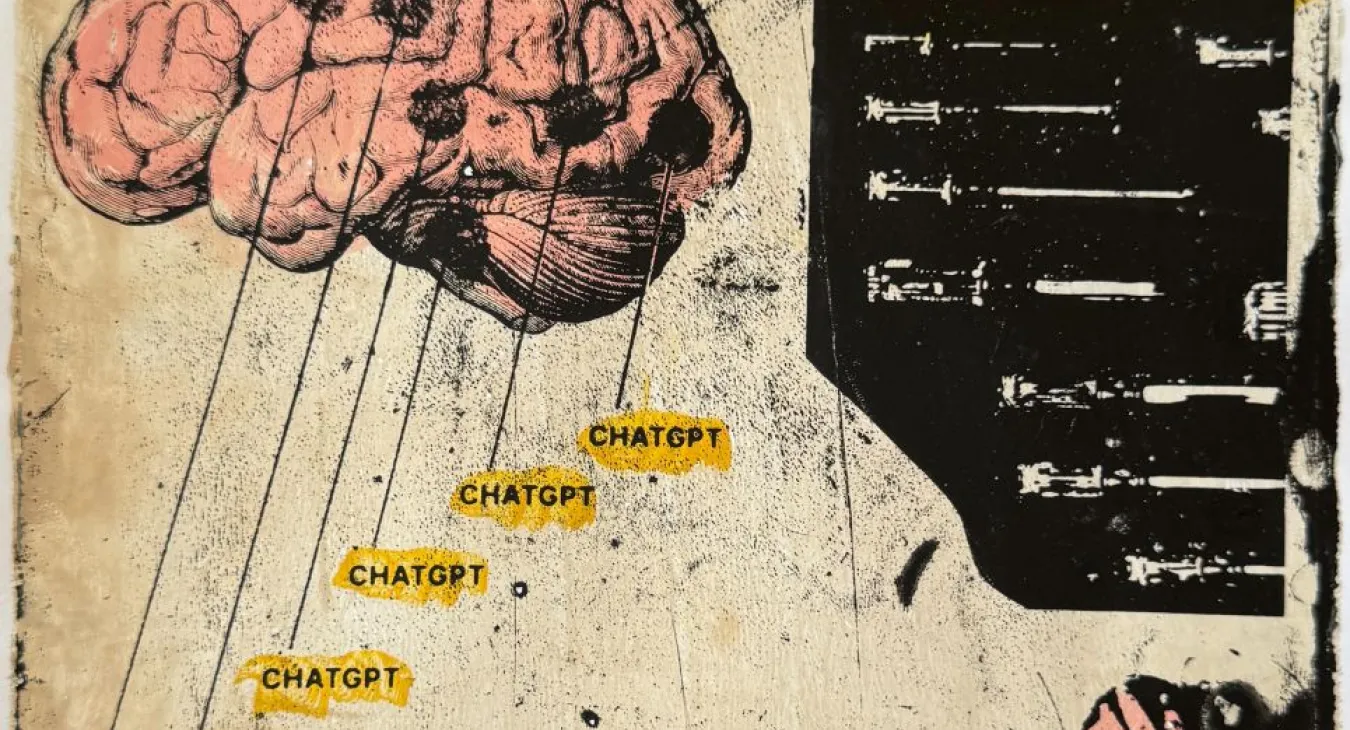
  • a brain with areas marked as responsible for chatGPT processing
    Magazine Issue
    08/2026 - SpeciaI issue on artificial intelligence

    Editorial for the special issue "Artificial intelligence, real consequences: Exploring the psychological dimensions of AI"

    • written by
    • Magdalena Wischnewski,
    • Stella Wernicke
    Not long ago, artificial intelligence was mostly found in science fiction and computer science departments. Today, it drafts our emails, recommends our next purchase, tutors our children, and occasionally tells us it understands how we feel. This shift has happened so quickly that our psychological vocabulary is still catching up. What does it mean to trust a system that has no body, no history, and no stake in the outcome but communicates like us? Why do we sometimes treat a chatbot with the same politeness we'd extend to a colleague, and other times discard it the moment it makes a...
    Read more
  • In-Mind Blog

    Join the In-Mind team: Help us make psychology accessible to everyone!

    written by: Rinat Meerson, Stella Wernicke, Jana Dreston
  • Magazine Issue 09/2026

    Teamwork today and tomorrow: The skills that matter and how to build them

    written by: Lara Watermann, Natalie Hogh, Joshua Braun, Simone Kubowitsch
  • In-Mind Blog

    After "Adolescence": What we know (and don’t know) about gender attitudes and online misogyny

    written by: Kate Schramm, Silvana Weber
  • Magazine Issue 08/2026 - SpeciaI issue on artificial intelligence

    Benefits and risks of asking AI for health advice

    written by: Jaroslava Kaňková
  • Magazine Issue 01/2019

    Refugees wel(l)come: The impact of social support on refugees’ well-being

    written by: Ina-Maria Döring
    To date, the refugee crisis has been a central issue for society and associated with several challenges. This article focuses on the well-being of refugees as a basis for successful... more
  • Magazine Issue 01/2019

    From Pervasive Beliefs To Wrongful Convictions

    written by: Enide Maegherman, Robert Horselenberg, Karl Ask, Peter J. Van Koppen
    Popular series like “Making a Murderer” and “The Confession Tapes” have raised public awareness of the possibility of wrongful convictions. Can cognitive psychology resolve why evidence of innocence is overlooked in... more
  • Magazine Issue 01/2019

    Sorry, Not Sorry: Apologies and Denials in the #MeToo Movement

    written by: Chris Reinders Folmer
    The #MeToo-movement publicly confronts alleged perpetrators of sexual misconduct with their transgressions. In return, the accused often struggle with the question of how to reply. What can research about trust... more
  • Magazine Issue 09/2018

    The Effect of Acute Stress on Memory: How It Helps and How It Hurts

    written by: Carey Marr, Melanie Sauerland, Henry Otgaar, Conny Quaedflieg, Lorraine Hope
    Although we often perceive the effect of stress negatively, research suggests that stress effects are not always detrimental. This review paper examines the impact that acute stress has on memory... more
  • Magazine Issue 09/2018

    Risk assessment tools and criminal reoffending: Does bias determine who is “high risk”?

    written by: Jennifer Kamorowski, Maartje Schreuder, Corine de Ruiter, Marko Jelícic, Karl Ask
    In The Netherlands in 1993, a man named Thomas was convicted of an arson in which no one was injured. Thomas was sentenced to four years in prison and involuntary... more
  • Magazine Issue 09/2018

    Understanding Online Child Sexual Abuse and How to Talk to Children About it

    written by: Malin Joleby, Carolina Lunde, Linda Jonsson
    The new digital technology provides children with endless opportunities to explore and communicate. Still, it is important to prepare them for potential risks that they might encounter online, just as... more
  • Load More Issues

In-Mind Blog

  • 30.05.2014 | Violence & Aggression

    Coping with being bullied

    written by: Matt Newman
    In this blog post, I discuss recent research suggesting that being the victim of bullying can have a long-lasting impact on mental and physical health.  But there’s a ray of hope in this literature as well:  the lasting impact may depend on the ways that victims cope with being bullied. more
  • 28.05.2014 | Political Psychology

    Political ideology is more than just “liberal” and “conservative”

    written by: Jarret Crawford
    In this blog post, I describe new evidence that thinking about political ideology on a single liberal/left to conservative/right spectrum masks important nuances in the origins of political ideologies and in the way that people apply those ideologies to important judgments, including those of other people (i.e., prejudice). more
  • 13.05.2014 | Social Influence & Negotiations

    Would One Direction be as popular if we got to re-run the world?

    written by: Ase Innes-Ker
    In this post I ask why do songs, movies and books become popular? If you love something, it is easy to think it must be its obvious qualities, but if you work in promotion, you know that these qualities are not easy to spot. Usually, we look to our peers to discover new things – what Psychologists call social proof. The work I present shows how important social proof is in determining what becomes popular, but also that appeal, to some degree, matters. more
  • 05.05.2014 | Culture

    Can music create intercultural understanding? According to Madonna (and psychological research), it can!

    written by: Marieke van Egmond
    In my last blog, I argued that Madonna’s lyric of ‘music makes the people come together’ has a scientific basis. There are scientific studies that support the claim that music indeed increases cooperation and, thus, brings people together. But, as you might remember, the second line in the chorus of Madonna’s song is: ‘Music mix the bourgeoisie and the rebel’. In this blog, I will discuss whether she is citing the literature correctly or not. more
  • 02.05.2014 | Solid Science

    Pre-registration watch part 1: Detecting deception

    written by: Anna van 't Veer
    In this blog post, I will report on the experiences of social psychologists, such as myself, with committing ourselves to detailed descriptions of the hypotheses and other specifics of experiments before we run them. In part 1, I briefly cover some basics about this so-called pre-registration and then I will discuss my own experience with a pre-registration in the online journal Frontiers about unconscious deception detection. more
  • 28.04.2014 | Meaning Making

    Free will without metaphysics

    written by: Andrew Monroe
    Despite the resurgence of interest in free will, there remains confusion and disagreement regarding free will’s role in social life, in particular, how people understand free will and whether free will guides blame and praise for others. In this blog post I argue that we need to pay closer attention to the folk concept of free will in order to resolve the confusion surrounding free will in everyday life. more
  • Load more blog posts

Editors' Choice

  • Magazine Issue 09/2026

    Teamwork today and tomorrow: The skills that matter and how to build them

    written by: Lara Watermann, Natalie Hogh, Joshua Braun, Simone Kubowitsch
  • In-Mind Blog
    a boy sitting next to a laptop using his phone

    After "Adolescence": What we know (and don’t know) about gender attitudes and online misogyny

    written by: Kate Schramm, Silvana Weber
  • Magazine Issue 08/2026 - SpeciaI issue on artificial intelligence
    Man using ChatGPT

    Benefits and risks of asking AI for health advice

    written by: Jaroslava Kaňková

Most Read

  • Magazine Issue 02/2014

    The good, the bad, and the ugly of the Dove Campaign for Real Beauty

    written by: Angela Celebre, Ashley Waggoner Denton
  • Magazine Issue 03/2026

    Children in front of a screen: what is the impact of technology on their development?

    written by: Marica Notte, Daniela Renzi
  • Magazine Issue 09/2025

    Viral and harmful: Violence in media and its impact on empathy

    written by: Mira Fauth-Bühler

The Inquisitive Mind is supported by:

  • DGPs – Deutsche Gesellschaft für Psychologie
  • C-SEB – Center for Social and Economic Behavior

Menu

  • Magazine
  • Blog
  • Submit to In-Mind
  • About In-Mind
  • Search
  • LinkedIn
  • Bluesky
  • Instagram
  • Print
  • RSS Feed
  • Cookie settings

About Us

In-Mind is a voluntary science communication project. We enable scientifically working psychologists to present their research topics in a scientifically sound, understandable and entertaining way for an interested audience: Psychology by scientists for everyone....more

Footer menu

  • Imprint
  • Data Protection