  • EN
  • DE
  • FR
  • IT
  • NL

User account menu

  • Log in
Home
  • Magazine
    • All issues
    • Glossary
  • Blog
    • All blog posts
  • Submit to In-Mind
    • Articles
    • Blog posts
  • About In-Mind
    • Team
    • What is In-Mind?
    • Credits
  • Search

Psychology for You!

  • Magazine Issue
    09/2026

    Teamwork today and tomorrow: The skills that matter and how to build them

    • written by
    • Lara Watermann,
    • Natalie Hogh,
    • Joshua Braun,
    • Simone Kubowitsch
    Teams today collaborate across screens, time zones, and digital tools, but better technology does not always mean better teamwork. Hybrid meetings, information overload, and workflows supported by artificial intelligence (AI) create new challenges. Drawing on expert insights and psychological research, this article explores which team skills matter most and how teams can build them.
    Read more
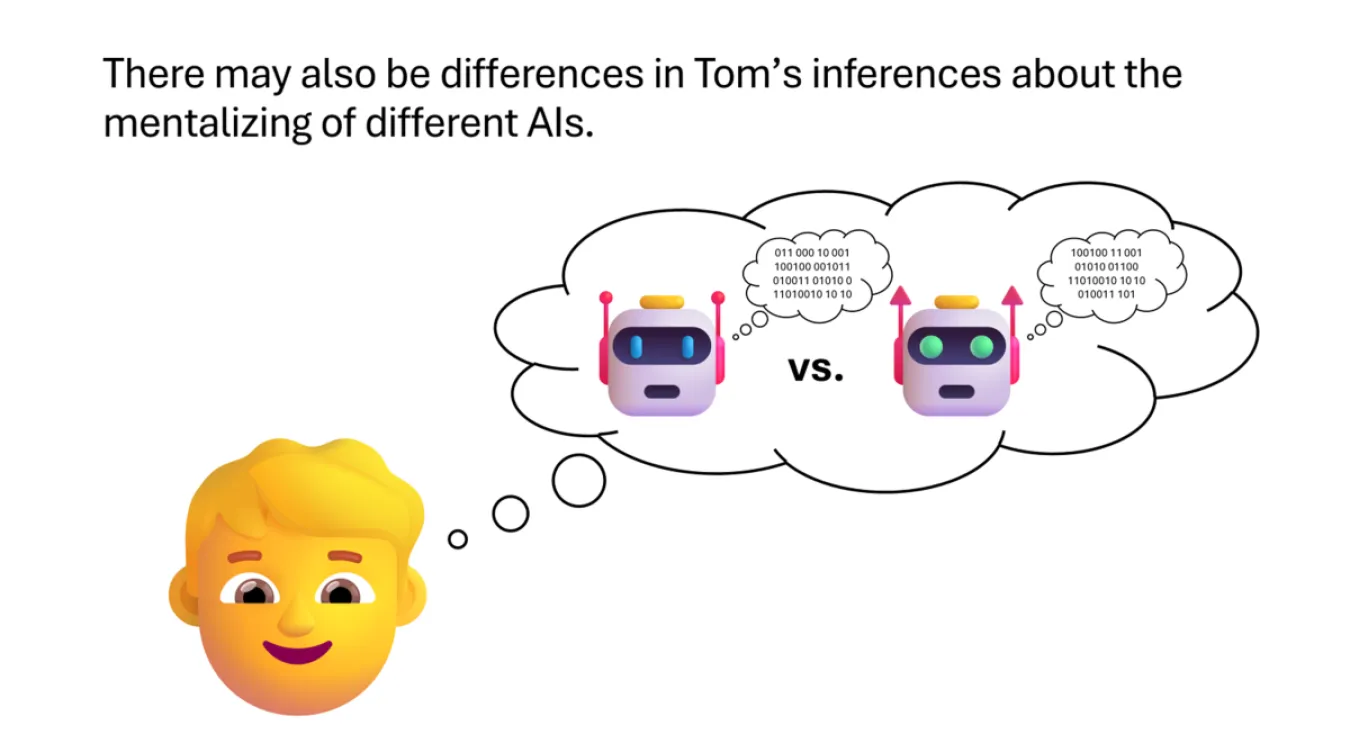
  • Cartoon of boy with speech ballon with 2 robots
    Magazine Issue
    08/2026 - SpeciaI issue on artificial intelligence

    How humans form beliefs about conversational AI

    • written by
    • Tobias R. Rebholz
    Why do we treat Alexa or ChatGPT like a helpful coworker – or even a friend? This article explores how talking to conversational AI shapes the beliefs we form about machines.
    Read more
  • Magazine Issue
    08/2026 - SpeciaI issue on artificial intelligence

    Why putting humans in the loop can make decision-making with AI worse

    • written by
    • Tobias Rieger,
    • Dietrich Manzey,
    • Eileen Roesler,
    • Linda Onnasch
    AI’s decisions are often comprised with a human in the loop. Why? The person tries to improve the decisions but ends up making it worse despite good intentions. Our need to contribute interferes with these systems. In this article, we discuss this issue and whether explainable AI can foster true human-AI teamwork for better choices.
    Read more
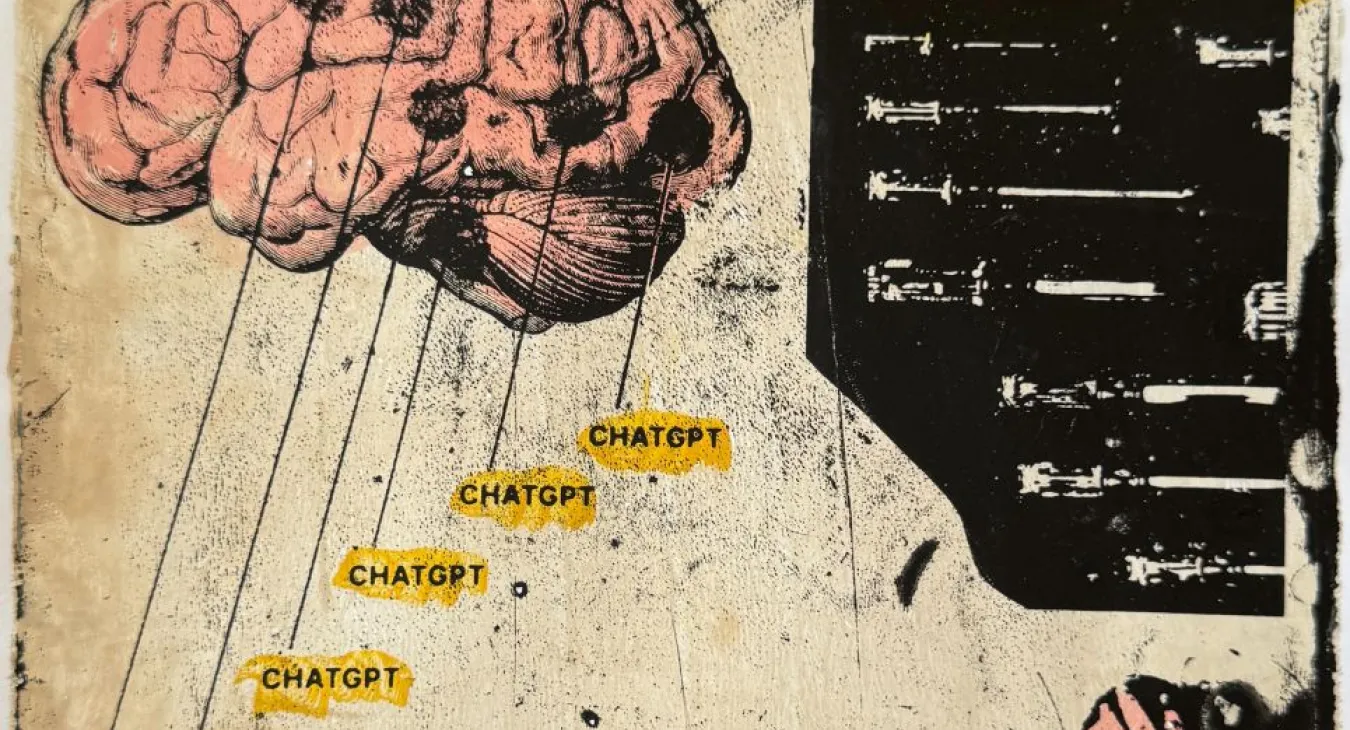
  • a brain with areas marked as responsible for chatGPT processing
    Magazine Issue
    08/2026 - SpeciaI issue on artificial intelligence

    Editorial for the special issue "Artificial intelligence, real consequences: Exploring the psychological dimensions of AI"

    • written by
    • Magdalena Wischnewski,
    • Stella Wernicke
    Not long ago, artificial intelligence was mostly found in science fiction and computer science departments. Today, it drafts our emails, recommends our next purchase, tutors our children, and occasionally tells us it understands how we feel. This shift has happened so quickly that our psychological vocabulary is still catching up. What does it mean to trust a system that has no body, no history, and no stake in the outcome but communicates like us? Why do we sometimes treat a chatbot with the same politeness we'd extend to a colleague, and other times discard it the moment it makes a...
    Read more
  • In-Mind Blog

    Join the In-Mind team: Help us make psychology accessible to everyone!

    written by: Rinat Meerson, Stella Wernicke, Jana Dreston
  • Magazine Issue 09/2026

    Teamwork today and tomorrow: The skills that matter and how to build them

    written by: Lara Watermann, Natalie Hogh, Joshua Braun, Simone Kubowitsch
  • In-Mind Blog

    After "Adolescence": What we know (and don’t know) about gender attitudes and online misogyny

    written by: Kate Schramm, Silvana Weber
  • Magazine Issue 08/2026 - SpeciaI issue on artificial intelligence

    Benefits and risks of asking AI for health advice

    written by: Jaroslava Kaňková
  • Magazine Issue 04/2018

    Fake Posttraumatic Stress Disorder (PTSD) Costs Real Money

    written by: Irena Boskovic, Harald Merckelbach
    As a diagnosis, Posttraumatic stress disorder ( PTSD) rests entirely on what people report about their symptoms. Thus, many people, such as Robert, Lisa, and even a Senator, who strive... more
  • Magazine Issue 01/2018

    Selfie-Esteem: The Relationship Between Body Dissatisfaction and Social Media in Adolescent and Young Women

    written by: Bindal Makwana, Yaeeun Lee, Susannah Parkin, Leland Farmer
    Social media platforms like Instagram and Facebook have become ingrained in the lives of countless individuals. With adolescents and young adults, particularly young women, being the primary users of such... more
  • Magazine Issue 01/2018

    Cooperation in social dilemmas: How can psychology help to meet climate change goals?

    written by: Rachel New, Julian Savulescu, Nadira S. Faber
    Effectively managing shared natural resources is essential to protecting and improving our physical environment. This cannot be done without cooperation at international, national and local levels. Bringing together research on... more
  • Magazine Issue 01/2018

    Welcome to the Matrix! Opportunities and Risks of the Virtual World

    written by: Sarah Mayr
    It's been almost 20 years since Neo, "The One", booted up to fight the machines in the global smash hit The Matrix. Once painted as a dark and foreboding frontier... more
  • Magazine Issue 07/2017

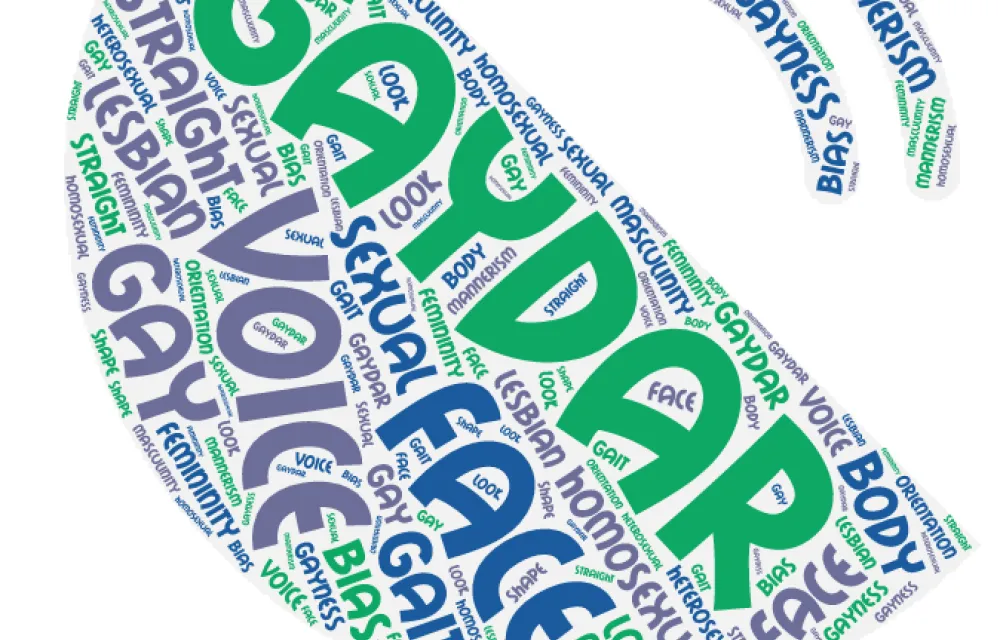
    Straight talk about gaydar: How do individuals guess others’ sexual orientation?

    written by: Fabio Fasoli, Peter Hegarty
    Individuals guess women’s and men’s sexual orientation on the basis of visual, non-verbal, and vocal cues. People use these cues as signs of others’ sexual orientation. Here, we review research... more
  • Magazine Issue 07/2017

    The Face of Leadership: How CEOs’ Facial Appearance Predicts Business Success

    written by: Daniel E. Re, Nicholas O. Rule
    Recent research in social psychology has demonstrated that the facial appearance of Chief Executive Officers (CEOs) and other business leaders predicts their companies’ financial performance. In this article, we review... more
  • Load More Issues

In-Mind Blog

  • 28.03.2014 | Political Psychology

    Bleeding-heart liberals and hard-hearted conservatives: Political dehumanization in the United States

    written by: Jarret Crawford
    My previous blog post covered new research showing that liberals and conservatives are prejudiced against one another to an equal degree. In this post, I will review evidence that liberals’ and conservatives’ prejudices lead them to dehumanize their political opponents—that is, to see them as less than human. more
  • 24.03.2014 | Culture

    Why Madonna was right: Music really does make the people come together

    written by: Marieke van Egmond
    In August 2000, global superstar Madonna released the single “Music” from her soon to be hit album. Other than the brilliant lyrics “Do you like to Boogie woogie”, you might remember that one of the lines in the chorus was “Music makes the people come together.”  In this post, I will discuss the social psychological research, which suggests that she was more right then even she must have thought. more
  • 21.03.2014 | Interdisciplinary Inquiries, Current Events, Political Psychology

    Is banning bossy enough to enact real social change? Celebrity activism and the “Ban Bossy” campaign

    written by: Jessica Tomory
    Recently celebrity activists such as Beyoncé, Jennifer Garner, and Sheryl Sandberg have thrown their weight behind a campaign to ban the term “bossy” to describe women (banbossy.com, #banbossy). The goal of the campaign is to encourage young women to step into leadership roles and to assert themselves in the classroom and in life. In this blog I highlight the social value of celebrity activism and I highlight important caveats of celebrity activism based on science. In the end I assert that the “Ban Bossy” campaign is a great start to building awareness for the larger issue at hand. more
  • 14.03.2014 | Happiness & Well-being

    Variety and motivation: The crux to lasting happiness

    written by: Alina Feinholdt
    Most people seek lasting happiness but only a few are aware of the fact that false expectations and a tedious lifestyle can speed up the disappearance of happiness. In this blog post, I explain how exciting activities and motivation may curb the dwindling of happiness. more
  • 10.03.2014 | Political Psychology

    Being rational and emotional are not (necessarily) contradictions

    written by: Mark Brandt
    In the first part of this three part series, my colleague Ellie Shockley described how rational thinking may drive political attitudes and voting behavior. In the second part of the series, Matt Moytl described how emotion may drive political attitudes and voting behavior. In the final part of this series, I discuss how emotions and reasons are not necessarily in conflict. more
  • 07.03.2014 | Meaning Making

    CEO’s, morality, and minds: How good and bad guide our perceptions of others

    written by: Andrew Monroe
    Morality colors the way we view the world, but how it influences our judgments of others is a controversial debate.  One popular view is that morality biases people’s perceptions of others—specifically others’ intentions.  I suggest that this view is incorrect.  Instead, valence, not morality, guides perception, and it does so in a way that may be adaptive. more
  • Load more blog posts

Editors' Choice

  • Magazine Issue 09/2026

    Teamwork today and tomorrow: The skills that matter and how to build them

    written by: Lara Watermann, Natalie Hogh, Joshua Braun, Simone Kubowitsch
  • In-Mind Blog
    a boy sitting next to a laptop using his phone

    After "Adolescence": What we know (and don’t know) about gender attitudes and online misogyny

    written by: Kate Schramm, Silvana Weber
  • Magazine Issue 08/2026 - SpeciaI issue on artificial intelligence
    Man using ChatGPT

    Benefits and risks of asking AI for health advice

    written by: Jaroslava Kaňková

Most Read

  • Magazine Issue 02/2014

    The good, the bad, and the ugly of the Dove Campaign for Real Beauty

    written by: Angela Celebre, Ashley Waggoner Denton
  • Magazine Issue 03/2026

    Children in front of a screen: what is the impact of technology on their development?

    written by: Marica Notte, Daniela Renzi
  • Magazine Issue 09/2025

    Viral and harmful: Violence in media and its impact on empathy

    written by: Mira Fauth-Bühler

The Inquisitive Mind is supported by:

  • DGPs – Deutsche Gesellschaft für Psychologie
  • C-SEB – Center for Social and Economic Behavior

Menu

  • Magazine
  • Blog
  • Submit to In-Mind
  • About In-Mind
  • Search
  • LinkedIn
  • Bluesky
  • Instagram
  • Print
  • RSS Feed
  • Cookie settings

About Us

In-Mind is a voluntary science communication project. We enable scientifically working psychologists to present their research topics in a scientifically sound, understandable and entertaining way for an interested audience: Psychology by scientists for everyone....more

Footer menu

  • Imprint
  • Data Protection