- editorial assistant
- Elisabeth Höhne,
- Maren Giersiepen
Bisexual people often remain “invisible” and are frequently targets of prejudice. This article explores the beliefs people have about bisexuality and examines the role of the media in either reinforcing negative stereotypes or promoting more positive representations.
The invisibility of bisexual people and its consequences
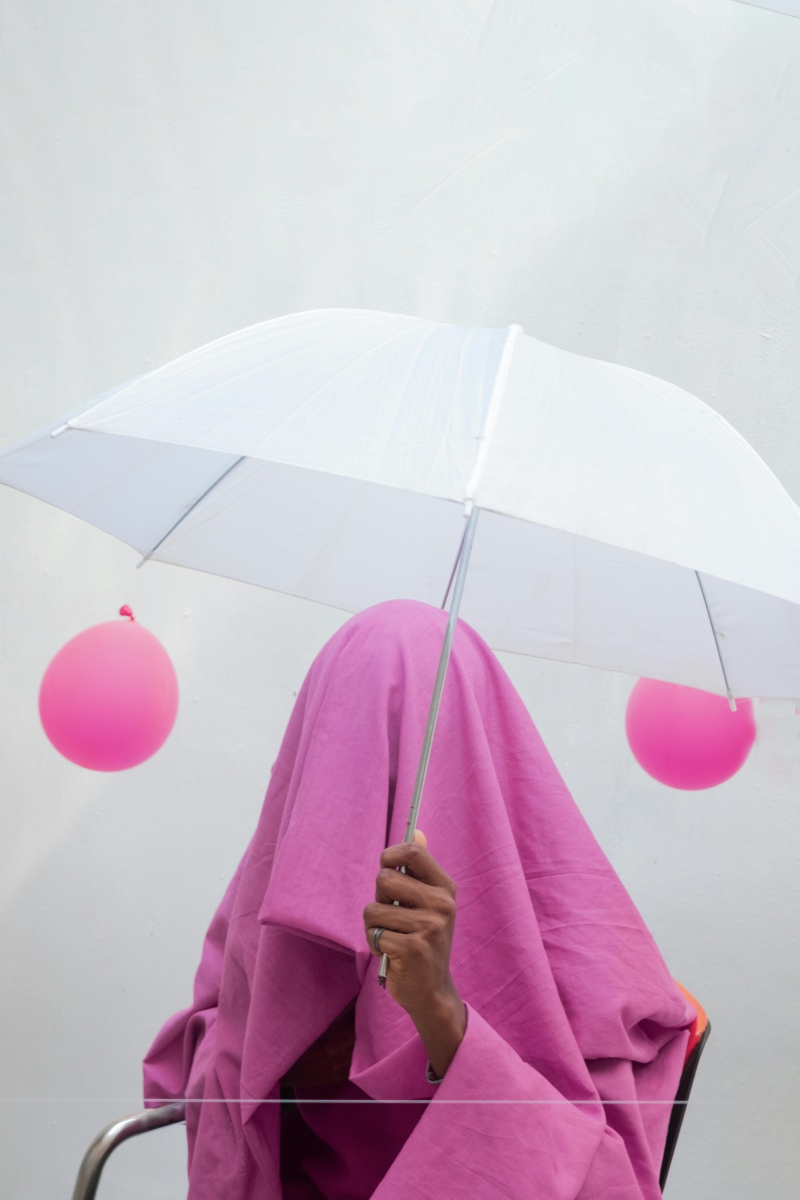
You have probably heard someone say, “bisexuality doesn’t exist!” This statement is a clear example of how bisexual individuals are rendered invisible, a phenomenon known as “bi-erasure.” According to MacDonald [1], common beliefs about bisexuality include the idea that bisexuality is not a real sexual orientation and that bisexual people are confused about their sexuality (see also [2]). Specific beliefs about bisexuality are also linked to a binary conceptualization of gender (i.e., men or women). If we consider men, their bisexuality is often perceived as a temporary phase leading to coming out as gay. If we focus on bisexual women, their invisibility seems to be particularly pronounced even though, in reality, more women identify as bisexual than men [3], [4]. Bisexual women are often mistakenly considered to be heterosexual women seeking new experiences and eager to attract the attention of heterosexual men [2], [5]. Moreover, all bisexual people are often perceived as promiscuous, and their sexual orientation as mainly associated with sexual behaviour [6]. The invisibility of bisexual people is therefore, on the one hand, motivated by this perception that they engage in promiscuous behaviour that goes against monogamy and the norms associated with traditional relationships (e.g., having only one partner, being faithful). On the other hand, bisexuality represents a threat to both heterosexual and gay people, as it blurs the distinction between straight and gay orientation and challenges the assumption that a person is attracted to only one gender [7].
Emphasising a binary view of gender and sexual orientation is at the root of biphobia [8], namely the prejudice towards bisexual people which manifests through the delegitimization of bisexuality, the reinforcement of stereotypes, and discrimination [9], [10]. But who holds such prejudice? The literature shows that biphobia is present in both heterosexual and gay people [11], [12], resulting in a form of “double stigma.” Most bisexual people report that their identity and relationships are often minimised, leading to feelings of shame, internalised stigma, and attempts to hide their sexual orientation [13]. As a result, bisexual people experience high levels of stress [14] and report higher rates of anxiety, depression, suicide attempts, and substance abuse than both heterosexual and gay individuals [15], [16]. In Italy, bisexual individuals report greater internalisation of stigma related to their bisexuality compared with homosexual individuals [17], which, along with experiences of biphobia, contributes to psychological distress in terms of anxiety and depression [18]. In general, bisexual individuals report that people have difficulty understanding their bisexuality and frequently rely on stereotypes [19], which makes it difficult for them to come out or show who they are [20], [21]. Furthermore, bisexual individuals who report greater concern about their sexual orientation also exhibit higher levels of anxiety compared to those who do not report such concerns [22]. However, this is not the case for everyone, as younger bisexual people feel more comfortable with their sexual orientation than older bisexual individuals [22]. It is not only discrimination at the group or personal level that has a negative impact on the psychological well-being of bisexual people. Political events that discuss the rights of the LGBTQ+ community can also affect well-being. For instance, Rucco and colleagues [23] examined the rejection of Italy's Zan Legislative Bill (2021), which aimed to prevent and condemn discrimination based on sex, gender, sexual orientation, and disability. They found that this rejection led to increased internalised stigma, anxiety, and depression among bisexual people.
All of this leads us to a key question: what can we do to counter bisexual invisibility? Some associations have implemented awareness campaigns. For example, since 2008, the Italian platform BProud aims to deconstruct myths about bisexuality and promote its visibility by sharing stories of bisexual people [24]. Many of these stories involve narrations of bisexual individuals’ lives and experiences, but the site also includes a section on famous bisexual people. We want to mention one example that we believe is illustrative of the stigma bisexual people often experience. In 2020, François Arnaud, an actor in Schitt’s Creek and The Borgias, came out as bisexual. In recounting his experience, he explained that he had to constantly “fight” against the assumption that he was straight [25], clearly illustrating bisexual invisibility. What does this tell us? Bisexual invisibility affects everyone, regardless of fame.
The representation of bisexual people in the media and its effects
The media plays an important role because it may or may not give visibility to certain social groups. Bisexual invisibility in the media and the type of representation of bisexual people, when present, are important for different reasons: they influence the perceptions and attitudes people develop towards bisexuality and bisexual people [26], and they also impact the psychological well-being of bisexual people [27].
According to Clarke’s stage model of media representation [27], there are four stages concerning minority groups’ depiction in the media. The first stage involves “invisibility,” where the group is not portrayed. The second stage involves “ridicule,” where the targets are presented stereotypically and negatively. The third stage is “regulation,” when some characters are presented in counter-stereotypical ways and play dominant roles. Finally, in the stage of “respect,” minority and majority groups are represented in a similar manner. For a long time, bisexuality was not acknowledged by the media, which mainly covers heterosexual relationships and orientations, followed by homosexual ones. Indeed, an analysis of American television media conducted in 2001 showed that, while gay men and lesbian women were represented in 7.5% of dramas and comedies – and such representations sometimes reached the regulation and respect stages – there were no representations of bisexual individuals at that time [28]. Nowadays, media representations of bisexuality have increased, despite a gender imbalance whereby bisexual women are more likely to be represented than bisexual men [29]. While this may give hope for representations of bisexuality and bisexual people in line with the respect stage of Clarke’s model, many portrayals are still based on stereotypes. In particular, the media portrays bisexual women as more sexually fluid than men [30] and bisexual men as confused about their sexual orientation [31]. Women’s bisexuality is often focused on sexual behaviours intended to address heterosexual men’s fantasies, a pattern present in the media since the 1990s. A well-known example is the film Basic Instinct [32]. The main character, portrayed by Sharon Stone, is bisexual. However, the bisexuality of the protagonist is merely an accessory to the “basic” representation of a typical femme fatale, hyper-sexualised, promiscuous, and wicked. Such representation is problematic: it focuses on sexual behaviours that cater to heterosexual male fantasies and suggests that bisexual women are sexually accessible within conventional heterosexual boundaries [33]. But this idea of promiscuity is also present in portrayals of bisexual men. In Ira Sachs’ film Passages [34], the protagonist Tomas is caricatured as a confused, unfaithful bisexual man whose choices are driven by sexual desire. In other cases, bisexual people in the media are presented and perceived as homosexual, as their attraction to the opposite sex is minimised [35]. This reinforces a binary view of sexuality that includes only gay/lesbian and heterosexual categories [36] and often leads the media to “deny” the bisexuality of a famous person when they come out [37].
This binary view of sexual orientation contributes to the invisibility of bisexuality both within and outside the media. In TV series, bisexual characters are often portrayed as confused about their sexual orientation, and there is a lack of representations of characters explicitly coming out as bisexual [38], [39]. Fortunately, things are changing, and we are entering a phase of regulation and respect, to use Clarke’s terms. In 2022, Netflix released the graphic novel-inspired TV series Heartstopper [40], in which two young boys, Nick and Charlie, fall in love. In a key episode, Nick comes out to his mother as bisexual, a coming out scene that is still rarely depicted in film and television. Furthermore, although negative representations of bisexual people persist, positive portrayals are increasing. In 2023, the film Red, White & Royal Blue [41] depicts a relationship between a gay man (Prince Henry) and a bisexual man (Alex, son of the President of the United States) that finds support from their families and society.
But why is this important? The media plays a crucial role in reducing prejudice and promoting social acceptance [42], [43]. On the one hand, exposure to positive representations of bisexuality in the media is associated with more positive attitudes towards bisexual people [44]. Indeed, people who watch TV series with bisexual characters form positive associations with those characters, which leads to reduced biphobia [45]. On the other hand, the media plays a key role in promoting or hindering the psychological well-being of bisexual people. This may be particularly true for those who rely on the media to understand the lifestyles and cultures of their community [46], [47]. Indeed, 38.9% of bisexual people believe that negative and stereotypical representations of bisexuality have had a negative impact on their mental health [30], [48]. In particular, experiencing a discrepancy between a negative and stereotypical representation provided by the media and one’s own personal experience can cause stress and play a crucial role in stigma internalisation [49]. In contrast, as suggested by the literature on social learning [50] and indirect contact [51], positive representations of bisexuality provide positive “models” with which people can identify, and this increases their motivation to come out [47]. These representations seem to be especially important for those who feel isolated and lack direct contact with other bisexual individuals [52].
Conclusion
Psychosocial research has shown that the invisibility of bisexual people is as much a part of everyday life as it is in the media, which impacts both biphobia and the well-being of bisexual people. There is clearly a long way to go. However, promoting positive representations in the media is a first step towards undermining stereotypes that have lingered for years. The media should also extend representation to Bi+ people, namely people who are attracted to more than one gender, not exclusively men and women. More visibility should also be given to awareness campaigns such as BProud, promoted by the Bi+ community itself to educate people and reduce biphobia. It is through work on several fronts that we can reduce the invisibility of bisexual people and its negative consequences.
bi+: Umbrella term for people who feel emotional, romantic and/or sexual attraction towards people of various genders. This category includes pansexual people (attraction to people regardless of their gender) and omnisexual people (attraction to all genders but with a preference for one gender over others).
bi-erasure: de-legitimising and questioning the existence of bisexuality as sexual orientation.
biphobia: The fear and prejudice that people show towards Bi+ people, and which manifests itself in stereotypes, negative attitudes, erasure/denial of bisexuality, and discrimination.
bisexual: This term refers to a person who is emotionally and romantically involved and/or sexually attracted to more than one gender (see APA: https://www.apa.org/pi/lgbt/resources/bisexual).
media representation: The term refers to how the media (e.g., newspapers, television, films and TV series, social media) portray particular people or group and how they talk about them.
minority group: This term refers to groups that, due to certain characteristics (e.g., ethnicity, sexual orientation, religion, nationality), represent a minority compared to the majority of the population.
psychological well-being: State of well-being including a positive mood and emotional state, low levels of stress, good social interactions and personal satisfaction.
[1] A. P. MacDonald, “Bisexuality: Some comments on research and theory,” J. Homosex., vol. 6, no. 3, pp. 21–35, 1981. doi: 10.1300/j082v06n03_02.
[2] T. Morgenroth, T. A. Kirby, M. J. Cuthbert, J. Evje, and A. E. Anderson, “Bisexual erasure: Perceived attraction patterns of
bisexual women and men,” Eur. J. Soc. Psychol., vol. 52, no. 2, pp. 249–259, 2022. doi: 10.1002/ejsp.2773.
[3] Office for National Statistics, “Exploring existing data on
gender identity and
sexual orientation,” 2020. [Online]. Available: https://www.ons.gov.uk/methodology/classificationsandstandards/measurin… (accessed Jan. 2, 2026).
[4] M. Barbaglia, G. Dalla Zuanna, and F. Garelli, La sessualità degli italiani. Bologna: Il Mulino, 2010.
[5] P. J. Lannutti and A. Denes, “A kiss is just a kiss?: Comparing perceptions related to female–female and female–male kissing,” J. Bisex., vol. 12, no. 1, pp. 49–62, 2012. doi: 10.1080/15299716.2012.645716.
[6] A. Zivony and T. Saguy, “Stereotype deduction about
bisexual women,” J.
Sex Res., vol. 55, no. 4–5, pp. 666–678, 2018. doi: 10.1080/00224499.2018.1437116.
[7] K. Yoshino, “The epistemic contract of
bisexual erasure,” Stanford Law Rev., vol. 52, no. 2, pp. 353–456, 2001. doi: 10.2307/1229482.
[8] R. Ochs and M. Deihl, “Moving beyond binary thinking,” in Homophobia: How We All Pay the Price, W. J. Blumenfeld, Ed. Boston, MA: Beacon Press, 1992, pp. 67–75.
[9] K. Bennett, “Feminist bisexuality: A both/and option for an either/or world,” in Close to Home: Bisexuality and Feminism, E. R. Weise, Ed. Seattle, WA: Seal Press, 1992, pp. 205–231.
[10] C. E. Flanders, R. E. Anderson, L. A. Tarasoff, and M. Robinson, “Bisexual
stigma, sexual violence, and sexual health among
bisexual and other plurisexual women,” J.
Sex Res., vol. 56, no. 9, pp. 1115–1127, 2019. doi: 10.1080/00224499.2018.1563042.
[11] K. M. Hertlein, E. E. Hartwell, and M. E. Munns, “Attitudes toward bisexuality according to
sexual orientation and
gender,” J. Bisex., vol. 16, no. 3, pp. 339–360, 2016. doi: 10.1080/15299716.2016.1200510.
[12] E. E. Doan Van et al., “Perceived
discrimination,
coping mechanisms, and effects on health,” Arch.
Sex. Behav., vol. 48, pp. 159–174, 2019. doi: 10.1007/s10508-018-1254-z.
[13] N. Hayfield, C. Campbell, and E. Reed, “Misrecognition and managing marginalisation,” Psychol.
Sex., vol. 9, no. 3, pp. 221–236, 2018. doi: 10.1080/19419899.2018.1470106.
[14] E. Anderson and M. McCormack, “Sixth form girls and
bisexual burden,” J. Gend. Stud., vol. 25, no. 1, pp. 24–34, 2016. doi: 10.1080/09589236.2013.877383.
[15] C. Dyar et al., “Application of bisexuality research to
intervention guidelines,” Transl. Issues Psychol. Sci., vol. 1, no. 4, pp. 352–362, 2015. doi: 10.1037/tps0000045.
[16] M. Pompili et al., “Bisexuality and suicide: A systematic review,” J.
Sex. Med., vol. 11, no. 8, pp. 1903–1913, 2014. doi: 10.1111/jsm.12581.
[17] J. Pistella, F. Rosati, and R. Baiocco, “Feeling safe and content,” J. Lesbian Stud., vol. 27, no. 1, pp. 41–59, 2023. doi: 10.1080/10894160.2022.2087344.
[18] C. Scandurra et al., “Minority stress and mental health in Italian
bisexual people,” Soc. Sci., vol. 9, no. 4, p. 46, 2020. doi: 10.3390/socsci9040046.
[19] A. Castro and D. Carnassale, “Loving more than one color,” J. Bisex., vol. 19, no. 2, pp. 198–228, 2019. doi: 10.1080/15299716.2019.1617548.
[20] B. Gusmano, “Coming out through an intersectional perspective,” J. Bisex., vol. 18, no. 1, pp. 15–34, 2018. doi: 10.1080/15299716.2017.1416510.
[21] S. Monaco, “Being
bisexual in contemporary Italy,” Int. J. Sociol. Soc. Policy, vol. 41, no. 5/6, pp. 673–688, 2021. doi: 10.1108/ijssp-05-2020-0157.
[22] F. Fantacci et al., “To be or not to be Bi in Italy,” Boll. Psicol. Appl., vol. 81, 2023. doi: 10.26387/bpa.2023.00012.
[23] D. Rucco et al., “Structural
stigma and
bisexual+ people,” J. Bisex., vol. 23, no. 1, pp. 27–49, 2023. doi: 10.1080/15299716.2022.2119629.
[24] BProud, “BPeople – Storie e visibilità bisessuale,” 2008. [Online]. Available: https://www.bproud.it/wordpress/ (accessed Jan. 2, 2026).
[25] NBC News, “Schitt’s Creek actor Francois Arnaud comes out as
bisexual,” 2020. [Online]. Available: https://www.nbcnews.com/feature/nbc-out/schitt-s-creek-actor-fran-ois-a… (accessed Jan. 2, 2026).
[26] L. Tralli, “Getting Bi,” in Queer Gaze, A. Caruso, Ed., Milan, Italy: Asterisco Edizioni, 2020, pp. 53–66.
[27] C. Clarke, “Television and social controls,” Telev. Q., vol. 9, no. 2, pp. 18–22, 1969.
[28] A. B. Raley and J. L. Lucas, “Stereotype or success?,” J. Homosex., vol. 51, no. 2, pp. 19–38, 2006. doi: 10.1300/j082v51n02_02.
[29] GLAAD, “Where We Are on TV: 2022–2023,” 2023. [Online]. Available: https://assets.glaad.org/m/114d72edf8a779a6/original/GLAAD-2022-23-Wher… (accessed Jan. 2, 2026).
[30] H. Johnson, “Bisexuality, mental health, and
media representation,” J. Bisex., vol. 16, pp. 378–396, 2016. doi: 10.1080/15299716.2016.1168335.
[31] J. Vicari, Male Bisexuality in Current Cinema. Jefferson, NC: McFarland, 2014.
[32] P. Verhoeven (Director), Basic Instinct. Carolco Pictures, USA, 1992.
[33] L. M. Diamond, “A new view of lesbian subtypes,” Psychol. Women Q., vol. 29, no. 2, pp. 119–128, 2005. doi: 10.1111/j.1471-6402.2005.00174.x.
[34] I. Sachs (Director), Passages. SBS Productions, France, 2023.
[35] A. C. de Barros, “‘Gay now’,” J. Bisex., vol. 20, no. 1, pp. 104–117, 2020. doi: 10.1080/15299716.2020.1732258.
[36] A. Elizabeth, “Challenging the binary,” J. Bisex., vol. 13, no. 3, pp. 329–337, 2013. doi: 10.1080/15299716.2013.813421.
[37] R. Magrath, J. Cleland, and E. Anderson, “Bisexual erasure in the British print media,” J. Bisex., vol. 17, no. 3, pp. 300–317, 2017. doi: 10.1080/15299716.2017.1359130.
[38] S. Corey, “All bi myself,” J. Bisex., vol. 17, no. 2, pp. 190–205, 2017. doi: 10.1080/15299716.2017.1305940.
[39] M. D. E. Meyer, “Representing bisexuality on television,” J. Bisex., vol. 10, pp. 366–387, 2010. doi: 10.1080/15299716.2010.521040.
[40] A. Oseman (Creator), Heartstopper, Season 1, Episode 8: “Boyfriend”. See-Saw Films, Netflix, UK, 2022.
[41] M. López (Director), Red, White & Royal Blue. Amazon Studios, USA, 2023.
[42] M. L. Gray, “Negotiating identities/queering desires,” J. Comput.-Mediat. Commun., vol. 14, no. 4, pp. 1162–1189, 2009. doi: 10.1111/j.1083-6101.2009.01485.x.
[43] A. McKee, “Images of gay men in the media,” Aust. J. Commun., vol. 27, no. 2, pp. 81–98, 2000.
[44] W. T. Matsuda, S. V. Rouse, and C. L. Miller-Perrin, “Validation of the Attitudes Regarding Bisexuality Scale,” J. Bisex., vol. 14, no. 2, pp. 265–276, 2014. doi: 10.1080/15299716.2014.903219.
[45] Y. A. Chen and Y. B. Zhang, “Parasocial relationship and reduction of intergroup
prejudice,” Commun. Stud., vol. 73, no. 4, pp. 397–411, 2022. doi: 10.1080/10510974.2022.2113415.
[46] B. J. Bond, K. L. Drogos, and V. Hefner, “Information-seeking practices during sexual development,”
Sex. Cult., vol. 13, pp. 32–50, 2009. doi: 10.1007/s12119-008-9041-y.
[47] S. C. Gomillion and T. A. Giuliano, “The influence of media role models,” J. Homosex., vol. 58, pp. 330–354, 2011. doi: 10.1080/00918369.2011.546729.
[48] L. B. McInroy and S. L. Craig, “Perspectives of LGBTQ emerging adults,” J. Youth Stud., vol. 20, no. 1, pp. 32–46, 2017. doi: 10.1080/13676261.2016.1184243.
[49] B. J. Bond, “The mediating role of self-discrepancies,” Media Psychol., vol. 18, no. 1, pp. 51–73, 2015. doi: 10.1080/15213269.2014.917591.
[50] A. Bandura and R. H. Walters, Social Learning Theory. Englewood Cliffs, NJ: Prentice Hall, 1977. doi: 10.1177/105960117700200317.
[51] L. Vezzali and D. Giovannini, “Come ridurre il pregiudizio,” InMind Italia, vol. 2, pp. 24–29, 2012.
[52] B. J. Bond, “Parasocial relationships with media personae,” Media Psychol., vol. 21, no. 3, pp. 457–485, 2018. doi: 10.1080/15213269.2017.1416295.
Note: An earlier version of this article has been published in the Italian version of In-Mind.
Manzi, A., Fasoli, F., & Connor, A. (2026). Bisexual invisibility: Perceptions of bisexual people and their representation in the media. In-Mind, 2026(1). https://www.in-mind.org/article/bisexual-invisibility-perceptions-of-bisexual-people-and-their-representation-in-the-media