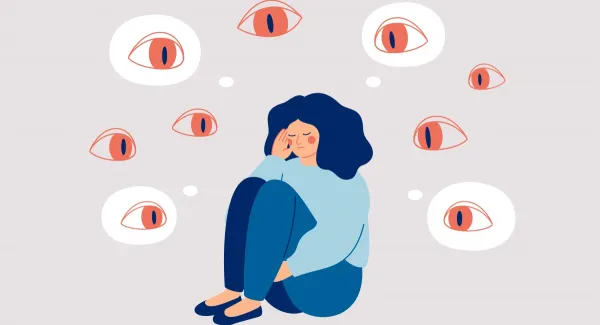
- edited by
- Charikleia Lampraki
Editorial Assistants: Charikleia Lampraki and Parnian Kourang Beheshti.
Note: An earlier version of this article has been published in the German version of In-Mind.
Imagine standing on a balance beam. Your heart races, your palms sweat—your body is primed for peak performance. Now comes the crucial decision: how will you steer your emotions? Will you let the tension paralyze you, or harness it as your driving force? Emotion regulation doesn’t mean avoiding fear; it means transforming it into focus and confidence. In this article, you’ll discover how targeted emotion regulation techniques can help you unlock your full potential and perform at your best, even under pressure.
I’m standing on the balance beam, ready for my routine at the German National Championship in artistic gymnastics. The tension is palpable—the judges’ eyes are fixed on me. But instead of control, I feel my emotions taking over. My heart races, my breathing becomes shallow, and fear starts to dominate.
What if I make a mistake? The thought won’t leave me. My body suddenly feels heavy and uncertain. I go for the jump, but my movements are stiff, my muscles no longer respond as they should. Nervousness paralyzes me, my focus fades. And then it happens. A moment of hesitation, a slight misstep, and I lose my balance.
As I fall from the beam, I realize: it wasn’t my physical ability that failed me, it was my uncontrolled, unregulated emotions.

The Basics of Emotions: How They Shape Our Experience and Actions
Emotions arise from the conscious or unconscious evaluation of situations. They influence our experiences, decisions, and behaviors, and consist of three central components:
- Subjective experience: The individual perception of an emotion, shaping how a person feels and interprets a situation.
- Physiological reactions: Measurable bodily changes such as an increased heart rate or faster breathing, controlled by the autonomic nervous system.
- Behavior (emotional expression & action tendencies): Visible reactions like facial expressions, gestures, or tone of voice, and the behaviors that follow.
These three components interact continuously. For example, an athlete may experience nervousness before a competition (subjective experience), their heart rate increases (physiological reaction), and they pace restlessly (behavior). Emotions therefore shape not only internal experiences but also physiological processes and outward behavior.
Emotion Regulation: Gaining Control of Emotions in Sport
Emotions, whether joy or fear, can significantly influence athletic performance (Wetzel et al., 2022). For this reason, the ability to regulate emotions is essential for athletes. Emotion regulation involves strategies used to deliberately manage the intensity and quality of emotional experiences and expressions (Gross, 1998). The goal is to control performance-inhibiting emotions and capitalize on performance-enhancing ones. In sports, it’s not only the valence of an emotion (positive or negative) that matters, but its functionality: not every positive emotion improves performance, and not every negative one is detrimental.
Instrumental emotion regulation means consciously using emotions to enhance performance—for instance, transforming nervousness into focused energy. The ideal emotional state varies across sports and individuals: some athletes thrive in a highly aroused, energized state, while others perform best when calm and focused. Consistent practice and continued refinement of emotion regulation skills are key factors in optimizing both performance and emotional well-being.
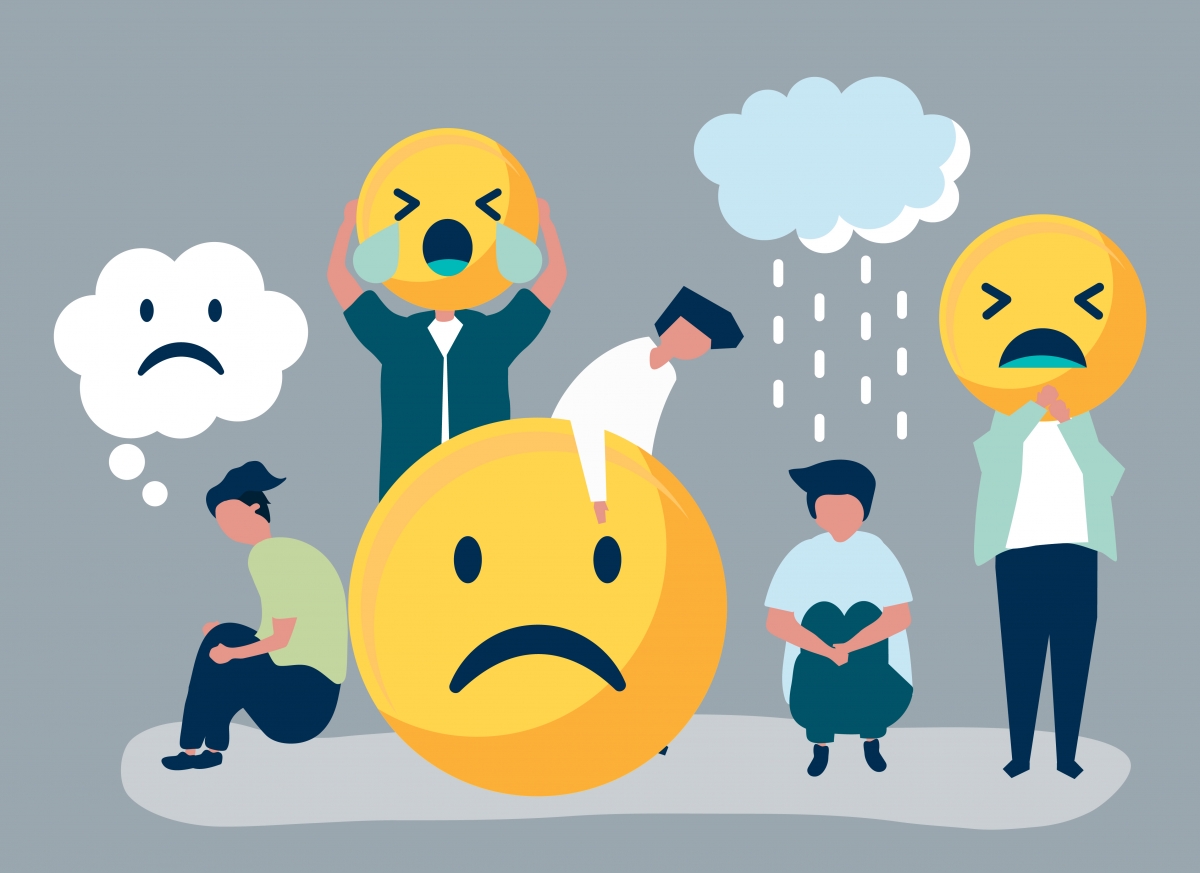
Emotion Regulation: Strategies for Controlling and Harnessing Emotions
Previous research in sport psychology has shown that emotion regulation strategies are closely linked to both athletic performance and athletes’ emotional experiences (Jones, 2003; Martinent et al., 2015; Wagstaff, 2014). Athletes use a wide variety of strategies to manage emotions experienced during competitions and training sessions (Martinent et al., 2015). Emotion regulation strategies such as cognitive reappraisal, relaxation techniques, visualization, distraction, expressive behavior regulation, and social support can all positively influence athletic performance (Aliyas et al., 2024).
The process model of emotion regulation proposed by James Gross (1998) highlights that regulation can occur at different stages of the emotion-generating process. Accordingly, emotion regulation strategies can be classified as either antecedent-focused (before the emotion fully unfolds) or response-focused (after the emotion has been triggered and expressed through behavior).
Antecedent-Focused Emotion Regulation Strategies
Visualization
Visualization can be understood as a form of mental situation selection, where athletes actively shape their internal experiences to elicit desired emotional responses. It involves imagining oneself successfully handling a stressful or challenging situation. By creating vivid mental images of success and positive outcomes, athletes can deliberately guide their emotions, reduce anxiety, and boost motivation.
For example, by repeatedly picturing a flawless performance, an athlete strengthens feelings of confidence and anticipation. This mental rehearsal prepares both mind and body for competition, reinforcing positive emotional states such as self-efficacy, focus, and joyful excitement.
Social Support
Emotion regulation through social support relies on others such as coaches or teammates to help reduce emotional strain and enhance resilience. Talking about one’s emotions and receiving reassurance can mitigate unpleasant feelings and promote optimal functioning.
For instance, before a competition, an athlete might confide in their coach about pre-competition anxiety. The coach, in turn, can calm them, provide constructive feedback, and remind them of their strengths, reducing nervousness and restoring confidence. Similarly, teammates who share their own experiences and offer encouragement can foster a positive team atmosphere and collective motivation.
Distraction
Distraction is a strategy where athletes consciously shift their attention away from distressing or performance-impairing emotions to lower emotional arousal in challenging moments. It is particularly useful when emotions become too intense or intrusive, disrupting concentration and performance.
A common example is listening to music before or during competition. Research shows that music can improve mood, enhance performance, reduce perceived exertion, and help athletes achieve maximum output with minimal effort (Terry et al., 2020).
Music can be calming or energizing, depending on what the athlete needs. Other distraction techniques include counting numbers, repeating calming mantras, or focusing on a neutral sensory cue (like breathing rhythm). These mental exercises redirect attention away from negative emotions and help athletes re-center on the task at hand. In this way, distraction can serve as an effective tool for maintaining focus without becoming overwhelmed by emotion.
Cognitive Reappraisal
Cognitive reappraisal refers to reinterpretation, the ability to view a stressful or challenging situation from a new, more positive, or neutral perspective. This strategy helps interrupt negative thought patterns and refocus attention on what can be controlled. For example, an athlete might reframe the thought “I’m going to lose” into “I’ll do my best and see what happens.” This shift reduces anxiety and redirects energy toward performance.
Empirical studies have found cognitive reappraisal to be one of the most effective methods for managing competition-related anxiety and other performance-impairing emotions (Doorley et al., 2021). By changing how we think about a situation, we can change how we feel and consequently, how we perform.
Response-Focused Emotion Regulation Strategies
Activation and Breathing Regulation
Response-focused strategies aim to modify emotional responses once they’ve already been triggered. One of the most powerful tools here is breathing regulation: controlling physiological arousal to influence emotional states.
Techniques such as diaphragmatic breathing (deep abdominal breathing) have been shown to promote relaxation and support both physical and mental health (Ma et al., 2017). A widely used method is the 4-7-8 breathing technique: inhale for four seconds, hold for seven, and exhale for eight. This controlled breathing calms the body, sharpens mental focus, and reduces tension helping athletes to perform under pressure. New evidence even suggests that maintaining around six breathing cycles per minute might produce optimal physiological coherence (Sevoz-Couche & Laborde, 2022).
Regulation of Emotional Expression
The regulation of emotional expression involves consciously altering how emotions are outwardly displayed either by amplifying or suppressing visible reactions. Recent research has paid particular attention to expressive suppression, in which athletes deliberately hide or restrain their emotional responses. While this can help maintain focus in high-stakes situations, it may also come at the cost of emotional energy or connection with others. Learning when and how to adjust emotional expression, without suppressing emotions entirely, can therefore be a key performance skill.
The techniques discussed above can be applied individually or in combination, forming a comprehensive training program for emotional management. Athletes are encouraged to experiment with different strategies and identify which ones work best for them. It is crucial to practice these techniques during training, not only in competition. Through repeated application and guided sport psychology interventions, emotion regulation strategies can become automatic, reliable, and performance-enhancing.
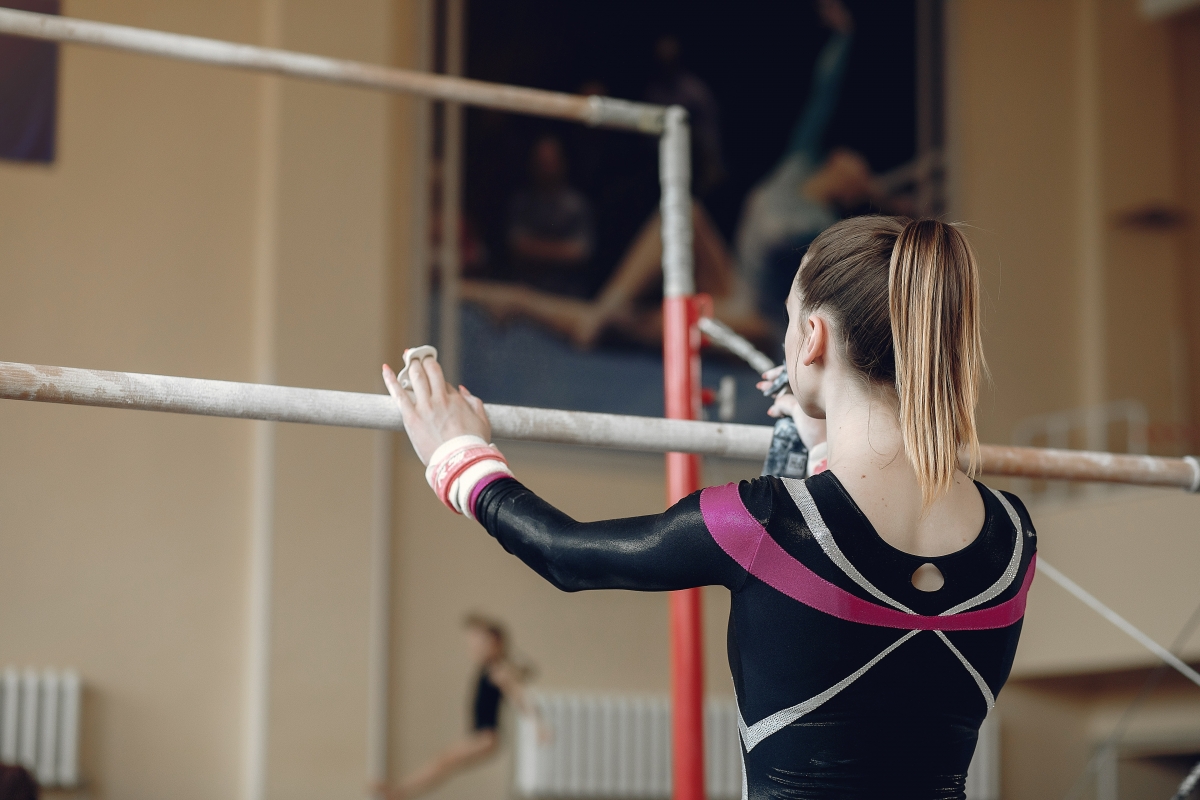
Self-Test: Understanding Your Emotion Regulation Style
The Emotion Regulation Questionnaire (ERQ)
To better understand your preferred strategies for dealing with emotions, you can use the Emotion Regulation Questionnaire (ERQ). Developed by Gross and John (2003), this questionnaire assesses how individuals perceive their ability to manage emotions. The ERQ distinguishes between two central strategies:
- Cognitive reappraisal–attempting to reinterpret the meaning of an emotional situation to regulate feelings.
- Suppression of emotional expression–consciously holding back or not displaying emotions outwardly.
Your results provide valuable insight into how you typically act in emotionally charged situations and which strategies might be especially helpful for you.
Links to the test:
English version: https://spl.stanford.edu/sites/g/files/sbiybj19321/files/media/file/eng…
German version: https://www.testarchiv.eu/de/test/9006192
Putting It into Practice: Emotion Regulation in Action
Emotion regulation strategies should be practiced regularly during training so that they can be applied effectively in competition. If the gymnast in the opening scenario had used emotion regulation strategies, the outcome might have looked quite different: I’m standing on the balance beam, ready for my routine at the national championship. The judges’ gazes are fixed on me; the pressure is almost tangible. My heart is racing, my hands are damp, my stomach tightens. The tension seems to flow through every cell of my body, and I can feel the weight of every movement.
In this moment, I remember a strategy that has always helped me: cognitive reappraisal. Instead of being consumed by fears of failure, I take a deep breath and tell myself, “I’ll do my best. I can handle this. I’ll focus on the moment, not on what could go wrong.” This reappraisal of the pressure calms me and brings back my focus. I close my eyes for a second and visualize myself executing every movement with precision and control. My body feels light, stable, and perfectly balanced. The image fills me with confidence.
I shift my attention to my breathing and begin the 4-7-8 technique: inhale for four seconds, hold for seven, exhale for eight. With each breath, I feel my body relaxing, my chest loosening, my mind sharpening. Strengthened by these strategies, I mount the beam with a clear mind and a calm body. I am no longer paralyzed by emotion. Every movement feels deliberate and strong. When I land my routine flawlessly, I know: it wasn’t the pressure that won —it was my ability to regulate my emotions.
Conclusion
In sports, emotion regulation is a decisive factor in controlling how emotions affect performance. Athletes can use strategies such as cognitive reappraisal, relaxation techniques, visualization, distraction, expressive behavior regulation, and social support to consciously shape their emotional states and transform them into performance-enhancing conditions. By practicing these strategies regularly in training, athletes can improve their emotional control during competition helping them not only perform better but also experience greater psychological resilience and well-being.
Bibliography
[1] B. Abler and H. Kessler, Emotion Regulation Questionnaire – A German version of the ERQ by Gross and John, Diagnostica, vol. 55, no. 3, pp. 144–152, 2009. doi: 10.1026/0012-1924.55.3.144.
[2] S. E. Aliyas, C. V. Chalapathy, L. Mathew, and A. Thomas, “Emotion regulation and sports performance: A systematic review,” Journal of Chemical Health Risks, vol. 14, no. 5, pp. 1037–1046, 2024. Available: https://www.jchr.org/index.php/JCHR/article/view/6355.
[3] J. D. Doorley and T. B. Kashdan, “Positive and negative emotion regulation in college athletes: A preliminary exploration of daily savoring, acceptance, and cognitive reappraisal,” Cognitive Therapy and Research, vol. 45, pp. 598–613, 2021. doi: 10.1007/s10608-020-10202-4.
[4] P. Furley and S. Laborde, “Emotion in sport,” in Sport Psychology: Foundations and Application, J. Schüler, M. Wegner, and H. Plessner, Eds. Springer, 2020, pp. 235–266.
[5] J. J. Gross, “The emerging field of emotion regulation: An integrative review,” Review of General Psychology, vol. 2, pp. 271–299, 1998. doi: 10.1037/1089-2680.2.3.271.
[6] J. J. Gross and O. P. John, Emotion Regulation Questionnaire (ERQ) [Measurement instrument], Stanford University, 2003. Available: https://spl.stanford.edu/sites/g/files/sbiybj19321/files/media/file/eng…
[7] M. V. Jones, “Controlling emotions in sport,” The Sport Psychologist, vol. 17, pp. 471–486, 2003. doi: 10.1123/tsp.17.4.471.
[8] J. Kubiak, S. Rother, and B. Egloff, “Keep your cool and win the game: Emotion regulation and performance in table tennis,” Journal of Personality, vol. 87, no. 5, pp. 996–1008, 2019.
[9] X. Ma, Z.-Q. Yue, Z.-Q. Gong, H. Zhang, N.-Y. Duan, Y.-T. Shi, et al., “The effect of diaphragmatic breathing on attention, negative affect, and stress in healthy adults,” Frontiers in Psychology, vol. 8, p. 874, 2017. doi: 10.3389/fpsyg.2017.00874.
[10] A. Martín-Rodríguez, L. A. Gostian-Ropotin, A. I. Beltrán-Velasco, N. Belando-Pedreño, J. A. Simón, C. López-Mora, et al., “Sporting mind: The interplay of physical activity and psychological health,” Sports (Basel), vol. 12, no. 1, p. 37, 2024. doi: 10.3390/sports12010037.
[11] G. Martinent, S. Ledos, C. Ferrand, M. Campo, and M. Nicolas, “Athletes’ regulation of emotions experienced during competition: A naturalistic video-assisted study,” Sport, Exercise, and Performance Psychology, vol. 4, no. 3, pp. 188–205, 2015. doi: 10.1037/spy0000037.
[12] C. Coevoz-Couche and S. Laborde, “Heart rate variability and slow-paced breathing: When coherence meets resonance,” Neuroscience and Biobehavioral Reviews, vol. 135, 104576, 2022. doi: 10.1016/j.neubiorev.2022.104576.
[13] P. C. Terry, C. I. Karageorghis, M. L. Curran, O. V. Martin, and R. L. Parsons-Smith, “Effects of music in exercise and sport: A meta- analytic review,” Psychological Bulletin, vol. 146, no. 2, pp. 91–117, 2020. doi: 10.1037/bul0000216.
[14] C. R. D. Wagstaff, D. Fletcher, and S. Hanton, “Exploring emotion abilities and regulation strategies in sport organizations,” Sport, Exercise, and Performance Psychology, vol. 1, no. 4, pp. 268–282, 2012. doi: 10.1037/a0028814.
[15] Ä. Wetzel, I. Güldenpenning, and M. Weigelt, “Competition-related emotions in sport – a scoping review,” German Journal of Exercise and Sport Research, vol. 52, pp. 419–432, 2022.
Figures
Figure 1: Gymnast on the Balance Beam, Designed by Freepik
Figure 2: Coping with Negative Emotions in Sports, Designed by rawpixel.com / Freepik
Figure 3: Applying Emotion Regulation Strategies Before a Competition, Designed by Freepik