  • EN
  • DE
  • FR
  • IT
  • NL

User account menu

  • Log in
Home
  • Magazine
    • All issues
    • Glossary
  • Blog
    • All blog posts
  • Submit to In-Mind
    • Articles
    • Blog posts
  • About In-Mind
    • Team
    • What is In-Mind?
    • Credits
  • Search

Psychology for You!

  • Magazine Issue
    09/2026

    Teamwork today and tomorrow: The skills that matter and how to build them

    • written by
    • Lara Watermann,
    • Natalie Hogh,
    • Joshua Braun,
    • Simone Kubowitsch
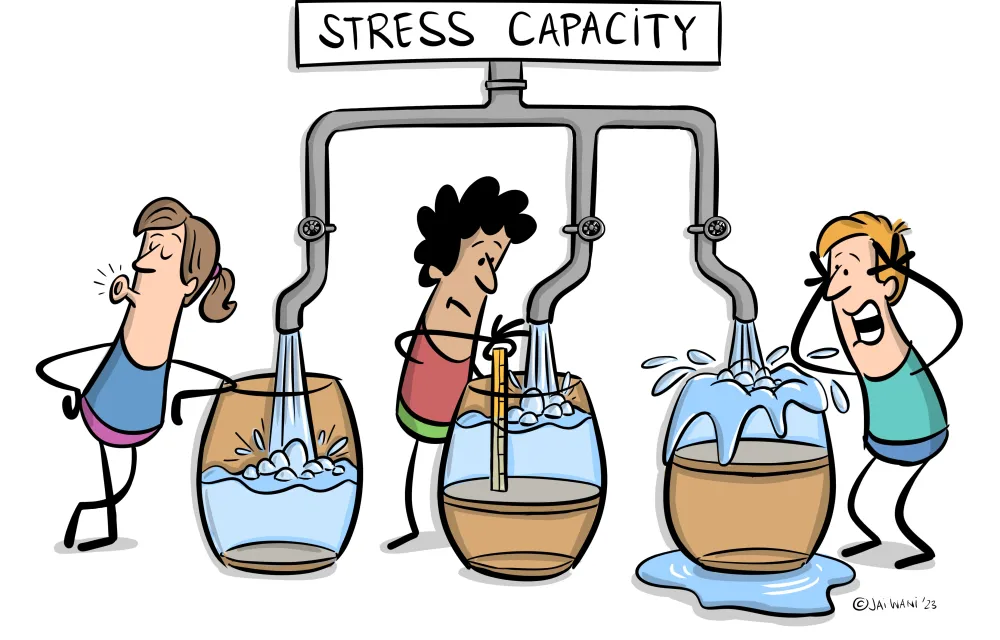
    Teams today collaborate across screens, time zones, and digital tools, but better technology does not always mean better teamwork. Hybrid meetings, information overload, and workflows supported by artificial intelligence (AI) create new challenges. Drawing on expert insights and psychological research, this article explores which team skills matter most and how teams can build them.
    Read more
  • AI-generated content may reflect gender stereotypes
    Magazine Issue
    08/2026 - SpeciaI issue on artificial intelligence

    Blaming the biased bot? Gender bias in AI-generated content

    • written by
    • Alexandra Wölfle
    With the growing popularity and increasing capabilities of generative AI, more and more attention is also drawn to AI model biases, in particular, gender biases. But what exactly does bias mean in this context, how should it be addressed, and what role do humans play in all this?
    Read more
  • What AIs are made of
    Magazine Issue
    08/2026 - SpeciaI issue on artificial intelligence

    Does ChatGPT think like humans?

    • written by
    • Jannis Friedrich
    AIs like ChatGPT are trained only on texts and do not actually experience the world. It’s been argued that for this reason, AI’s cannot really ‘understand’. This is called the symbol grounding problem: symbols have to be connected to perception and action. To address the question whether AIs can think like humans, this article looks at research on cognition and language.
    Read more
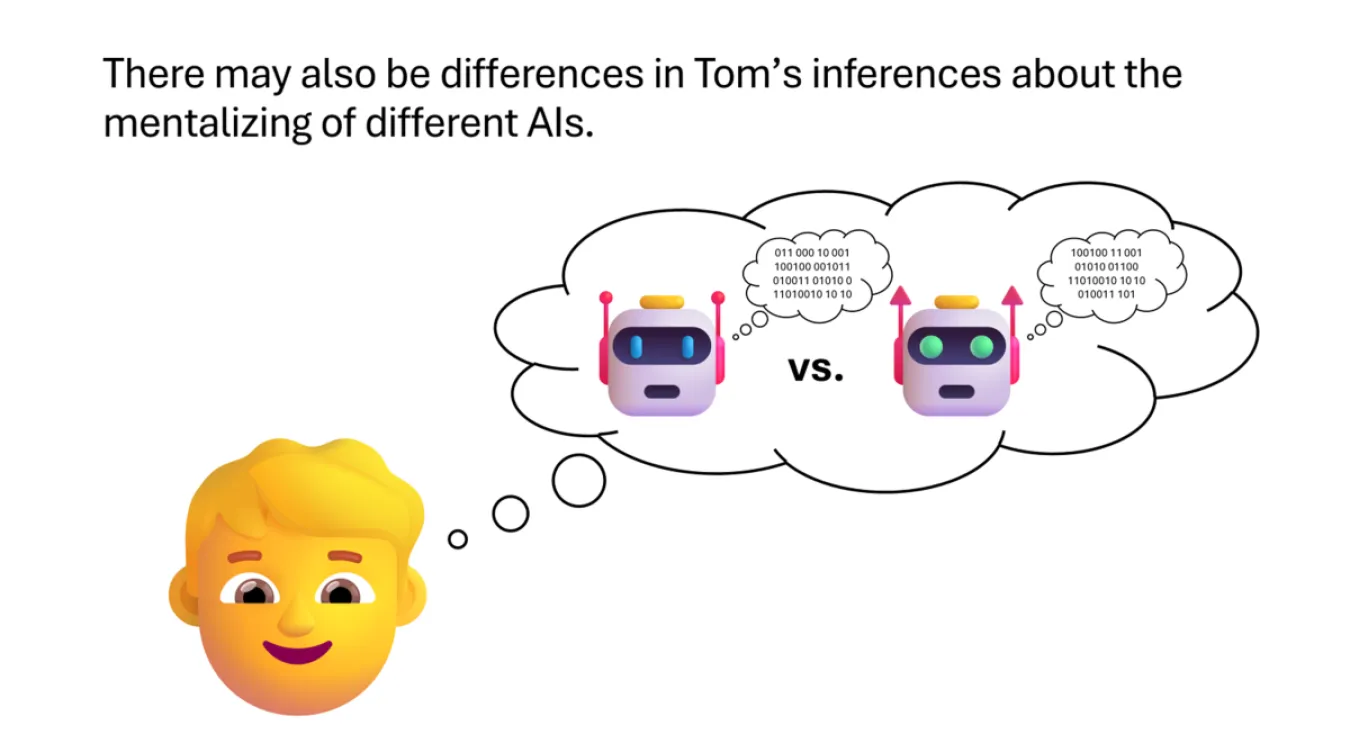
  • Cartoon of boy with speech ballon with 2 robots
    Magazine Issue
    08/2026 - SpeciaI issue on artificial intelligence

    How humans form beliefs about conversational AI

    • written by
    • Tobias R. Rebholz
    Why do we treat Alexa or ChatGPT like a helpful coworker – or even a friend? This article explores how talking to conversational AI shapes the beliefs we form about machines.
    Read more
  • In-Mind Blog

    Join the In-Mind team: Help us make psychology accessible to everyone!

    written by: Rinat Meerson, Stella Wernicke, Jana Dreston
  • Magazine Issue 09/2026

    Teamwork today and tomorrow: The skills that matter and how to build them

    written by: Lara Watermann, Natalie Hogh, Joshua Braun, Simone Kubowitsch
  • In-Mind Blog

    After "Adolescence": What we know (and don’t know) about gender attitudes and online misogyny

    written by: Kate Schramm, Silvana Weber
  • Magazine Issue 08/2026 - SpeciaI issue on artificial intelligence

    Benefits and risks of asking AI for health advice

    written by: Jaroslava Kaňková
  • Magazine Issue 06/2024 - Special issue on sport psychology

    Virtual reality training in Olympic sports: Promises and pitfalls

    written by: Fabio Richlan, Jeremias Braid
    The advent of virtual reality technology provides Olympic athletes and coaches with manifold new possibilities for training and competition preparation. Although promising and increasingly backed up by scientific research, it... more
  • Magazine Issue 06/2024 - Special issue on sport psychology

    In the shades of the rings – experiences of interpersonal violence in elite sports

    written by: Julia T. Schwender, Teresa Greither, Helena Schmitz, Laurie Schwab
    How can we safeguard elite athletes from interpersonal violence in sports? An exploration of the issue and potential solutions are proposed by researchers and psychologists in the field. more
  • Magazine Issue 05/2024

    Tilting at windmills: How conspiracy theories hinder climate action and what to do about it

    written by: Kevin Winter, Lotte Pummerer
    How conspiracy theories hinder climate action. Conspiracy theories are an obstacle to effective climate action. Psychological research provides answers on how to overcome them. more
  • Magazine Issue 05/2024

    Climate stress in everyday life: How can we support children?

    written by: Julia Asbrand, Felix Peter, Claudia Calvano, Lea Dohm
    The climate crisis leads to significant changes in nature and ultimately in our society challenging all of us. Children and adolescents are particularly vulnerable in their mental processing, as well... more
  • Magazine Issue 05/2024

    Never fear, a moral expert is here

    written by: Susanne M. Schmittat, Pascal Burgmer
    Can I read the diaries of my deceased daughter? Can I tell a friend's family that they have a drug problem, even if they have asked me to keep it... more
  • Magazine Issue 04/2024

    Does nudging have a place in politics? How decision-making contexts inevitably influence our behavior

    written by: Mario Herberz
    Why is the influence of contexts on decisions relevant for effective and citizen-centered policy making? Psychologist Dr. Mario Herberz explains. more
  • Load More Issues

In-Mind Blog

  • 22.05.2015 | Gender

    Gender equity in science: Achievement unlocked?

    written by: Joanna Korman, Stephanie Goodwin
    Is it time to throw out our gender-equity-in-STEM training materials? Williams and Ceci (2015) reported that STEM faculty members have a preference for hiring women (not men), reigniting debates over equity in academic hiring. In our blog post, we add to a growing conversation among the scientific community that questions Williams & Ceci’s grand claim of a post-sexist era in academic hiring. more
  • 27.02.2015 | Gender

    Girls will be girls, boys will be bossy

    written by: Cathleen Clerkin
    The word bossy has been heavily discussed recently, thanks, at least in part, to the Ban Bossy campaign. To date, this debate has centered on why women get called bossy. But what about men? In this blog post, I will share some new research on the word bossy, and what happens when both men and women act bossy, specifically within a workplace context. more
  • 23.02.2015 | Culture

    Einstein beats Mother Theresa as the hero of the world

    written by: Marieke van Egmond
    Heroes and villains don’t only exist in comic books. The real world is full of ‘good’ and ‘bad’ guys (and girls). Being an exceptional scientist or humanitarian will most likely land you on the heroic side of history. Obviously, dictators who have oppressed millions of people are more likely to be seen as the villains of world history. For a number of influential figures, our perception of their achievements however strongly depends on how our particular cultural region was affected. For example, even though the abolition of slavery by Abraham Lincoln makes him a historical hero in American eyes, people from other countries might value Mandela’s struggle against apartheid, or even Princess Diana much more. And what about more controversial figures such as Che Guevara and Napoleon? In this blog, I will review a brand new study in which it was tested who the heroes and villains of our                                                                            shared, global history are. more
  • 12.02.2015 | Happiness & Well-being

    Time to unwind: When autonomy and motivation add weight to recovery

    written by: Alina Feinholdt
    Extended working hours and off-job duties leave increasingly less time for a person to recover. Thus, the more important it becomes for a person to seek activities that really help to unwind from daily hassles. But is there anything such as the right or even wrong recovery activity? And what role does motivation play in this regard? In this blog post I will elaborate on these questions by reviewing recent research. more
  • 17.01.2015 | Current Events, Violence & Aggression

    Empowering cartoonists, deterring killers, protecting bystanders: Can psychology contribute?

    written by: Winnifred Louis
    We respond on many levels, like our readers, to the 2015 attack on Charlie Hebdo staff in France. The human tragedy makes us sad and angry. The moral atrocity screams for outraged condemnation. The sense of threat calls out community determination, courage, and sacrifice. The counter-mobilisation of millions, and of world leaders, evokes pride and grim satisfaction. more
  • 11.01.2015 |

    Video: Aggression and Violence

    written by: Brad Bushman, Diana Onu
    Anger is an emotional response to a real or imagined threat or provocation. Anger can range in intensity from mild irritation to extreme rage. We all become angry, and most of us don’t like it. The question is how to get rid of anger, or at least reduce it. more
  • Load more blog posts

Editors' Choice

  • Magazine Issue 09/2026

    Teamwork today and tomorrow: The skills that matter and how to build them

    written by: Lara Watermann, Natalie Hogh, Joshua Braun, Simone Kubowitsch
  • In-Mind Blog
    a boy sitting next to a laptop using his phone

    After "Adolescence": What we know (and don’t know) about gender attitudes and online misogyny

    written by: Kate Schramm, Silvana Weber
  • Magazine Issue 08/2026 - SpeciaI issue on artificial intelligence
    Man using ChatGPT

    Benefits and risks of asking AI for health advice

    written by: Jaroslava Kaňková

Most Read

  • Magazine Issue 02/2014

    The good, the bad, and the ugly of the Dove Campaign for Real Beauty

    written by: Angela Celebre, Ashley Waggoner Denton
  • Magazine Issue 03/2026

    Children in front of a screen: what is the impact of technology on their development?

    written by: Marica Notte, Daniela Renzi
  • Magazine Issue 09/2025

    Viral and harmful: Violence in media and its impact on empathy

    written by: Mira Fauth-Bühler

The Inquisitive Mind is supported by:

  • DGPs – Deutsche Gesellschaft für Psychologie
  • C-SEB – Center for Social and Economic Behavior

Menu

  • Magazine
  • Blog
  • Submit to In-Mind
  • About In-Mind
  • Search
  • LinkedIn
  • Bluesky
  • Instagram
  • Print
  • RSS Feed
  • Cookie settings

About Us

In-Mind is a voluntary science communication project. We enable scientifically working psychologists to present their research topics in a scientifically sound, understandable and entertaining way for an interested audience: Psychology by scientists for everyone....more

Footer menu

  • Imprint
  • Data Protection