  • EN
  • DE
  • FR
  • IT
  • NL

User account menu

  • Log in
Home
  • Magazine
    • All issues
    • Glossary
  • Blog
    • All blog posts
  • Submit to In-Mind
    • Articles
    • Blog posts
  • About In-Mind
    • Team
    • What is In-Mind?
    • Credits
  • Search

Psychology for You!

  • Magazine Issue
    09/2026

    Teamwork today and tomorrow: The skills that matter and how to build them

    • written by
    • Lara Watermann,
    • Natalie Hogh,
    • Joshua Braun,
    • Simone Kubowitsch
    Teams today collaborate across screens, time zones, and digital tools, but better technology does not always mean better teamwork. Hybrid meetings, information overload, and workflows supported by artificial intelligence (AI) create new challenges. Drawing on expert insights and psychological research, this article explores which team skills matter most and how teams can build them.
    Read more
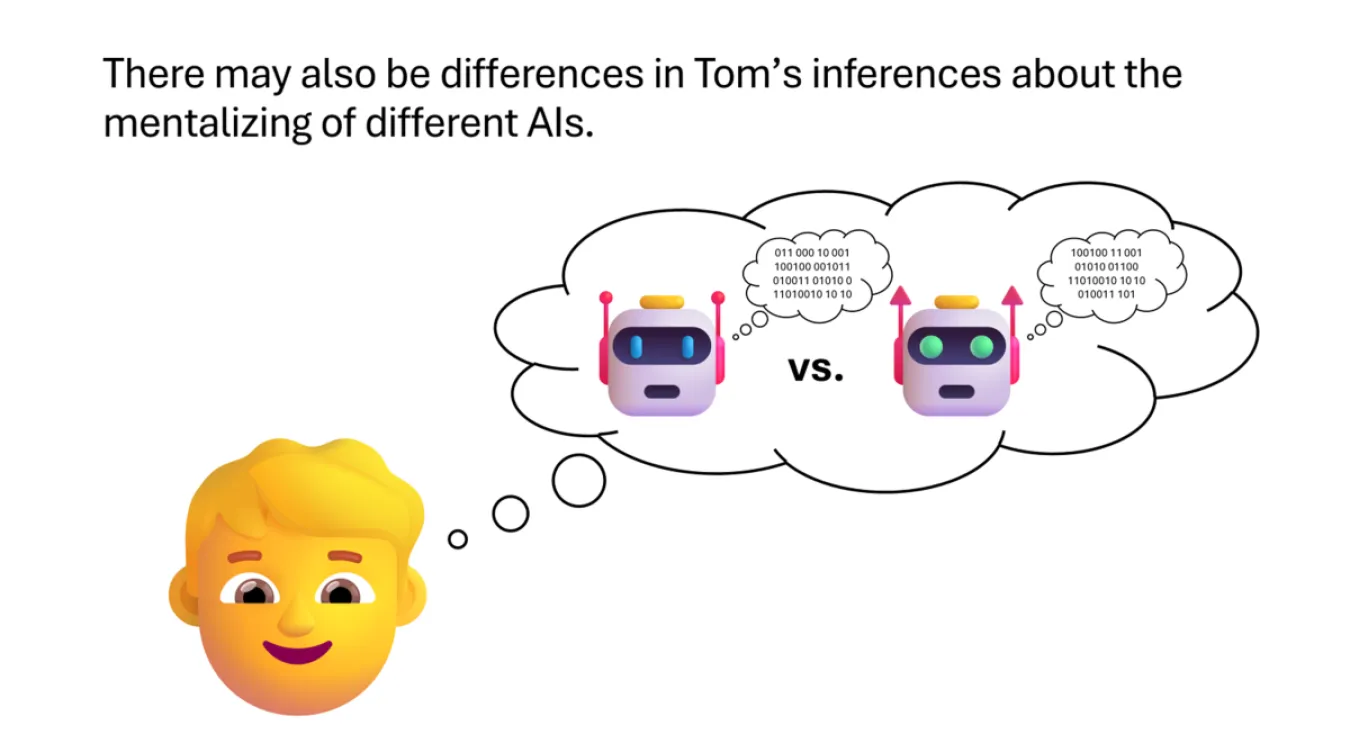
  • Cartoon of boy with speech ballon with 2 robots
    Magazine Issue
    08/2026 - SpeciaI issue on artificial intelligence

    How humans form beliefs about conversational AI

    • written by
    • Tobias R. Rebholz
    Why do we treat Alexa or ChatGPT like a helpful coworker – or even a friend? This article explores how talking to conversational AI shapes the beliefs we form about machines.
    Read more
  • Magazine Issue
    08/2026 - SpeciaI issue on artificial intelligence

    Why putting humans in the loop can make decision-making with AI worse

    • written by
    • Tobias Rieger,
    • Dietrich Manzey,
    • Eileen Roesler,
    • Linda Onnasch
    AI’s decisions are often comprised with a human in the loop. Why? The person tries to improve the decisions but ends up making it worse despite good intentions. Our need to contribute interferes with these systems. In this article, we discuss this issue and whether explainable AI can foster true human-AI teamwork for better choices.
    Read more
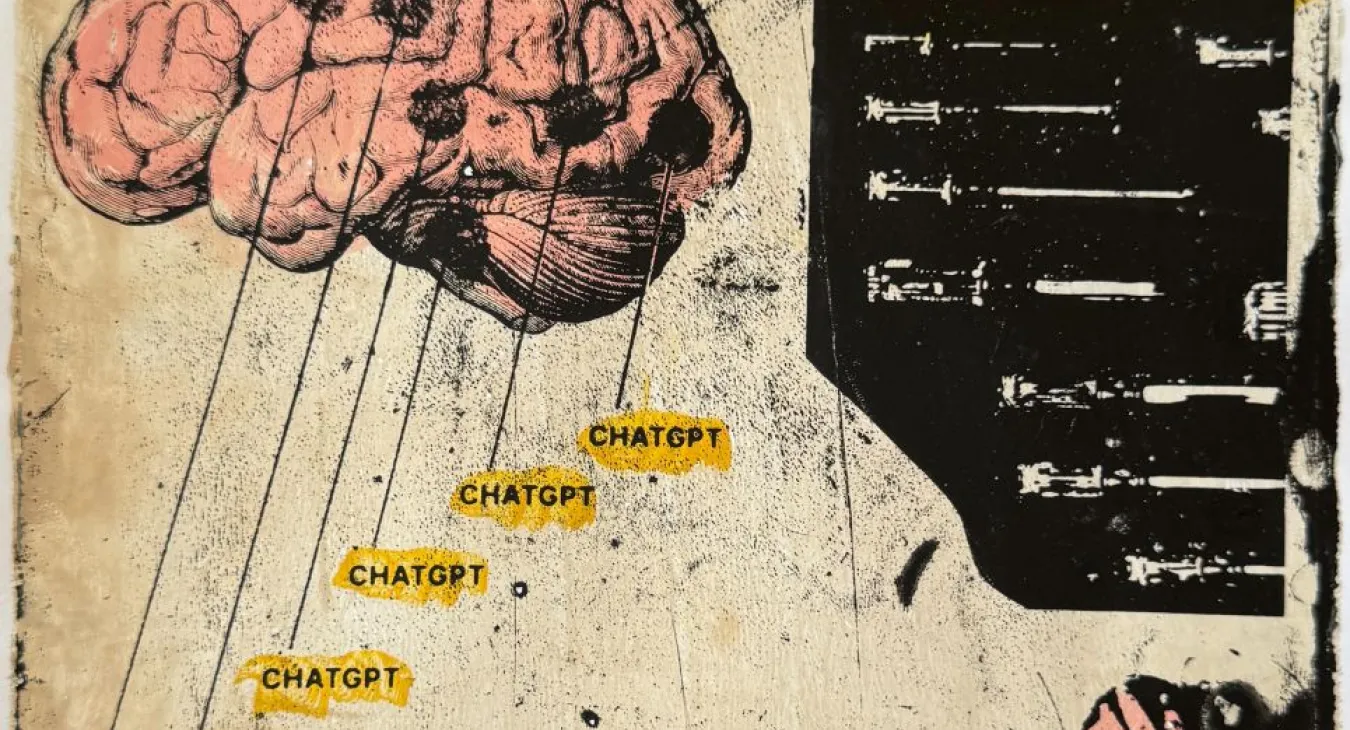
  • a brain with areas marked as responsible for chatGPT processing
    Magazine Issue
    08/2026 - SpeciaI issue on artificial intelligence

    Editorial for the special issue "Artificial intelligence, real consequences: Exploring the psychological dimensions of AI"

    • written by
    • Magdalena Wischnewski,
    • Stella Wernicke
    Not long ago, artificial intelligence was mostly found in science fiction and computer science departments. Today, it drafts our emails, recommends our next purchase, tutors our children, and occasionally tells us it understands how we feel. This shift has happened so quickly that our psychological vocabulary is still catching up. What does it mean to trust a system that has no body, no history, and no stake in the outcome but communicates like us? Why do we sometimes treat a chatbot with the same politeness we'd extend to a colleague, and other times discard it the moment it makes a...
    Read more
  • In-Mind Blog

    Join the In-Mind team: Help us make psychology accessible to everyone!

    written by: Rinat Meerson, Stella Wernicke, Jana Dreston
  • Magazine Issue 09/2026

    Teamwork today and tomorrow: The skills that matter and how to build them

    written by: Lara Watermann, Natalie Hogh, Joshua Braun, Simone Kubowitsch
  • In-Mind Blog

    After "Adolescence": What we know (and don’t know) about gender attitudes and online misogyny

    written by: Kate Schramm, Silvana Weber
  • Magazine Issue 08/2026 - SpeciaI issue on artificial intelligence

    Benefits and risks of asking AI for health advice

    written by: Jaroslava Kaňková
  • Magazine Issue 09/2018

    Social Machines: Social Aspects of Human-Computer Interaction

    written by: Flora Almosdi, Adrienn Ujhelyi
    Have you ever experienced the frustration of your computer not behaving as it should? Maybe it started to reboot during your most important meeting, or it simply froze and despite... more
  • Magazine Issue 05/2018

    White lies and black lies: What they have in common and how they differ

    written by: Janina Steinmetz, Ann-Christin Posten
    Black lies, or telling a lie to gain a personal benefit, are universally condemned. In contrast, white lies, or telling a lie to please another person, are seen as an... more
  • Magazine Issue 05/2018

    Origins of Common Fears: A Review

    written by: Arash Emamzadeh
    Whether you cower while looking down from great heights or fear looking up to the stormy skies, whether you fear the bite of a fat venomous snake or fear the... more
  • Magazine Issue 05/2018

    Remembering what never occurred? Children’s false memories for repeated experiences

    written by: Bruna Calado, Henry Otgaar, Timothy J. Luke, Sara Landström
    “Memory, my dear Cecily, is the diary that we all carry about with us.” “Yes, but it usually chronicles the things that have never happened, and couldn't possibly have happened.” ... more
  • Magazine Issue 04/2018

    Improving the Disclosure of Information in an Investigative Interview: Rapport building and the Physical Environment

    written by: Katherine Hoogesteyn, Ewout Meijer, Aldert Vrij, Harald Merckelbach
    When you think about an interrogation room, what do you picture? A small, dull, and anxiety-provoking room? You may be right; some interrogation rooms look like this. However, does the... more
  • Magazine Issue 04/2018

    Bad day? How it can seem even worse for some

    written by: Michelle Lemay, Brittney Holcomb
    Many people do not realize how often our emotions affect us. Our emotions dictate what things we focus on or attend to, how we interpret things, and what things we... more
  • Load More Issues

In-Mind Blog

  • 25.04.2014 | Happiness & Well-being

    Where are the genes for psychological traits?

    written by: Marcus Munafo
    In this blog post, I will discuss the methodologies available for identifying genetic influences on psychological traits, why it has proved so difficult to reliably identify specific genes, despite 20 years of effort, and what this tells us about the nature of these genetic influences. more
  • 21.04.2014 | Gender

    Marrying smart or marrying instead of being smart? The goal conflict between MRS degrees and STEM degrees

    written by: Cathleen Clerkin
    In this blog post, I review a number of studies that suggest that telling women to focus on their MRS degree (aka getting married) while in college can make women less interested in earning a STEM degree (Science, Technology, Engineering & Math). Why does this matter? Because the STEM fields are in desperate need of women. Luckily, research also suggests that women in STEM are more desirable than women may realize. more
  • 18.04.2014 | Violence & Aggression

    Sticks and stones and breaking bones: Social psychology and school aggression

    written by: Sian Jones
    Bullying is a pervasive issue in schools today. This is one of two blog posts that will look at school aggression from the perspective of contemporary social psychology. In this post, I'll examine the role of groups in encouraging bullying. In my next post, I'll look at the perspective of the bullied victims. When it comes to bullying, it seems that groups can both be a part of the problem and the solution. more
  • 14.04.2014 | Solid Science

    The year the journals changed

    written by: Roger Giner-Sorolla
    Where do all the studies come from? Behind every headline trumpeting a new finding in psychology, you can usually find an article in a peer-reviewed psychology journal. But how reliable are these findings? This is what many scientists have recently started to wonder. Because of this, journals in psychology are starting to insist on better reporting of research studies. In this first post of a two-part series, I will explain some of the standards that have typically been used to judge whether a study deserves publication or not. more
  • 09.04.2014 | Culture

    Colorful Culture

    written by: Charis Eisen, Keiko Ishii
    As a world without colors would be extremely boring, we are luckily able to perceive various different colors that enrich our environment. Recently, Keiko Ishii and colleagues found that the colors we prefer and use for our paintings vary systematically across cultures. But that doesn’t mean that tomorrow’s multi-cultural world is becoming black-and-white or grey, rather there is hope that it will become even more colorful than it is today. In this post, we will illustrate how individuals and cultures engage in mutual construction and thus enhance variety. more
  • 31.03.2014 | Announcements and News

    Inequality: Minority disadvantage or White privilege? - And why it matters

    written by: Ellie Shockley
    In this blog post, I will discuss research showing how framing ethnic inequality in terms of White advantage versus minority disadvantage impacts how Whites and minorities understand inequality and thus how we should address inequality. more
  • Load more blog posts

Editors' Choice

  • Magazine Issue 09/2026

    Teamwork today and tomorrow: The skills that matter and how to build them

    written by: Lara Watermann, Natalie Hogh, Joshua Braun, Simone Kubowitsch
  • In-Mind Blog
    a boy sitting next to a laptop using his phone

    After "Adolescence": What we know (and don’t know) about gender attitudes and online misogyny

    written by: Kate Schramm, Silvana Weber
  • Magazine Issue 08/2026 - SpeciaI issue on artificial intelligence
    Man using ChatGPT

    Benefits and risks of asking AI for health advice

    written by: Jaroslava Kaňková

Most Read

  • Magazine Issue 02/2014

    The good, the bad, and the ugly of the Dove Campaign for Real Beauty

    written by: Angela Celebre, Ashley Waggoner Denton
  • Magazine Issue 03/2026

    Children in front of a screen: what is the impact of technology on their development?

    written by: Marica Notte, Daniela Renzi
  • Magazine Issue 09/2025

    Viral and harmful: Violence in media and its impact on empathy

    written by: Mira Fauth-Bühler

The Inquisitive Mind is supported by:

  • DGPs – Deutsche Gesellschaft für Psychologie
  • C-SEB – Center for Social and Economic Behavior

Menu

  • Magazine
  • Blog
  • Submit to In-Mind
  • About In-Mind
  • Search
  • LinkedIn
  • Bluesky
  • Instagram
  • Print
  • RSS Feed
  • Cookie settings

About Us

In-Mind is a voluntary science communication project. We enable scientifically working psychologists to present their research topics in a scientifically sound, understandable and entertaining way for an interested audience: Psychology by scientists for everyone....more

Footer menu

  • Imprint
  • Data Protection