  • EN
  • DE
  • FR
  • IT
  • NL

User account menu

  • Log in
Home
  • Magazine
    • All issues
    • Glossary
  • Blog
    • All blog posts
  • Submit to In-Mind
    • Articles
    • Blog posts
  • About In-Mind
    • Team
    • What is In-Mind?
    • Credits
  • Search

Psychology for You!

  • Magazine Issue
    09/2026

    Teamwork today and tomorrow: The skills that matter and how to build them

    • written by
    • Lara Watermann,
    • Natalie Hogh,
    • Joshua Braun,
    • Simone Kubowitsch
    Teams today collaborate across screens, time zones, and digital tools, but better technology does not always mean better teamwork. Hybrid meetings, information overload, and workflows supported by artificial intelligence (AI) create new challenges. Drawing on expert insights and psychological research, this article explores which team skills matter most and how teams can build them.
    Read more
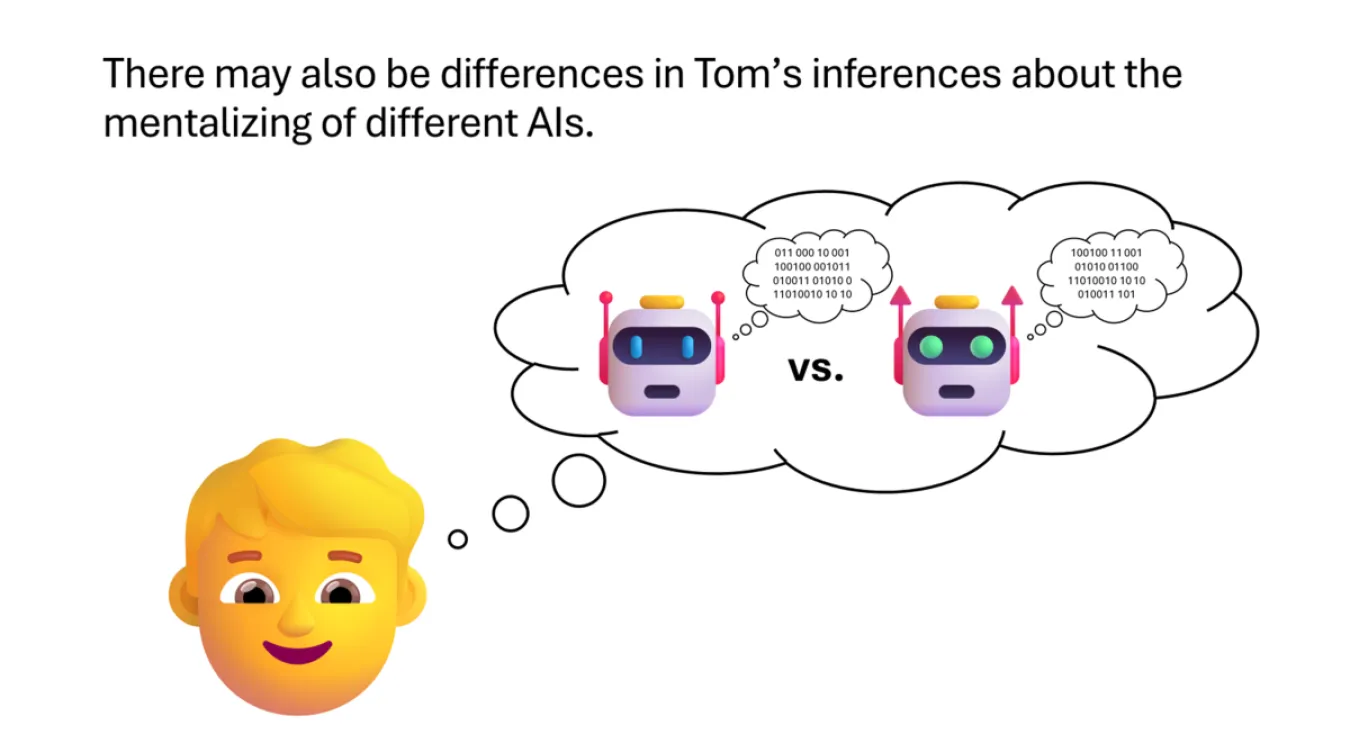
  • Cartoon of boy with speech ballon with 2 robots
    Magazine Issue
    08/2026 - SpeciaI issue on artificial intelligence

    How humans form beliefs about conversational AI

    • written by
    • Tobias R. Rebholz
    Why do we treat Alexa or ChatGPT like a helpful coworker – or even a friend? This article explores how talking to conversational AI shapes the beliefs we form about machines.
    Read more
  • Magazine Issue
    08/2026 - SpeciaI issue on artificial intelligence

    Why putting humans in the loop can make decision-making with AI worse

    • written by
    • Tobias Rieger,
    • Dietrich Manzey,
    • Eileen Roesler,
    • Linda Onnasch
    AI’s decisions are often comprised with a human in the loop. Why? The person tries to improve the decisions but ends up making it worse despite good intentions. Our need to contribute interferes with these systems. In this article, we discuss this issue and whether explainable AI can foster true human-AI teamwork for better choices.
    Read more
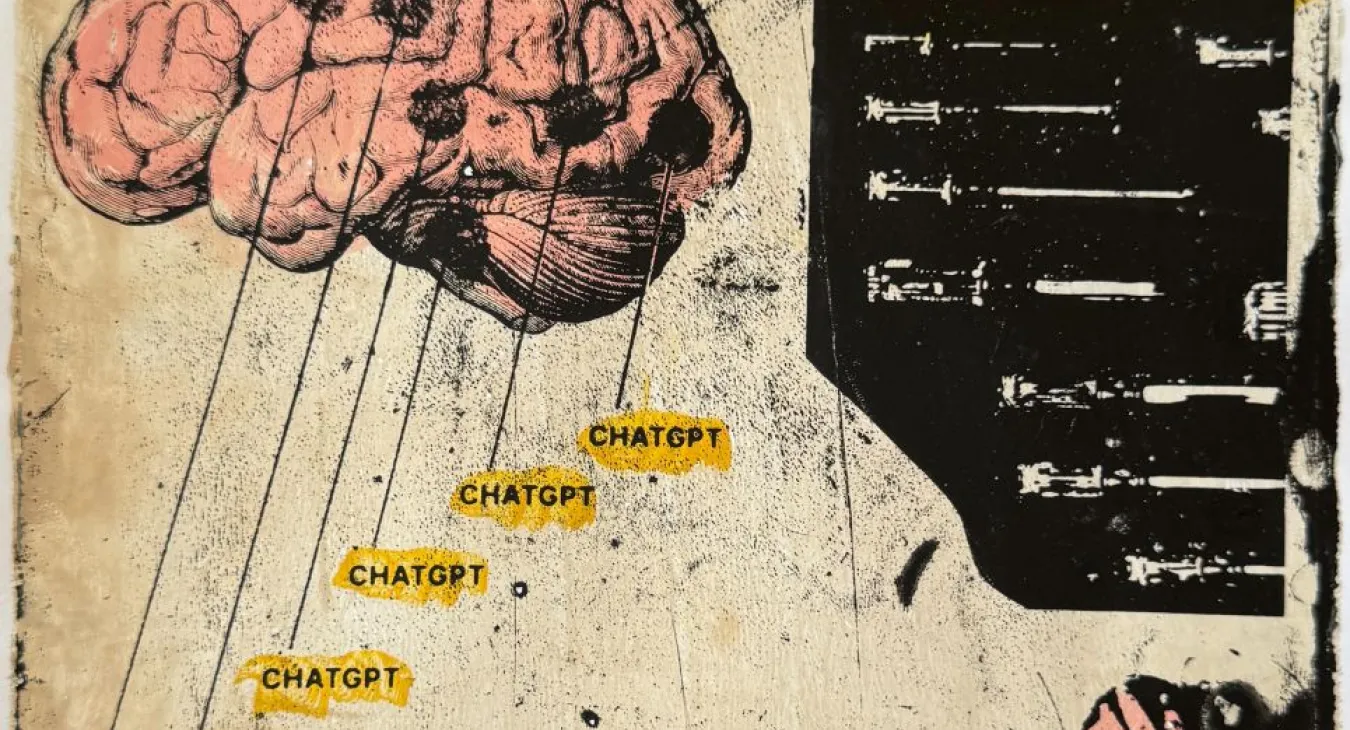
  • a brain with areas marked as responsible for chatGPT processing
    Magazine Issue
    08/2026 - SpeciaI issue on artificial intelligence

    Editorial for the special issue "Artificial intelligence, real consequences: Exploring the psychological dimensions of AI"

    • written by
    • Magdalena Wischnewski,
    • Stella Wernicke
    Not long ago, artificial intelligence was mostly found in science fiction and computer science departments. Today, it drafts our emails, recommends our next purchase, tutors our children, and occasionally tells us it understands how we feel. This shift has happened so quickly that our psychological vocabulary is still catching up. What does it mean to trust a system that has no body, no history, and no stake in the outcome but communicates like us? Why do we sometimes treat a chatbot with the same politeness we'd extend to a colleague, and other times discard it the moment it makes a...
    Read more
  • In-Mind Blog

    Join the In-Mind team: Help us make psychology accessible to everyone!

    written by: Rinat Meerson, Stella Wernicke, Jana Dreston
  • Magazine Issue 09/2026

    Teamwork today and tomorrow: The skills that matter and how to build them

    written by: Lara Watermann, Natalie Hogh, Joshua Braun, Simone Kubowitsch
  • In-Mind Blog

    After "Adolescence": What we know (and don’t know) about gender attitudes and online misogyny

    written by: Kate Schramm, Silvana Weber
  • Magazine Issue 08/2026 - SpeciaI issue on artificial intelligence

    Benefits and risks of asking AI for health advice

    written by: Jaroslava Kaňková
  • Magazine Issue 03/2017

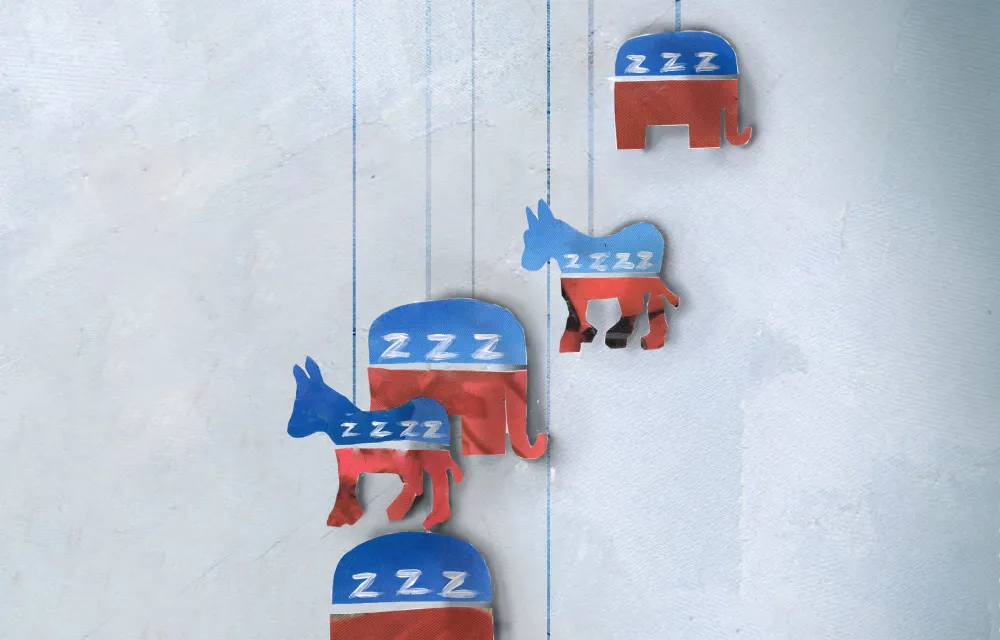
    Sleepy Politics: How Sleep Deprivation can Affect Political Decision Making

    written by: Jan Alexander Häusser
    In today’s political landscape, important decisions are often made by those who are severely sleep deprived. This raises the question of potential consequences of sleep deprivation for political decision making... more
  • Magazine Issue 03/2017

    Asking Children to Talk About Abuse: Can Research Help Improve Police Interviewer Skills?

    written by: Mikaela Magnusson, Emelie Ernberg, Sara Landström
    Child abuse cases often lack corroborative evidence in the form of injuries, DNA or direct witness observations. Instead, the most important source of information about the alleged crime is typically... more
  • Magazine Issue 03/2017

    In Defense of Anger: An Evolutionary Necessity and its Contemporary Applicability

    written by: Cameron Stuart Kay
    Anger is defined as an unpleasant feeling that results from an unpleasant event and it is, therefore, not particularly surprising that so many people dismiss it as a pointless emotion... more
  • Magazine Issue 10/2016

    Are Perceptions of Election “Rigging” Racialized?

    written by: Christopher M. Federico, Jacob Appleby
    Republican presidential nominee Donald Trump has departed from the usual norms of campaigning by repeatedly alleging that the November election is “going to be rigged” by his opponents. In recent... more
  • Magazine Issue 10/2016

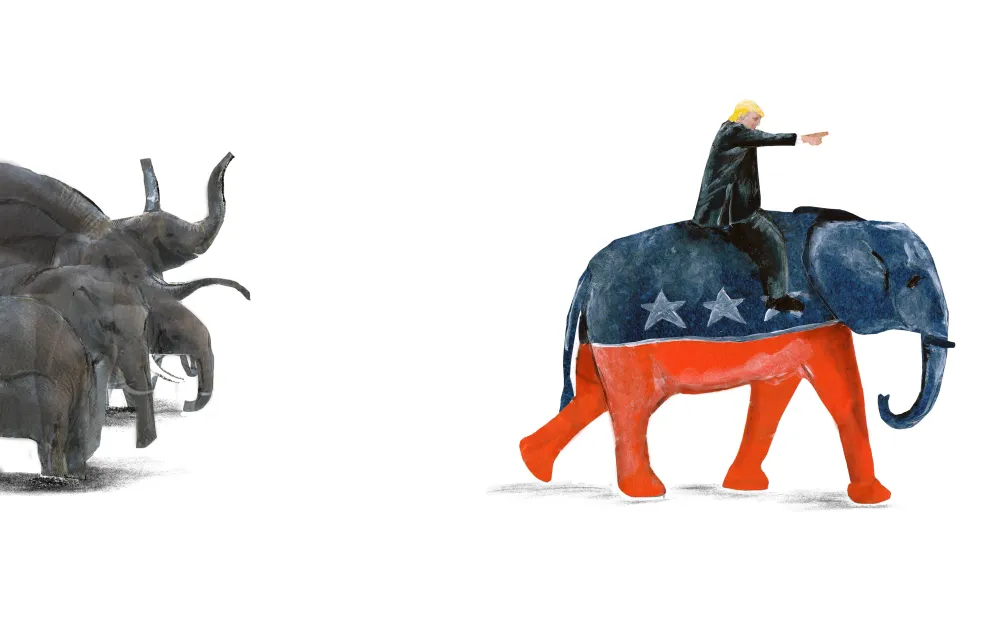
    Elephants and Donkeys Are Killing The United States: Why We Need Political Diversity

    written by: Kate Johnson
    While the opinions expressed in our own social networks may overwhelmingly predict our presidential candidate winning by a landslide, almost half of Americans polled support the candidate we oppose. As... more
  • Magazine Issue 10/2016

    Why Has Donald Trump Lost So Much Conservative Support?

    written by: Chris Martin
    Donald Trump has lost the support of many conservatives, a problem that may be explained by his lack of conscientiousness. This trait is more characteristic of conservatives than liberals, which... more
  • Load More Issues

In-Mind Blog

  • 01.03.2014 | Political Psychology

    Political convictions emerge from the gut

    written by: Matt Motyl
    In the first part of this three part series, my colleague Ellie Shockley described how rational thinking may drive political attitudes and voting behavior. In this second part of the series, I describe how emotion may drive political attitudes and voting behavior. In the final part of this series, Mark Brandt will discuss how emotion and reason each contribute to people’s political attitudes and behaviors. more
  • 27.02.2014 | Violence & Aggression

    Fifty Shades of arousal misattribution and cognitive associations: How Christian Grey is making us believe that women find BDSM “hot”

    written by: Kathryn Bartlett Anderson
    Does Fifty Shades of Grey make you wonder if BDSM is arousing? If women secretly want to be spanked? This post explains how Fifty Shades readers may develop this belief, how it may affect their behavior, and how it may increase sexual aggression against women. more
  • 24.02.2014 | Political Psychology

    Are voters rational?

    written by: Ellie Shockley
    Are voters rational? There is, unfortunately, no easy answer to the question. Social psychological science, like all science, is a quest for knowledge in a complicated world. However, research helps us advance closer to a genuine understanding of voter rationality – or irrationality, as the case may be. As a part of a three-part series on the subject of voter rationality, my colleagues Matt Motyl, Mark Brandt, and I will discuss some theories and research dealing with voters’ attitudes and behaviors. We hope you will stay a part of the conversation with us! more
  • 20.02.2014 | Political Psychology

    Everyone is prejudiced, too

    written by: Jarret Crawford
    In this blog post, I will discuss new research in political psychology that is changing our understanding of what prejudice is, and who is prejudiced. more
  • 12.02.2014 | Culture

    Re-thinking how we think about conformity

    written by: Robert Thomson
    In this post, I recount part of my journey into the nitty-gritty of cross-cultural differences in behavior. More specifically, I discuss the link between skateboarding across the USA, attractive Japanese women in tights, and the paradoxical nuances in conformity between cultures. more
  • 06.02.2014 | Romance & Friendship

    Does parental disapproval lead to love or dissolution? The Romeo and Juliet effect vs. the social network effect

    written by: Chelsea Ellithorpe
    In this post, I assert that two opposing theories about how opinions friends and family hold affect one’s romantic relationship (Romeo and Juliet effect vs. social network effect) can actually coexist. Though there is little empirical support for the Romeo and Juliet effect, current research demonstrates that this effect may exist in certain circumstances. more
  • Load more blog posts

Editors' Choice

  • Magazine Issue 09/2026

    Teamwork today and tomorrow: The skills that matter and how to build them

    written by: Lara Watermann, Natalie Hogh, Joshua Braun, Simone Kubowitsch
  • In-Mind Blog
    a boy sitting next to a laptop using his phone

    After "Adolescence": What we know (and don’t know) about gender attitudes and online misogyny

    written by: Kate Schramm, Silvana Weber
  • Magazine Issue 08/2026 - SpeciaI issue on artificial intelligence
    Man using ChatGPT

    Benefits and risks of asking AI for health advice

    written by: Jaroslava Kaňková

Most Read

  • Magazine Issue 02/2014

    The good, the bad, and the ugly of the Dove Campaign for Real Beauty

    written by: Angela Celebre, Ashley Waggoner Denton
  • Magazine Issue 03/2026

    Children in front of a screen: what is the impact of technology on their development?

    written by: Marica Notte, Daniela Renzi
  • Magazine Issue 09/2025

    Viral and harmful: Violence in media and its impact on empathy

    written by: Mira Fauth-Bühler

The Inquisitive Mind is supported by:

  • DGPs – Deutsche Gesellschaft für Psychologie
  • C-SEB – Center for Social and Economic Behavior

Menu

  • Magazine
  • Blog
  • Submit to In-Mind
  • About In-Mind
  • Search
  • LinkedIn
  • Bluesky
  • Instagram
  • Print
  • RSS Feed
  • Cookie settings

About Us

In-Mind is a voluntary science communication project. We enable scientifically working psychologists to present their research topics in a scientifically sound, understandable and entertaining way for an interested audience: Psychology by scientists for everyone....more

Footer menu

  • Imprint
  • Data Protection