  • EN
  • DE
  • FR
  • IT
  • NL

User account menu

  • Log in
Home
  • Magazine
    • All issues
    • Glossary
  • Blog
    • All blog posts
  • Submit to In-Mind
    • Articles
    • Blog posts
  • About In-Mind
    • Team
    • What is In-Mind?
    • Credits
  • Search

Psychology for You!

  • Magazine Issue
    09/2026

    Teamwork today and tomorrow: The skills that matter and how to build them

    • written by
    • Lara Watermann,
    • Natalie Hogh,
    • Joshua Braun,
    • Simone Kubowitsch
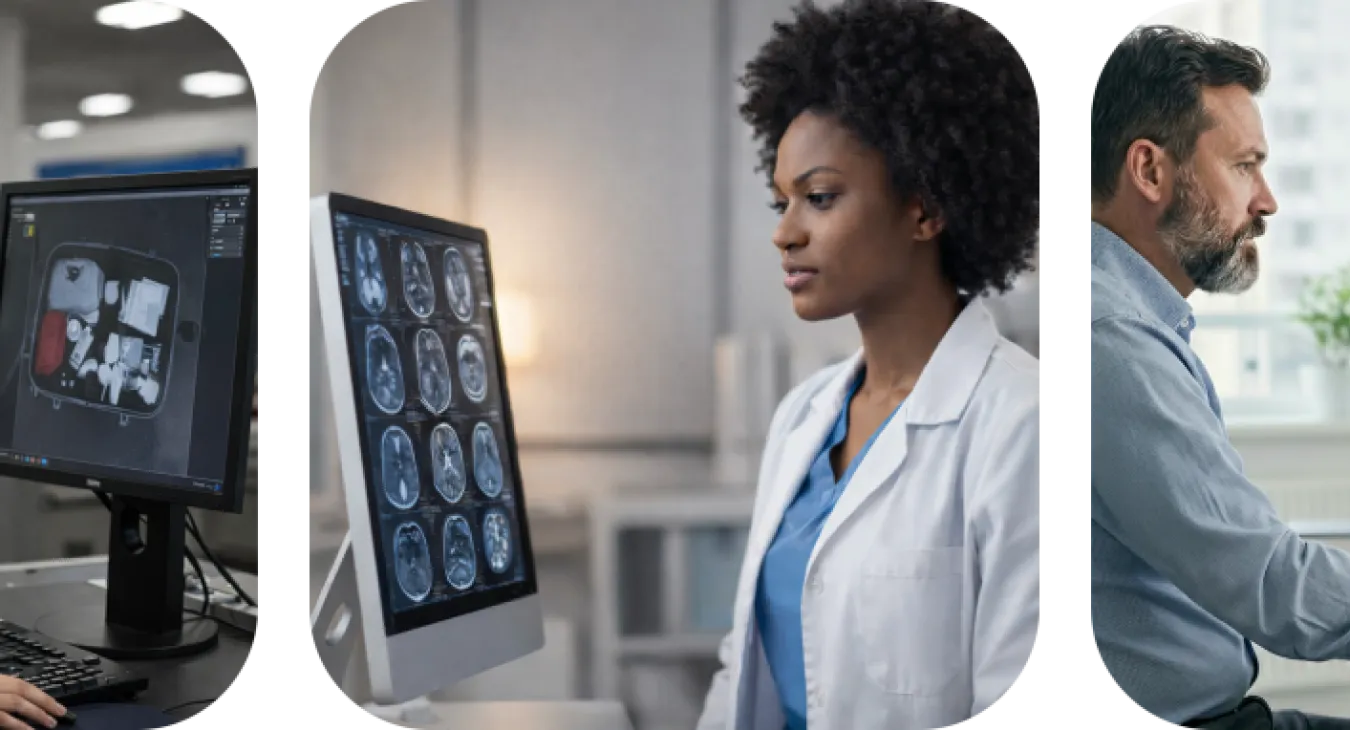
    Teams today collaborate across screens, time zones, and digital tools, but better technology does not always mean better teamwork. Hybrid meetings, information overload, and workflows supported by artificial intelligence (AI) create new challenges. Drawing on expert insights and psychological research, this article explores which team skills matter most and how teams can build them.
    Read more
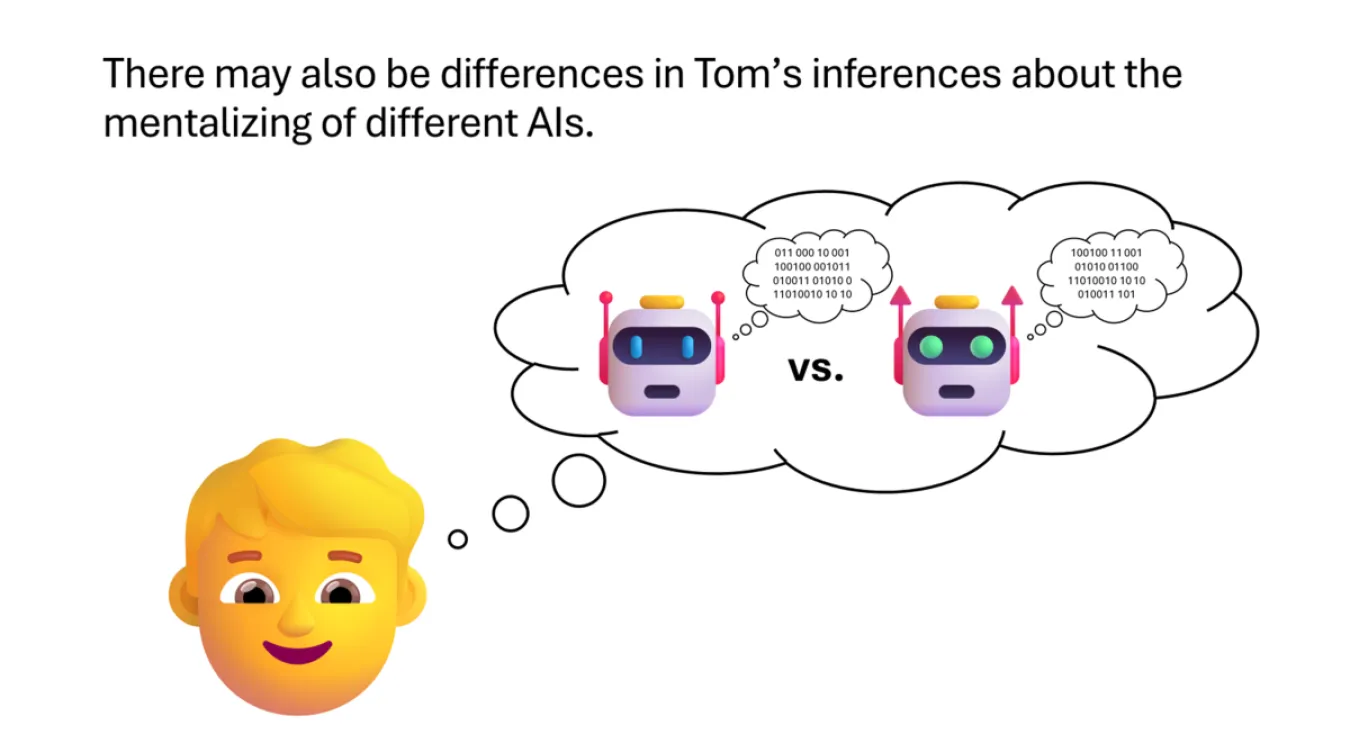
  • Cartoon of boy with speech ballon with 2 robots
    Magazine Issue
    08/2026 - SpeciaI issue on artificial intelligence

    How humans form beliefs about conversational AI

    • written by
    • Tobias R. Rebholz
    Why do we treat Alexa or ChatGPT like a helpful coworker – or even a friend? This article explores how talking to conversational AI shapes the beliefs we form about machines.
    Read more
  • Magazine Issue
    08/2026 - SpeciaI issue on artificial intelligence

    Why putting humans in the loop can make decision-making with AI worse

    • written by
    • Tobias Rieger,
    • Dietrich Manzey,
    • Eileen Roesler,
    • Linda Onnasch
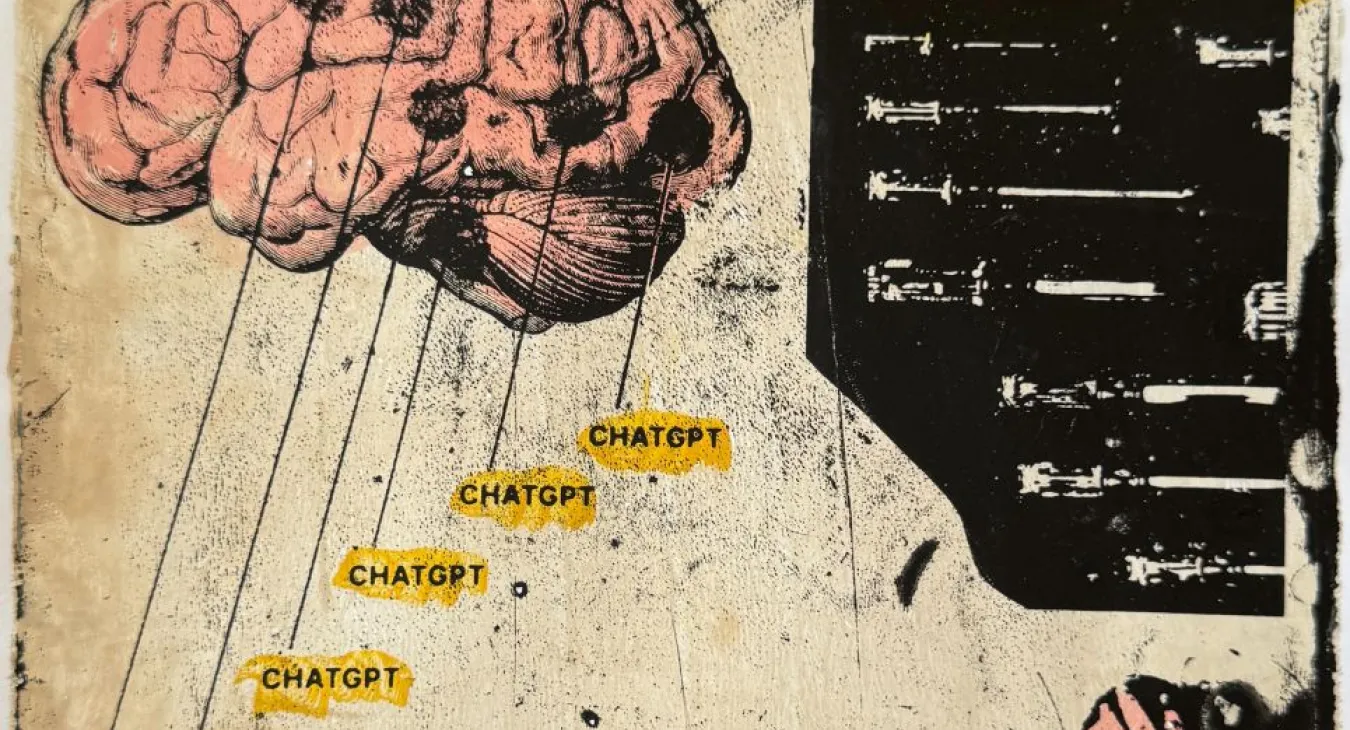
    AI’s decisions are often comprised with a human in the loop. Why? The person tries to improve the decisions but ends up making it worse despite good intentions. Our need to contribute interferes with these systems. In this article, we discuss this issue and whether explainable AI can foster true human-AI teamwork for better choices.
    Read more
  • a brain with areas marked as responsible for chatGPT processing
    Magazine Issue
    08/2026 - SpeciaI issue on artificial intelligence

    Editorial for the special issue "Artificial intelligence, real consequences: Exploring the psychological dimensions of AI"

    • written by
    • Magdalena Wischnewski,
    • Stella Wernicke
    Not long ago, artificial intelligence was mostly found in science fiction and computer science departments. Today, it drafts our emails, recommends our next purchase, tutors our children, and occasionally tells us it understands how we feel. This shift has happened so quickly that our psychological vocabulary is still catching up. What does it mean to trust a system that has no body, no history, and no stake in the outcome but communicates like us? Why do we sometimes treat a chatbot with the same politeness we'd extend to a colleague, and other times discard it the moment it makes a...
    Read more
  • In-Mind Blog

    Join the In-Mind team: Help us make psychology accessible to everyone!

    written by: Rinat Meerson, Stella Wernicke, Jana Dreston
  • Magazine Issue 09/2026

    Teamwork today and tomorrow: The skills that matter and how to build them

    written by: Lara Watermann, Natalie Hogh, Joshua Braun, Simone Kubowitsch
  • In-Mind Blog

    After "Adolescence": What we know (and don’t know) about gender attitudes and online misogyny

    written by: Kate Schramm, Silvana Weber
  • Magazine Issue 08/2026 - SpeciaI issue on artificial intelligence

    Benefits and risks of asking AI for health advice

    written by: Jaroslava Kaňková
  • Magazine Issue 07/2016

    Was that how it happened? Shaping our memory for personal experiences in conversation with others

    written by: Joanne Rechdan, Melanie Sauerland, Lorraine Hope, James Ost
    Conversations with others can alter our memories for life events. Our purpose in relating a story, and how our audience receives it, are factors that influence our selection of what... more
  • Magazine Issue 04/2016

    It’s not a matter of fashion: How psychological research can revamp common beliefs on lesbian and gay parenting

    written by: Diego Lasio
    Lesbian and gay parenting is still controversial and same- sex parents are often subjected to prejudices founded on the belief that parental sexual orientation exposes children to various negative outcomes... more
  • Magazine Issue 01/2016

    What is c Factor, and Where Can I Get It?

    written by: Barbara Wood Roberts, Douglas E. Colman
    Meredith just landed her first job at a run-of-the-mill industrial design firm. As the newest member of an important project team, she began as an “average” member of the group... more
  • Magazine Issue 01/2016

    From the Editors: On the Current State of Science Journalism

    written by: Dylan Selterman
    As we move through the 21st century, psychological science is at a crossroads. We are maturing as a field, albeit with some growing pains. The newest groundbreaking discoveries from... more
  • Magazine Issue 11/2015

    Seeing and Believing: Common Courtroom Myths in Eyewitness Memory

    written by: Nina Tupper, Melanie Sauerland, Lorraine Hope, Harald Merckelbach
    When it comes to understanding eyewitness memory, people’s commonsense views are sometimes consistent with contemporary scientific knowledge – but sometimes they are dangerously adrift. This article aims to unravel some... more
  • Magazine Issue 11/2015

    Can you nonbelieve it: What happens when you do not believe in your memories?

    written by: Jianqin Wang, Henry Otgaar, Mark Howe, Tom Smeets, Harald Merckelbach
    Human memory is susceptible to errors and distortions. This may sound cliché (Loftus, 2005), but the practical meaning of this is illustrated by, for example, the devastating effects of mistaken... more
  • Load More Issues

In-Mind Blog

  • 29.01.2014 | Political Psychology

    Everyone is biased

    written by: Jarret Crawford
    My first blog post tells the story of my discovery of the conditions that reveal the political biases of liberals and conservatives. It’s also a story of coming to terms with my own biases. more
  • 04.01.2014 | Big Questions in Society

    After Trayvon: The science of protecting innocent black men

    written by: Scott Sleek
    Even though the death of Trayvon Martin drew much public attention in the last year and a half, the shooting of an unarmed, innocent black male is in no way an isolated case in America. Jonathan Ferrell, a 24-year-old African-American man in Florida, was recently killed by police officers when he was looking for help after crashing his car. Roy Middleton, a 60-year-old Florida man, was crippled after the sheriff’s deputies mistook him for a car thief and shot him 15 times in his own driveway. Omar Edwards, an African-American policeman, was shot in Harlem by another officer who mistook him for a car thief. And Jordan Davis, 17, was shot and killed by a 45-year-old man who said he felt threatened in an argument at a gas station. more
  • 31.12.2014 | Big Questions in Society

    Why do we sometimes enjoy the misfortune of others?

    written by: Wilco van Dijk
    Have you ever been in a situation where you couldn’t resist a little smile when someone else had a setback? Have you ever experienced joy when another person suffered a mishap? We’ve all probably been in that situation and we’ve all felt that joy. The German language coined the word Schadenfreude—a compound word of the German words 'Schaden' meaning 'harm' and 'Freude' meaning 'joy'—for the pleasure at the misfortunes of others and nowadays it is used as a loanword in the English language. more
  • 01.12.2013 |

    Why do people help strangers when disaster strikes?

    written by: Theresa DiDonato
    Marc Fucarile, a 34-year old native of Stoneham MA, lost his right leg, nearly lost his left, was peppered with shrapnel, and suffered severe burns when the second bomb exploded at the 2013 Boston Marathon.  Shortly thereafter, from his hospital bed, Marc described his situation saying, “There’s more good in the world than there is bad” (LaPierre, 2013).  Given his circumstances, this is an extraordinary observation, one that inspires awe and admiration. more

Editors' Choice

  • Magazine Issue 09/2026

    Teamwork today and tomorrow: The skills that matter and how to build them

    written by: Lara Watermann, Natalie Hogh, Joshua Braun, Simone Kubowitsch
  • In-Mind Blog
    a boy sitting next to a laptop using his phone

    After "Adolescence": What we know (and don’t know) about gender attitudes and online misogyny

    written by: Kate Schramm, Silvana Weber
  • Magazine Issue 08/2026 - SpeciaI issue on artificial intelligence
    Man using ChatGPT

    Benefits and risks of asking AI for health advice

    written by: Jaroslava Kaňková

Most Read

  • Magazine Issue 02/2014

    The good, the bad, and the ugly of the Dove Campaign for Real Beauty

    written by: Angela Celebre, Ashley Waggoner Denton
  • Magazine Issue 03/2026

    Children in front of a screen: what is the impact of technology on their development?

    written by: Marica Notte, Daniela Renzi
  • Magazine Issue 09/2025

    Viral and harmful: Violence in media and its impact on empathy

    written by: Mira Fauth-Bühler

The Inquisitive Mind is supported by:

  • DGPs – Deutsche Gesellschaft für Psychologie
  • C-SEB – Center for Social and Economic Behavior

Menu

  • Magazine
  • Blog
  • Submit to In-Mind
  • About In-Mind
  • Search
  • LinkedIn
  • Bluesky
  • Instagram
  • Print
  • RSS Feed
  • Cookie settings

About Us

In-Mind is a voluntary science communication project. We enable scientifically working psychologists to present their research topics in a scientifically sound, understandable and entertaining way for an interested audience: Psychology by scientists for everyone....more

Footer menu

  • Imprint
  • Data Protection