  • EN
  • DE
  • FR
  • IT
  • NL

User account menu

  • Log in
Home
  • Magazine
    • All issues
    • Glossary
  • Blog
    • All blog posts
  • Submit to In-Mind
    • Articles
    • Blog posts
  • About In-Mind
    • Team
    • What is In-Mind?
    • Credits
  • Search

Psychology for You!

  • Magazine Issue
    09/2026

    Teamwork today and tomorrow: The skills that matter and how to build them

    • written by
    • Lara Watermann,
    • Natalie Hogh,
    • Joshua Braun,
    • Simone Kubowitsch
    Teams today collaborate across screens, time zones, and digital tools, but better technology does not always mean better teamwork. Hybrid meetings, information overload, and workflows supported by artificial intelligence (AI) create new challenges. Drawing on expert insights and psychological research, this article explores which team skills matter most and how teams can build them.
    Read more
  • Magazine Issue
    08/2026 - SpeciaI issue on artificial intelligence

    Understanding the mind-AI connection – how cognitive abilities shape AI use

    • written by
    • Magnus Liebherr,
    • Eva Gößwein
    The impact of Artificial Intelligence (AI) is closely tied to human cognitive abilities – mental processes that determine how we interpret, evaluate, and respond to AI-generated information. Understanding this interplay is essential for designing AI systems that align with human cognition, enhancing user engagement while reducing risks such as automation bias (the tendency to overtrust AI outputs) and cognitive overload (the state in which information exceeds mental capacity). In this article, we introduce the concepts of working memory, cognitive flexibility, and attention and explore how they shape the way we interact with AI. We illustrate how these cognitive functions influence...
    Read more
  • Human oversight
    Magazine Issue
    08/2026 - SpeciaI issue on artificial intelligence

    Human oversight of AI: An effective remedy for AI risks or a way to induce unwarranted trust in AI?

    • written by
    • Markus Langer,
    • Kevin Baum,
    • Johann Laux
    When AI determines medical treatments or prison sentences, we may find comfort in the idea of a “human touch” in decisions, for instance, in the form of human oversight mandated in AI regulation. But does human oversight add something meaningful or does it merely serve to convince us to trust AI?
    Read more
  • Digital price tags
    Magazine Issue
    08/2026 - SpeciaI issue on artificial intelligence

    How artificial intelligence in supermarkets influences customer experiences

    • written by
    • Sophia Wingen,
    • Laura Schenk
    A supermarket with prices that can change at any time and fully automated checkouts is no longer fiction but a reality enabled by artificial intelligence. This raises important questions about the consequences for consumers. Besides greater convenience, efficiency, and a personalized shopping experience, AI-driven supermarkets may reduce price and payment transparency and create a less comfortable atmosphere for consumers. This article explores the use of AI in supermarkets from a psychological perspective.
    Read more
  • In-Mind Blog

    Join the In-Mind team: Help us make psychology accessible to everyone!

    written by: Rinat Meerson, Stella Wernicke, Jana Dreston
  • Magazine Issue 09/2026

    Teamwork today and tomorrow: The skills that matter and how to build them

    written by: Lara Watermann, Natalie Hogh, Joshua Braun, Simone Kubowitsch
  • In-Mind Blog

    After "Adolescence": What we know (and don’t know) about gender attitudes and online misogyny

    written by: Kate Schramm, Silvana Weber
  • Magazine Issue 08/2026 - SpeciaI issue on artificial intelligence

    Benefits and risks of asking AI for health advice

    written by: Jaroslava Kaňková
  • Magazine Issue 12/2025

    Diagnosed by AI – What our social media behavior reveals about our mental health

    written by: Stella Wernicke, Stefanie Peykarjou, Letitia Parcalabescu
    When mental illnesses are detected early and treated promptly, people affected tend to suffer less and have a better chance of recovery. Until now, identifying signs of mental illness in... more
  • Magazine Issue 11/2025

    Understanding anxiety, encouraging courage: What families should know about social anxiety

    written by: Nadine Vietmeier, Jasper Froehlich, Silas Rooß
    Social anxiety is among the most common psychological challenges in childhood and adolescence—and it also presents major challenges for parents. How can they support their children without overwhelming them? What... more
  • Magazine Issue 11/2025

    Language models: A new perspective on language and cognition

    written by: Sam Boeve
    How do computers help us understand language acquisition? What do ChatGPT and text readability scores have in common? Language models are no longer just a useful technology; they are a... more
  • Magazine Issue 11/2025

    Self-care in the digital age: How we can handle social media in a healthy way

    written by: Marvin Holtwiesche, Mira Fauth-Bühler
    Do you find it difficult to reduce the time you spend on social media in the long term? Are you interested in learning why you often use social media excessively... more
  • Magazine Issue 11/2025

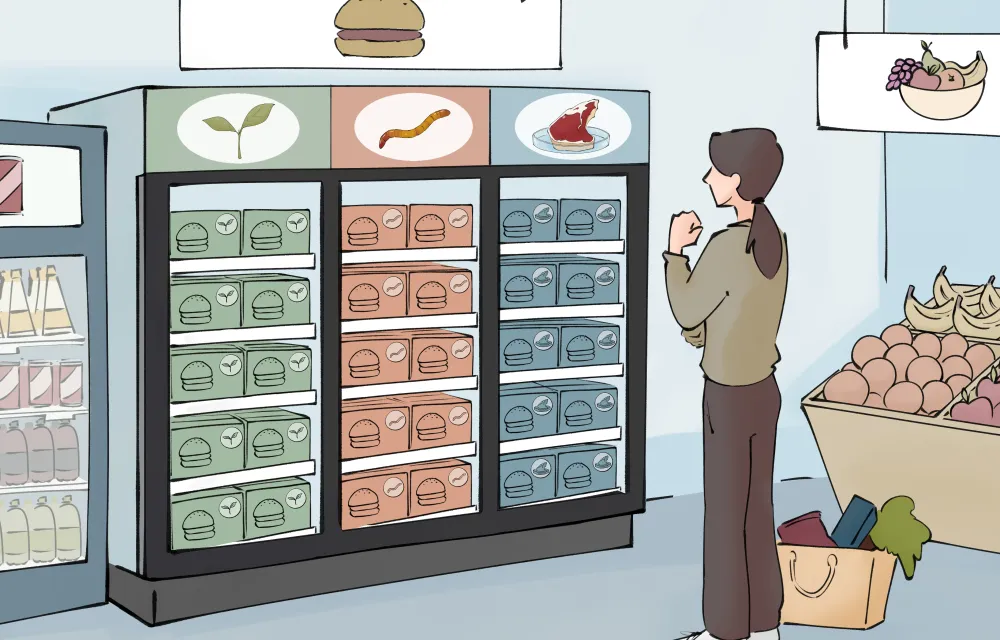
    Plant-based, insect-based, or cultivated meat alternatives—Why do we (not) consume them?

    written by: Lena Szczepanski, Milan Büscher, Lene Strootmann, Florian Fiebelkorn
    Meat alternatives have become a fixture on supermarket shelves. While people have been consuming plant-based alternatives for a long time, the consumption of insects and, in the future, cultivated meat... more
  • Magazine Issue 11/2025

    Mastering emotions: How emotion regulation can boost your athletic performance

    written by: Mira Fauth-Bühler
    Imagine standing on a balance beam. Your heart races, your palms sweat—your body is primed for peak performance. Now comes the crucial decision: how will you steer your emotions? Will you... more
  • Load More Issues

In-Mind Blog

  • 19.12.2024 | Self-Control & Decision-Making

    Everything was better in the past? Children’s self-regulation across the decades

    written by: Stefanie Peykarjou
    Do you also believe, like most American adults, that children today have less self-control than prior generations? A large study suggests that this assumption is wrong: Children from the 2000s can wait longer for candy than children from the 1960s and 1980s. more
  • 06.11.2024 | Announcements and News

    Call for editors for a Special Issue on the “Psychology of Artificial Intelligence”

    written by: Jana Dreston, Sofia Calderon, Stella Wernicke, Rinat Meerson
    Are you an AI researcher and wish to handle a special issue on the topic?
In-Mind is looking for one or several people who are interested in being guest editors... more
  • 25.10.2024 | Romance & Friendship

    Phubbing: When love slips through the screen

    written by: Sarah Spies, Denise Vesper
    We all know this situation: we want to tell the other person something, but they only have eyes for their smartphone. This behavior has a name: Phubbing. But how does phubbing change our relationships and do we have to switch back to reading the newspaper to be a good partner? more
  • 19.10.2024 | Other

    Bedtime procrastination: I know I should go to bed but …

    written by: Liesemarie Albers
    Perhaps, most people are aware that sleep is important and know the consequences of cutting nights short. However, many people delay their bedtimes from time to time – even though they are already tired and could easily fall asleep. Why do we put off going to bed? This article approaches explanations. more
  • 07.10.2024 |

    Call for articles on topical issues

    written by: Jana Dreston, Sofia Calderon, Stella Wernicke, Rinat Meerson
    We are currently looking to publish articles on a series of specific themes that we know people are generally very interested in learning more about. This is an invitation to... more
  • 24.04.2024 | Solid Science

    It’s just a joke, right? Empirical findings on the serious effects of sexist humor

    written by: Silvana Weber
    You can still make a joke, right? Yes, but... misogynistic jokes about women can have negative consequences. What can such humor do to women and men? more
  • Load more blog posts

Editors' Choice

  • Magazine Issue 09/2026

    Teamwork today and tomorrow: The skills that matter and how to build them

    written by: Lara Watermann, Natalie Hogh, Joshua Braun, Simone Kubowitsch
  • In-Mind Blog
    a boy sitting next to a laptop using his phone

    After "Adolescence": What we know (and don’t know) about gender attitudes and online misogyny

    written by: Kate Schramm, Silvana Weber
  • Magazine Issue 08/2026 - SpeciaI issue on artificial intelligence
    Man using ChatGPT

    Benefits and risks of asking AI for health advice

    written by: Jaroslava Kaňková

Most Read

  • Magazine Issue 02/2014

    The good, the bad, and the ugly of the Dove Campaign for Real Beauty

    written by: Angela Celebre, Ashley Waggoner Denton
  • Magazine Issue 03/2026

    Children in front of a screen: what is the impact of technology on their development?

    written by: Marica Notte, Daniela Renzi
  • Magazine Issue 09/2025

    Viral and harmful: Violence in media and its impact on empathy

    written by: Mira Fauth-Bühler

The Inquisitive Mind is supported by:

  • DGPs – Deutsche Gesellschaft für Psychologie
  • C-SEB – Center for Social and Economic Behavior

Menu

  • Magazine
  • Blog
  • Submit to In-Mind
  • About In-Mind
  • Search
  • LinkedIn
  • Bluesky
  • Instagram
  • Print
  • RSS Feed
  • Cookie settings

About Us

In-Mind is a voluntary science communication project. We enable scientifically working psychologists to present their research topics in a scientifically sound, understandable and entertaining way for an interested audience: Psychology by scientists for everyone....more

Footer menu

  • Imprint
  • Data Protection