- edited by
- Rinat Meerson
Reviewers: Jana Dombrowski and Yiwen Zhang.
Editorial Assistant: Maren Giersiepen.
We are constantly documenting our lives with digital technologies. But how do these tools, from smartphone camera rolls to wearables and social media platforms, change what and how we remember? In this article, we explore the interplay between memories stored in our minds and the available technological devices.
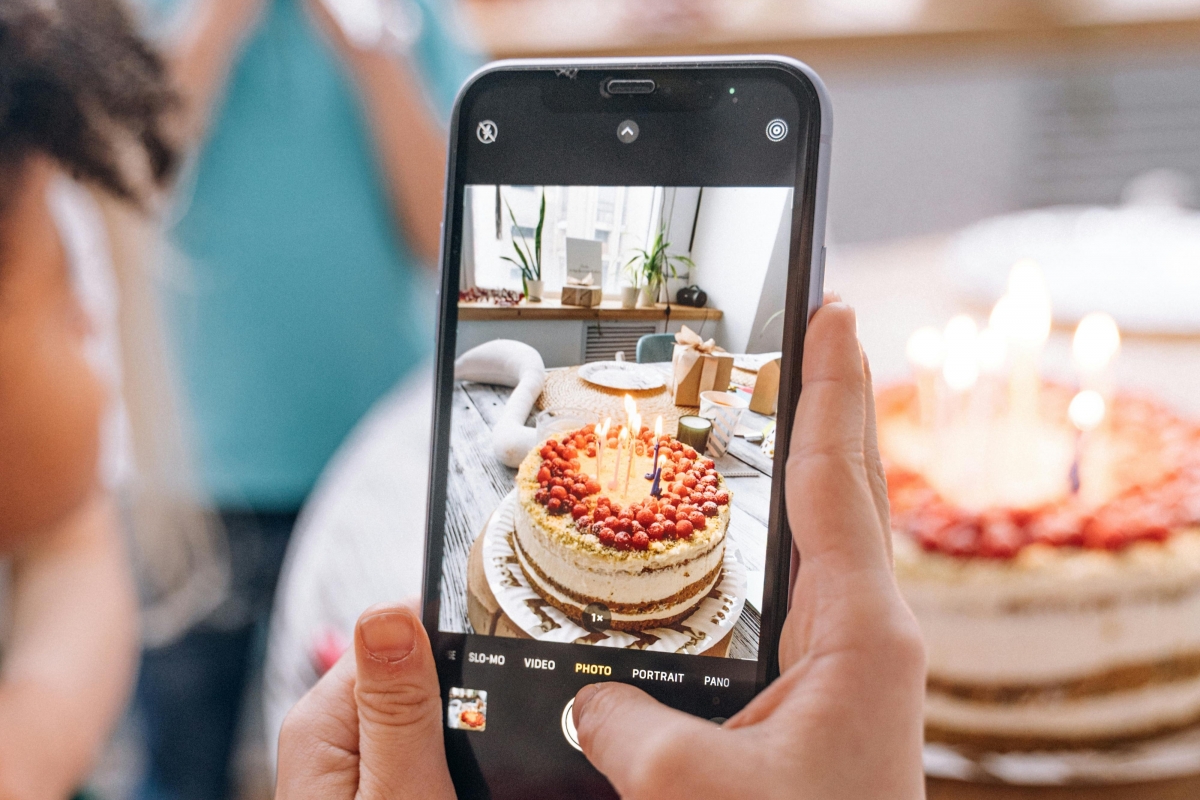
How did you spend your birthday two years ago? What happens when you try to remember that day? You probably start sifting through your mind for memories. You may recall if you celebrated, who was there, or whether it was a workday or a weekend. But what else would come back if you opened your phone and scrolled through photos or messages from that day? Our phones are always within reach and hold vast amounts of data about our lives. Autobiographical remembering today unfolds in constant interaction with digital resources. But how exactly do these tools support autobiographical remembering? We will address this question in the following. Before we do so, however, we need to take a step back and understand what autobiographical memories are.
Memories about our lives
Autobiographical memories are commonly defined as memories about our own lives (such as your birthday two years ago) [1]. These memories do not remain unchanged our whole lives, as our current goals and priorities can influence what we focus on, what we remember most clearly, or what we tell others about [2]. We keep this information about the events of our lives as internal memories in our minds. In addition, we may have stored information about these events in external resources such as photo albums and diaries. This is nothing new: Humans have been using these kinds of external resources for centuries or even millennia. But with the digital landscape surrounding us, the data stored on our phones is denser, searchable, and accessible anytime and anywhere, offering unprecedented possibilities for remembering. New data is constantly being collected. Not only when you actively take a picture, write down a list, or post something on social media, but also through automatically created digital traces like online purchases, phone calls, or fitness trackers.
So, how can we analyze and understand the changes to autobiographical remembering in the digital age from a psychological point of view? One recent suggestion in this regard is provided by the AMEDIA-model (Autobiographical Memory in the Digital Age), which tries to break down the iterative process of autobiographical remembering, in which people combine their internal memories with information from external digital sources [3;4]. While the model builds on previous research and theorizing about autobiographical remembering, it specifically focuses on understanding the impact of the digital environments that have emerged over the last years. In short, the model outlines how we record digital information about our lives ( encoding), change or reorganize it (curation), and later recall it ( retrieval). In the following, we take a closer look at these three process stages and what current research tells us about each of them. Given the complexity of the issues at stake, we will mostly focus on processes within the individual, although remembering often involves social interactions.
Encoding: More than just taking a picture
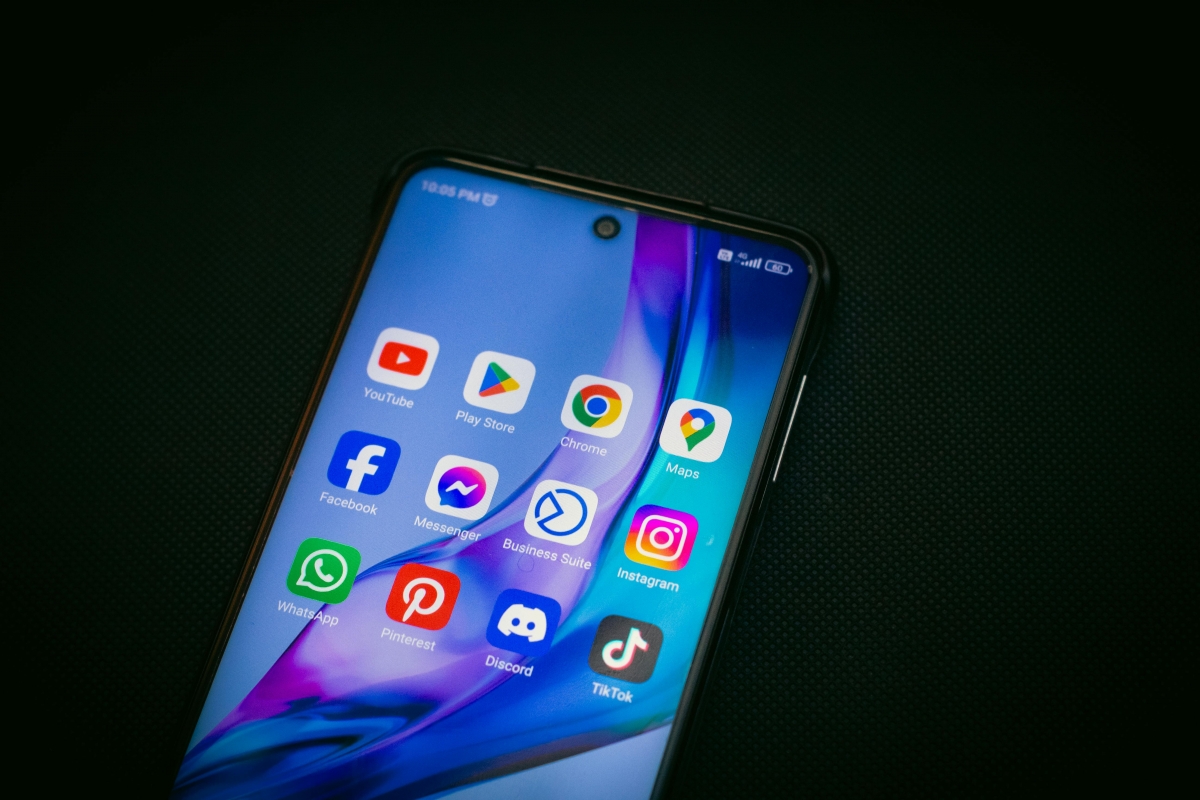
Encoding autobiographical information depends on what we pay attention to and which details we want to remember later. Choosing what to record is often intentional and active, but it doesn’t end there. With digital tools constantly around us, many aspects of our lives are now captured automatically: by our phones, apps, or even by other people. Let’s take a look at our example from the beginning. What kind of information did you record on your birthday two years ago? Some data you encoded deliberately in the moment, such as taking a photo of the birthday cake. But without realizing it, you also stored information indirectly, like texting a friend the restaurant address, which later reveals where you spent the evening, or wearing a fitness tracker, which may have logged your sleep or heart rate that night. What’s new and striking today are the tools that have no real analogue equivalent in the past. Social media platforms, for example, create vast archives of shared memories. You might have posted the picture of the cake on Instagram, been tagged in a friend’s post from the restaurant, or reacted to a comment under it.
As a result, the way we later remember an event crucially depends on the type of digital tools we used and the purpose we had in mind. Trying to remember your birthday two years ago might be a different experience depending on whether you do it based on the pictures stored in your smartphone gallery, the story you posted on Instagram, or the WhatsApp messages you received that day. Of course, different people use different tools to a different extent; that is, individuals have their own preferences for storing and retrieving autobiographical information in digital sources [5]. No matter which tools individuals use, they usually end up with a mosaic of digital traces: some recorded intentionally, some automatically, and some were shared with others.
Curation: Editing our digital records
So, does that mean all this data we record will just sit and wait in our digital devices until we decide to look at it again? It’s not that simple. In fact, externally recorded information can be changed, rearranged, or reorganized: a process that can be described as curation. Think about all this digital data that you stored from your birthday two years ago. A lot of it just exists and has not been looked at since. But you might have gone through your photos the next day, deleting a few awkward ones and keeping only your favorites, maybe even adding a filter before posting them on your social media. This curation of our data may alter how we remember certain events in the future, especially when we delete particular information [6]. Even others’ reactions to content you may have posted, such as likes, comments, shares, become part of this ongoing curation process. Meanwhile, algorithms also curate our data as well by organizing it in meaningful ways, such as when your photo gallery adds the photos from your birthday to a year-end throwback slideshow. The perception of this kind of algorithmic curation appears to be very diverse among people, some avoiding or just not consciously noticing them, while others ‘train’ their algorithms by actively engaging or liking certain content [7]. In the end, it should become clear that externally stored data is not static but formed and shaped by our interactions with it.
Retrieval: Reliving the past through our phones
Retrieval refers to the process of trying to remember something from your past. Here lies the most important interaction between internal memory and external recorded information, as using external technical devices may influence what you remember and how you recall events from the past. Now, think back again to your birthday two years ago. You probably began by scanning your own memory, then maybe turned to your phone for help, scrolling through messages or photos from that day. For more important days, such as your birthday, for instance, internal memories tend to be more vivid and detailed, so you may rely less on digital resources than for a randomly selected day, which is not necessarily connected to a special occasion [5]. Nevertheless, having access to photos and other digital traces can enhance remembering or provide new insights when internal memory is vague, helping people compensate for details that may fade over time [8], while also shaping how past events are experienced and understood in the present [5]: While reading a chat with a friend, scrolling back to your birthday two years ago, you might stumble upon a photo they sent from New Year’s Eve, which you spent together. Suddenly, you remember catching a terrible flu afterwards and spending a week in bed. You didn’t intend to recall that evening, but the memory surfaces anyway. You may even remember watching a great show during that week, but forgetting the title. To find it, you open a chat with your sister, where you might have mentioned it. This small sequence illustrates the iterative nature of remembering in the digital age as proposed in the AMEDIA-model [3;4], showing how we piece together our memories by moving back and forth between internal recollection and external resources.

Another key point is that retrieval isn’t just about pulling up data from the past. There are different types of memory processes that can be provoked through external sources that go beyond trying to remember a day or event in as much detail as possible. Browsing through your digital resources, especially on social media, can lead to reminiscing or even nostalgia, a more emotional and sentimental form of recall, for instance [9]. Like when you are reading the chat with your sister, and you notice all the deeply personal messages, as well as funny pictures and memes, that you have exchanged over the years. However, looking at the digital recordings of one’s past is not necessarily a positive experience but can also lead to rumination. In the chat with your sister, you might, for instance, notice a long gap in your conversation, which makes you remember the argument you had a couple of months ago. In cases like this one, the digital data about our lives can confront us with something that brings up memories in the present we would rather forget.
Looking ahead: Opportunities and risks of digital remembering
Now that we have seen how digital tools shape the way we record, curate, and recall our memories, new questions arise for research and practice. In which contexts can these tools truly support remembering, and when might they change or even distort it? The following examples illustrate how these questions are becoming increasingly relevant in different areas of application.
Finding effective memory aids is particularly relevant for older adults who often experience difficulties retrieving past events and experiences, such as the last time they went to a playground with their grandchildren. Indeed, there is empirical research demonstrating that digitally capturing and later reviewing everyday experiences can improve older adults’ ability to reexperience the past [10]. The problems that older adults have with retrieving past experiences are further aggravated among individuals living with dementia [11]. Against this background, the use of Digital Life Stories (i.e., digital photo albums enhanced with music, voice recordings, and memory prompts) for people with dementia has gained growing attention in clinical practice and research. These life stories are often created with the help of close relatives and collect key experiences and emotions from a person’s life. Digital Life Stories can help compensate for declining memory abilities and enhance well-being, social relationships, and sense of identity [12].
Does this imply that having a digital archive of our lives at hand will make us remember better? Maybe not so fast. First, remembering always remains a reconstructive process: Photos, messages, and posts do not speak for themselves but need to be interpreted. These records are often selective and shaped by our own choices: What we decide to record and how we record it can steer how an event is remembered later. Second, digital content can potentially be manipulated: In fact, it has been demonstrated that deepfakes and misleading online posts can contribute to false memories [13]. While memory distortions are not new, it remains to be seen whether digital technologies amplify these risks and make certain interpretations of past events more persistent over time.
What this means for our memories
We now carry vast digital archives of our own lives in our pockets. Understanding what this means for remembering requires looking at what we record, how we curate these digital traces, and how we later use them to recall the past. Many open questions remain, but one thing is already clear: how we document our lives also shapes how we remember and make sense of them. Reflecting on our own digital habits may be a first step toward using these tools more thoughtfully.
Bibliography
[1] R. Fivush, “The development of autobiographical memory,” Annual Review of Psychology, vol. 62, no. 1, pp. 559–582, Dec. 2010, doi: 10.1146/annurev.psych.121208.131702.
[2] M. A. Conway, “Memory and the self,” Journal of Memory and Language, vol. 53, no. 4, pp. 594–628, Oct. 2005, doi: 10.1016/j.jml.2005.08.005.
[3] F. Hutmacher, M. Appel, and S. Schwan, “Understanding Autobiographical Memory in the Digital Age: the AMEDIA-Model,” Psychological Inquiry, vol. 35, no. 2, pp. 83–105, Apr. 2024, doi: 10.1080/1047840x.2024.2384125.
[4] F. Hutmacher, M. Appel, and S. Schwan, “Remembering our lives in the 21st century,” Psychological Inquiry, vol. 35, no. 2, pp. 150–157, Apr. 2024, doi: 10.1080/1047840x.2024.2384128.
[5] F. Hutmacher, B. Conrad, M. Appel, and S. Schwan, “Mediated autobiographical remembering in the digital age: insights from an experimental think-aloud study,” Cognitive Research Principles and Implications, vol. 10, no. 1, May 2025, doi: 10.1186/s41235-025-00627-4.
[6] J. S. Soares, “Comparing functions of and recollection with recently taken and recently deleted smartphone camera photos,” Applied Cognitive Psychology, vol. 37, no. 4, pp. 699–710, Mar. 2023, doi: 10.1002/acp.4064.
[7] T. Joanroy, E. Steenvoorden, D. Padure, R. Venger, and R. Smit, “‘I’d rather have memories that I can actually hold on to’: How young adults use and experience algorithmic memory technologies,” Memory Mind & Media, vol. 4, Jan. 2025, doi: 10.1017/mem.2025.4.
[8] F. Hutmacher, C. Einhellig, and S. Klink, “Birthday memories: an experimental think-aloud study on autobiographical remembering in the digital age,” Memory, pp. 180–190, Jan. 2026, doi: 10.1080/09658211.2025.2602077.
[9] B. Jungselius and A. Weilenmann, “Keeping Memories Alive: A decennial study of social media reminiscing, memories, and nostalgia,” Social Media + Society, vol. 9, no. 4, Oct. 2023, doi: 10.1177/20563051231207850.
[10] C. B. Martin et al., “A smartphone intervention that enhances real-world memory and promotes differentiation of hippocampal activity in older adults,” Proceedings of the National Academy of Sciences, vol. 119, no. 51, Dec. 2022, doi: 10.1073/pnas.2214285119.
[11] M. Irish, “Autobiographical memory in dementia syndromes—An integrative review,” Wiley Interdisciplinary Reviews Cognitive Science, vol. 14, no. 3, Oct. 2022, doi: 10.1002/wcs.1630.
[12] H. Dellkvist, A. L. Dallora, L. Christiansen, and L. Skär, “The use of a digital life story to support person-centred care of older adults with dementia: A scoping review,” Digital Health, vol. 10, Jan. 2024, doi: 10.1177/20552076241241231.
[13] G. Murphy and E. Flynn, “Deepfake false memories,” Memory Online, pp. 112-124, Apr. 2022, doi: 10.1080/09658211.2021.1919715.
Figures
Figure 1: https://www.pexels.com/photo/person-holding-black-smartphone-taking-pho…
Figure 2: https://pixabay.com/de/photos/iphone-smartphone-mobiltelefon-2618485/
Figure 3: https://unsplash.com/de/fotos/junge-frau-mit-smartphone-auf-sofa-Lc7jhs…