  • INT
  • DE
  • FR
  • IT
  • NL

User account menu

  • Log in
Home
  • Magazine
    • All issues
    • Glossary
  • Blog
    • All blog posts
  • Book Reviews
    • Book Reviews
  • Submit to In-Mind
    • Articles
    • Blog posts
  • About In-Mind
    • Team
    • What is In-Mind?
    • Credits

Psychology for You!

  • Magazine Issue
    08/2026 - SpeciaI issue on artificial intelligence

    Understanding the mind-AI connection – how cognitive abilities shape AI use

    • written by
    • Magnus Liebherr,
    • Eva Gößwein
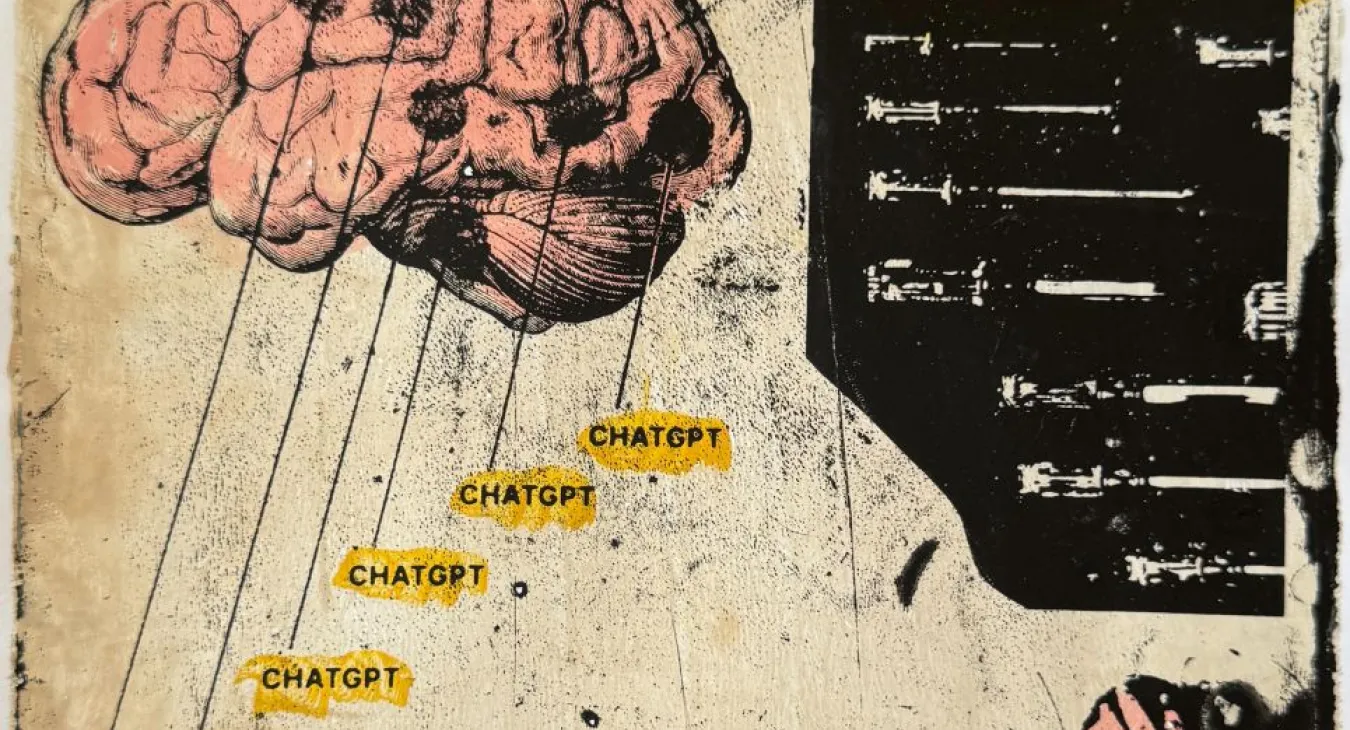
    The impact of Artificial Intelligence (AI) is closely tied to human cognitive abilities – mental processes that determine how we interpret, evaluate, and respond to AI-generated information. Understanding this interplay is essential for designing AI systems that align with human cognition, enhancing user engagement while reducing risks such as automation bias (the tendency to overtrust AI outputs) and cognitive overload (the state in which information exceeds mental capacity). In this article, we introduce the concepts of working memory, cognitive flexibility, and attention and explore how they shape the way we interact with AI. We illustrate how these cognitive functions influence...
    Read more
    • Log in to post comments
  • Human oversight
    Magazine Issue
    08/2026 - SpeciaI issue on artificial intelligence

    Human oversight of AI: An effective remedy for AI risks or a way to induce unwarranted trust in AI?

    • written by
    • Markus Langer,
    • Kevin Baum,
    • Johann Laux
    When AI determines medical treatments or prison sentences, we may find comfort in the idea of a “human touch” in decisions, for instance, in the form of human oversight mandated in AI regulation. But does human oversight add something meaningful or does it merely serve to convince us to trust AI?
    Read more
    • Log in to post comments
  • Digital price tags
    Magazine Issue
    08/2026 - SpeciaI issue on artificial intelligence

    How artificial intelligence in supermarkets influences customer experiences

    • written by
    • Sophia Wingen,
    • Laura Schenk
    A supermarket with prices that can change at any time and fully automated checkouts is no longer fiction but a reality enabled by artificial intelligence. This raises important questions about the consequences for consumers. Besides greater convenience, efficiency, and a personalized shopping experience, AI-driven supermarkets may reduce price and payment transparency and create a less comfortable atmosphere for consumers. This article explores the use of AI in supermarkets from a psychological perspective.
    Read more
    • Log in to post comments
  • AI-generated content may reflect gender stereotypes
    Magazine Issue
    08/2026 - SpeciaI issue on artificial intelligence

    Blaming the biased bot? Gender bias in AI-generated content

    • written by
    • Alexandra Wölfle
    With the growing popularity and increasing capabilities of generative AI, more and more attention is also drawn to AI model biases, in particular, gender biases. But what exactly does bias mean in this context, how should it be addressed, and what role do humans play in all this?
    Read more
    • Log in to post comments
  • Magazine Issue 08/2026 - SpeciaI issue on artificial intelligence

    Understanding the mind-AI connection – how cognitive abilities shape AI use

    written by: Magnus Liebherr, Eva Gößwein
  • Magazine Issue 08/2026 - SpeciaI issue on artificial intelligence

    Human oversight of AI: An effective remedy for AI risks or a way to induce unwarranted trust in AI?

    written by: Markus Langer, Kevin Baum, Johann Laux
  • Magazine Issue 08/2026 - SpeciaI issue on artificial intelligence

    How artificial intelligence in supermarkets influences customer experiences

    written by: Sophia Wingen, Laura Schenk
  • Magazine Issue 08/2026 - SpeciaI issue on artificial intelligence

    Blaming the biased bot? Gender bias in AI-generated content

    written by: Alexandra Wölfle
  • Magazine Issue 06/2024 - Special issue on sport psychology

    Psychological aspects of elite performance in new Olympic disciplines: The case of climbing

    written by: Xavier Sanchez, Julian Henz, Cécile Martha, Jerry Prosper Medernach
    In recent years, sports that have traditionally been practiced as recreational and non-competitive have been added in the official Olympic program. For example, climbing is on the Olympic program for... more
  • Magazine Issue 05/2024

    Never fear, a moral expert is here

    written by: Susanne M. Schmittat, Pascal Burgmer
    Editorial Assitant: Stella Wernicke Note: This article was already reviewed and is published in the German version of In-Mind. Can I read the diaries of my deceased daughter? Can I... more
  • Magazine Issue 05/2024

    Climate stress in everyday life: How can we support children?

    written by: Julia Asbrand, Felix Peter, Claudia Calvano, Lea Dohm
    The climate crisis leads to significant changes in nature and ultimately in our society challenging all of us. Children and adolescents are particularly vulnerable in their mental processing, as well... more
  • Magazine Issue 05/2024

    Tilting at windmills: How conspiracy theories hinder climate action and what to do about it

    written by: Kevin Winter, Lotte Pummerer
    Conspiracy theories about climate change are common. People who believe in them show less climate-friendly attitudes and behaviors. But there are ways to reduce the impact of conspiracy theories in... more
  • Magazine Issue 04/2024

    Horoscopes – why we believe in them

    written by: Lea Sperlich
    When reading horoscopes, we often find sentences like: "Sometimes you are extroverted, sociable, and open-minded, sometimes rather introverted, skeptical, and reserved." If you feel that this statement applies to you... more
  • Magazine Issue 04/2024

    Does nudging have a place in politics? How decision-making contexts inevitably influence our behavior

    written by: Mario Herberz
    We like to see ourselves as masters of our decisions. However, psychological research has found that the context that surrounds our decisions influences our behavior often unnoticed - for better... more
  • Load More Issues

In-Mind Blog

  • 23.02.2015 | Culture

    Einstein beats Mother Theresa as the hero of the world

    written by: Marieke van Egmond
    Heroes and villains don’t only exist in comic books. The real world is full of ‘good’ and ‘bad’ guys (and girls). Being an exceptional scientist or humanitarian will most likely land you on the heroic side of history. Obviously, dictators who have oppressed millions of people are more likely to be seen as the villains of world history. For a number of influential figures, our perception of their achievements however strongly depends on how our particular cultural region was affected. For example, even though the abolition of slavery by Abraham Lincoln makes him a historical hero in American eyes, people from other countries might value Mandela’s struggle against apartheid, or even Princess Diana much more. And what about more controversial figures such as Che Guevara and Napoleon? In this blog, I will review a brand new study in which it was tested who the heroes and villains of our shared, global history are. more
  • 12.02.2015 | Happiness & Well-being

    Time to unwind: When autonomy and motivation add weight to recovery

    written by: Alina Feinholdt
    Extended working hours and off-job duties leave increasingly less time for a person to recover. Thus, the more important it becomes for a person to seek activities that really help to unwind from daily hassles. But is there anything such as the right or even wrong recovery activity? And what role does motivation play in this regard? In this blog post I will elaborate on these questions by reviewing recent research. more
  • 17.01.2015 | Current Events, Violence & Aggression

    Empowering cartoonists, deterring killers, protecting bystanders: Can psychology contribute?

    written by: Winnifred Louis
    We respond on many levels, like our readers, to the 2015 attack on Charlie Hebdo staff in France. The human tragedy makes us sad and angry. The moral atrocity screams for outraged condemnation. The sense of threat calls out community determination, courage, and sacrifice. The counter-mobilisation of millions, and of world leaders, evokes pride and grim satisfaction. more
  • 16.12.2014 | Solid Science

    Solid science: How graduate students foster research transparency

    written by: Nicole Janz
    Reproducibility is seen as the gold standard for solid science. However, three are few incentive to work transparently, and even less incentives to conduct replication studies. To change this, more and more teachers are assigning replication studies to graduate students as a class assignment. Will this turn early career researchers into witch hunters? more
  • 05.12.2014 | Happiness & Well-being

    Becoming superhuman: Is it all in your mind?

    written by: Mallika Sarma, Cathleen Clerkin
    Everyone loves a good comic book hero, but what if superhuman feats were something you could learn to do in real life? In this post, we will share some recent scientific evidence that suggests that through mindfulness, people can learn to control their minds, bodies, pain tolerance and emotions in ways that seem almost superhuman. more
  • 02.12.2014 | Social Influence & Negotiations

    Who gives a Tweet? Fandom, social identity, and why people take to Twitter

    written by: Jessica Tomory
    When we think of the world in terms of categories and different groups of people, we think of the various groups to which we belong and our identities within such groups. The groups to which we belong impact how we perceive ourselves, how others perceive us, and the extent to which we express our social identities in order to bolster our self-esteem. This blog will examine how and why people are motivated to express their social identities using social media and, more specifically, will propose that Twitter serves an important identity function for group members. more
  • Load more blog posts

Book Reviews

Buried Secrets: Rememberance of Things Past, a Review by Christopher Perez

reviewed by: Christopher Perez

The Coddling of the American Mind, reviewed by Dylan Selterman

reviewed by: Dylan Selterman

My Year of Rest and Relaxation, reviewed by Andrew Archer

reviewed by: Andrew Archer

The Hope Circuit, Reviewed by Joe Smith

reviewed by: Joe Smith

Social Psychology: Revisiting the Classics (2nd Edition)

reviewed by: Richard Skaff

Most Read

  • Magazine Issue 02/2025

    Do we really like what we like? How social influence processes shape our experiences when we are online

    written by: Dr. A. Marthe Möller
  • Magazine Issue 04/2024

    Does nudging have a place in politics? How decision-making contexts inevitably influence our behavior

    written by: Mario Herberz
  • Magazine Issue 06/2024 - Special issue on sport psychology

    In the shades of the rings – experiences of interpersonal violence in elite sports

    written by: Julia T. Schwender, Teresa Greither, Helena Schmitz, Laurie Schwab
  • Magazine Issue 08/2024

    Bug or feature? Boredom feels aversive, and this is why it matters

    written by: Wanja Wolff, Katja Rewitz, Dr. Maik Bieleke
  • Magazine Issue 10/2009

    The Ghost in the System: Where Free Will Lurks in Human Minds

    written by: Jay Michaels, Robin Vallacher

The Inquisitive Mind Magazine is supported by:

  • DGPs
  • C-SEB

Menu

  • Magazine
  • Blog
  • Book Reviews
  • Submit to In-Mind
  • About In-Mind
  • facebook
  • twitter
  • instagram
  • print
  • RSS Feed

About Us

In-Mind is a voluntary science communication project. We enable scientifically working psychologists to present their research topics in a scientifically sound, understandable and entertaining way for an interested audience: Psychology by scientists for everyone....more

Footer menu

  • Imprint
  • Data Protection
Clear keys input element